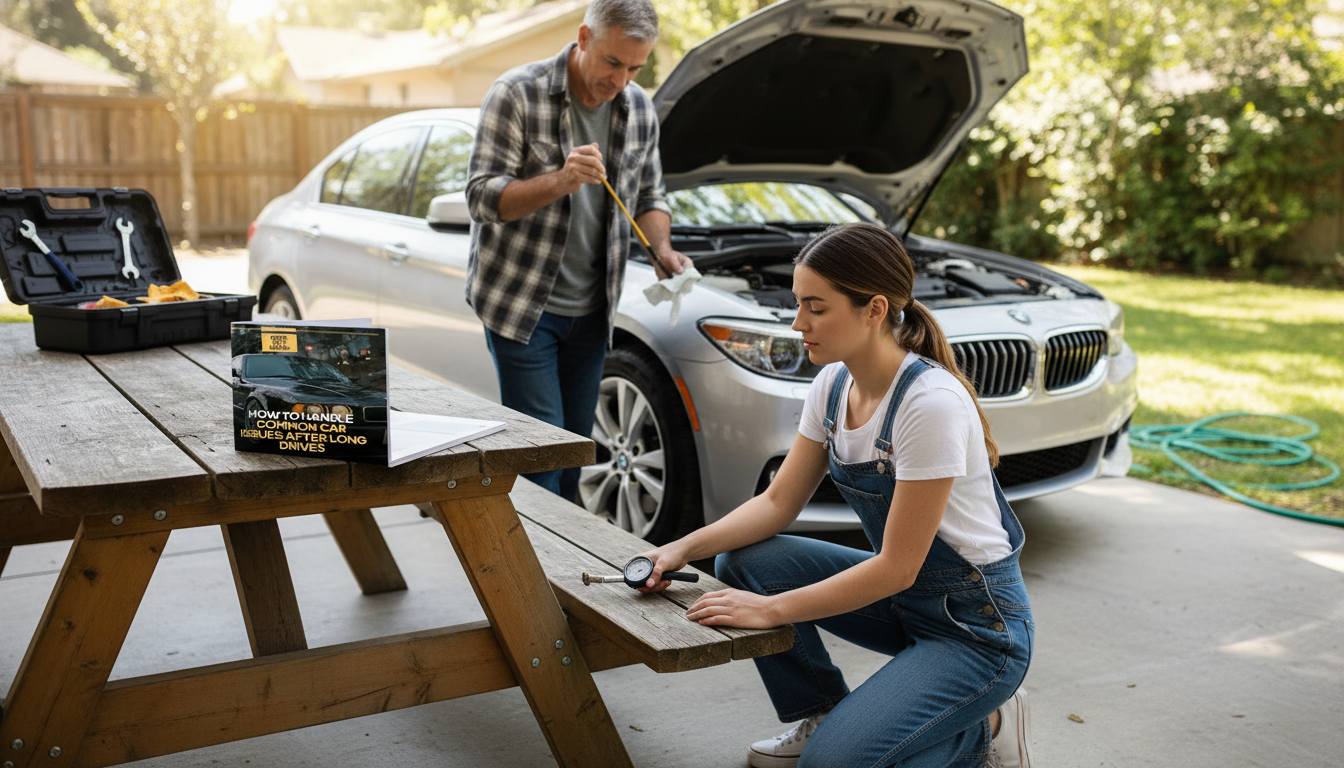
Long drives can reveal small problems before they become expensive repairs—heat soak, sustained speeds, heavy loads, and stop-and-go traffic all add stress. A calm post-drive routine helps spot warning signs early, handle common hiccups safely, and keep the next trip smooth.
Right after you park is the best time to catch “new” smells, noises, and leaks—before they disappear once everything cools down.
| Symptom | Most likely causes | Quick check | When to stop driving |
|---|---|---|---|
| Temperature gauge higher than normal | Low coolant, failing fan, clogged radiator, stuck thermostat | Cool down fully, check coolant level in reservoir, inspect for leaks | Red temp light, steam, coolant smell, loss of power |
| Vibration at highway speeds | Tire imbalance, low tire pressure, uneven wear, bent wheel | Check pressures, inspect tread and sidewalls, look for bulges | Bulge, cords showing, steering wobble worsening |
| Squealing or grinding brakes | Worn pads, glazed rotors, debris, sticking caliper | Look through wheel spokes for pad thickness; listen at low speed | Grinding, pulling hard to one side, brake warning light |
| Oil smell after parking | Oil seep onto hot exhaust, overfilled oil, valve cover leak | Check oil level, look for wetness around valve cover area | Visible smoke, oil pressure light |
| Battery struggles to crank after a stop | Weak battery, loose terminals, charging issue | Check terminals for looseness/corrosion; test voltage if possible | No-start in remote area, repeated stalling |
Cooling systems often show their weak points after hours of steady load or a hot shutdown. Distinguish normal “hot weather behavior” from a real overheat event.
For broader maintenance guidance and safety reminders, the NHTSA vehicle maintenance resource is a solid reference point.
Tires take the brunt of long-trip heat and impact damage. A few minutes of inspection can prevent a blowout or a surprise alignment bill.
Descending grades and towing can heat brakes enough to change pedal feel, create odor, or accelerate wear. Give brakes time to cool before deciding what’s normal.
If brake concerns persist, a reputable shop can help confirm wear patterns and safety issues; the AAA maintenance and repair hub is a helpful starting point for service information and planning.
For maintenance intervals and what typically gets overlooked, the Car Care Council maintenance tips page is a practical refresher.
A mild “hot” smell and radiator fan run-on can be normal, especially in warm weather. Sweet coolant odor, burning oil smell, or an electrical/insulation smell is not normal and should prompt a leak check and a closer inspection before the next long drive.
Check tire pressure the next morning (cold) and set it to the door-jamb specification. Readings taken right after driving are higher from heat, which can lead to underinflation once the tires cool.
Let the engine fully cool, then check the coolant reservoir level and look for obvious leaks or wet spots around hoses and fittings. If the problem repeats or you saw a red temperature warning, stop driving and schedule a cooling-system pressure test.













Leave a comment