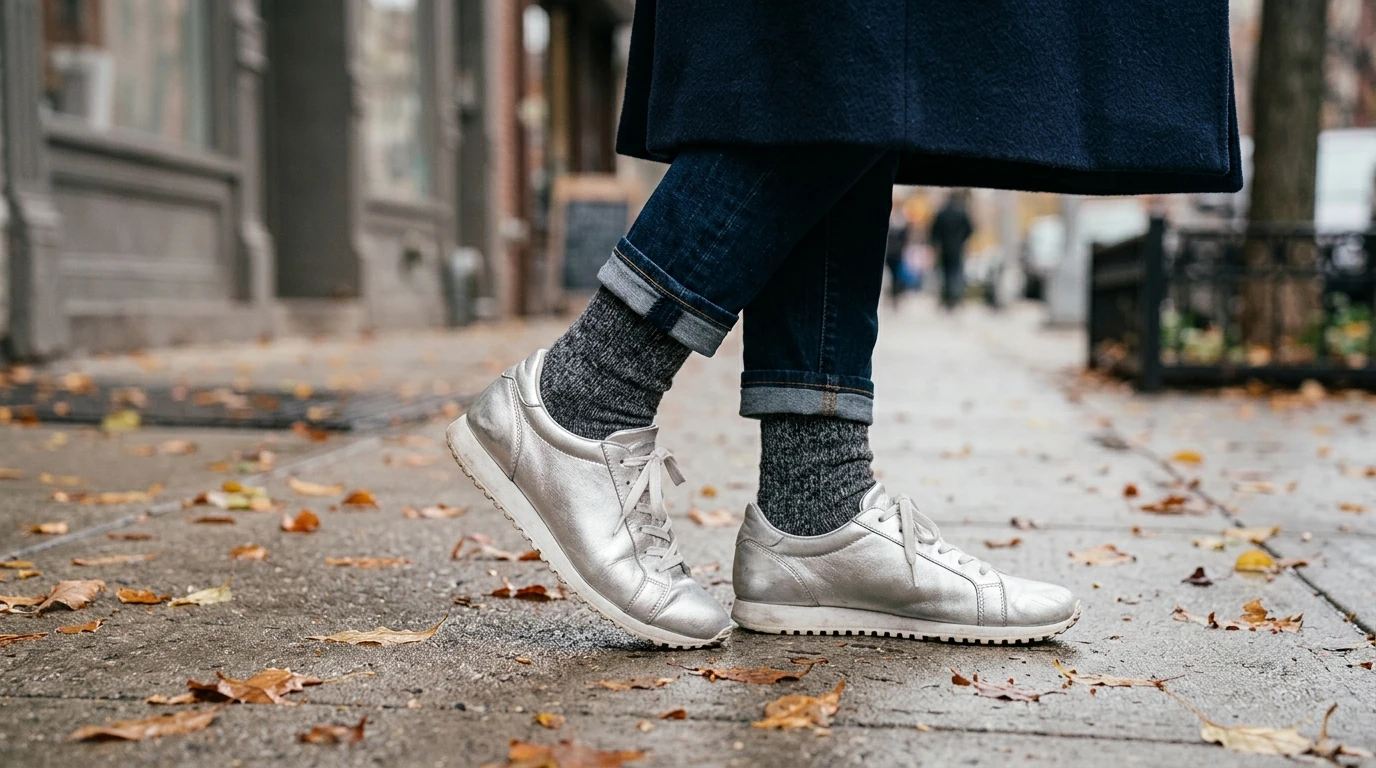
A silver shoe can be a cold-weather staple when it balances statement style with everyday wearability. A metallic finish brings light to darker seasonal outfits, yet it can still function like a “neutral-plus” when paired with denim, black, gray, and winter whites. Below is a practical guide to fit, comfort, winter-friendly use, outfit ideas, and care—so the shine looks intentional all season long.
Quick overview
- Metallic silver finish suits fall and winter wardrobes built on neutrals, monochrome layers, and denim.
- Best for everyday city wear: commuting, weekends, and casual workplaces where sneakers are acceptable.
- In frequent rain, slush, or salt, plan on more regular wipe-downs and protective care to preserve the finish.
- Check sizing notes before ordering; different brands and lasts can run slightly narrow or long.
Design notes that matter in cooler months
Silver footwear is easiest to wear in fall and winter because it plays well with heavier textures and darker palettes. Think of it as jewelry for your outfit: it catches light, but it doesn’t have to dominate the look.
- Silver as a “neutral-plus”: It pairs effortlessly with black, charcoal, navy, camel, and creamy winter whites while still adding a crisp highlight.
- Texture contrast is the secret: Metallic finishes pop against wool coats, denim, corduroy, tweed, and chunky knits—materials that show up constantly in cold-weather dressing.
- Care depends on materials: If your shoe blends materials (for example, leather panels with textile sections), use care products by material type rather than a one-size-fits-all cleaner. For sustainability and material standards, see guidance from The Leather Working Group.
- Wet-sidewalk stability: Prioritize grip. Before the first outdoor wear, walk on a smooth indoor surface to gauge traction and stability, and visually check the tread depth.
Fit and sizing checklist
Silver shoes tend to look sharpest when the fit is dialed in—no collapsing heel counter, no toe crowding that creases the upper prematurely.
- Measure at day’s end: Feet are slightly larger after standing and walking. Use those measurements when comparing to any available size chart.
- Plan for winter socks: If thicker socks are part of your routine, think through whether you need a bit more volume. Sometimes a half-size adjustment is the difference between “fine” and “all-day comfortable.”
- Heel slip vs. toe room: A small amount of heel movement can be normal, especially in sneakers, but toes should not press the front when standing fully upright.
- If between sizes: Decide based on width. Wider feet often benefit from a touch more length/volume, while narrow feet may prefer the snugger size paired with thinner socks.
- Break-in reality check: Structured uppers may soften after a few wears, but the shoe will not meaningfully get longer—so don’t “hope” for extra toe room later.
For general foot-health guidance and fit principles, consult the American Podiatric Medical Association (APMA).
Comfort and wearability through fall and winter
Cold-weather wear is tougher on shoes and on feet: sidewalks are harder, steps can be slick, and you often walk more briskly just to stay warm. Comfort isn’t only about cushioning—it’s also about stability and keeping materials in good condition.
- Cushioning and support matter for city days: A forgiving midsole helps on pavement and during long commutes, while a stable base keeps your foot from feeling “wobbly” on uneven sidewalks.
- Use-case realism: Metallic finishes look best when kept clean. These are ideal for urban routes rather than muddy trails where debris can grind into the coating.
- Swelling after walking: Feet can swell slightly after 30–60 minutes on foot. A proper fit should stay comfortable even after your foot warms up and expands a bit.
- Wet-day rotation: If sidewalks are frequently wet, rotate shoes and give them time to dry fully between wears to help preserve materials and reduce odor.
For winter walking safety considerations (including reducing slip risk), review practical tips from the CDC.
Outfit pairings: making silver look effortless
The easiest way to style silver in fall and winter is to treat it like polished hardware. Keep the base outfit grounded, then let the shoes provide a clean, modern lift.
Care tips for a silver finish
Value and timing considerations
Where to buy (and a few in-stock picks)
FAQ
How do silver shoes fit into a fall and winter wardrobe without looking flashy?
Keep the rest of the outfit grounded in dark neutrals, denim, or soft winter tones, then let the silver act like subtle hardware. Textured fabrics (wool, knits, corduroy) make metallics feel seasonal instead of loud.
How should metallic-finish shoes be cleaned after rain or slush?
Gently wipe them with a soft, slightly damp cloth to remove water spots and grit, and remove any salt as soon as possible. Let them dry at room temperature and avoid harsh cleaners or heavy scrubbing that can dull the finish.
What if the shoes feel slightly tight with thicker socks?
Check that toes aren’t pressing the front when standing and that the heel feels stable; try thinner socks or adjust lacing to improve volume. If the length or overall space is clearly insufficient, use exchange options—width may relax a bit, but length won’t increase.
Recommended for you










Leave a comment