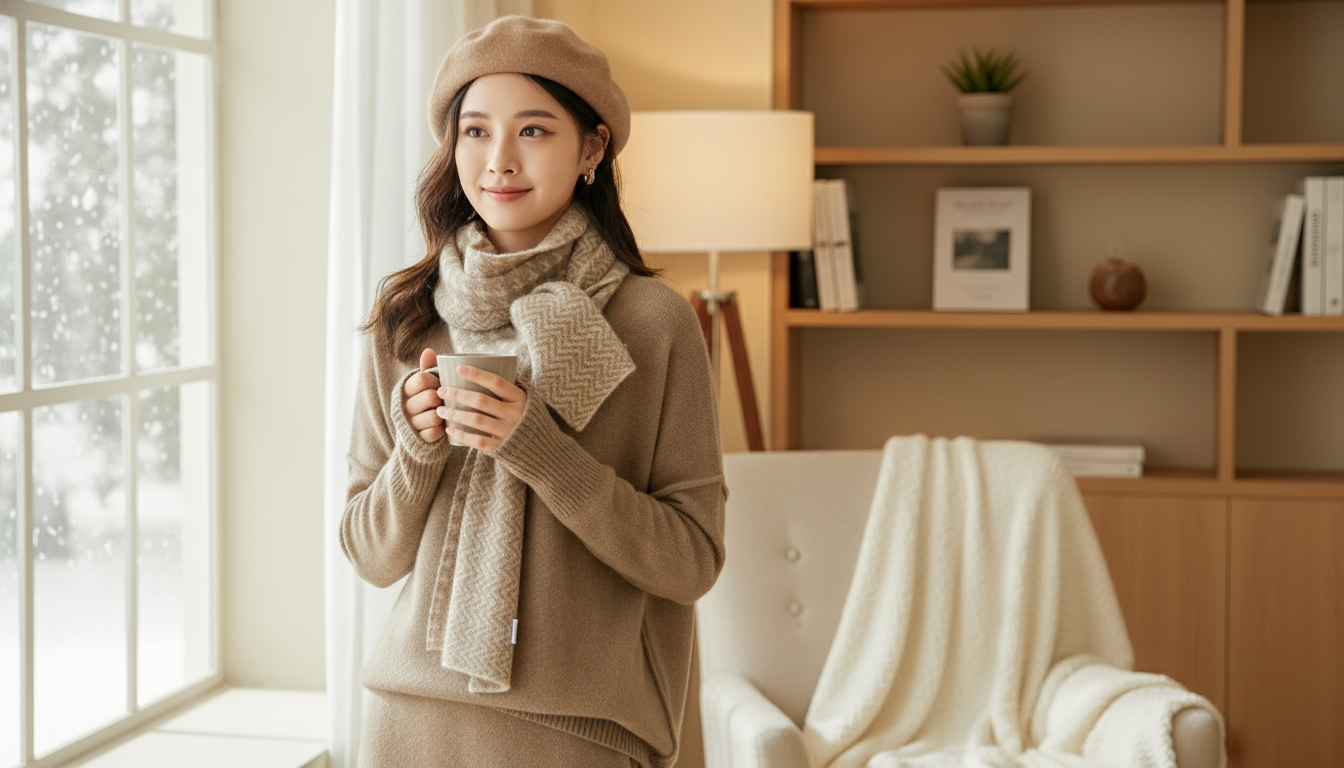
A truly great winter scarf does more than block the wind—it elevates cold-weather outfits, feels soft against the skin, and holds up season after season. Cashmere stands out for its cozy warmth at a lighter weight, while a knit construction adds flexibility and easy, natural drape. Below is a practical guide to what makes cashmere special, what signals quality, how to wear a knit scarf in a way that looks intentional, and how to care for it so it stays plush and polished.
Cashmere comes from the fine undercoat of cashmere goats. Those fibers are notably soft, and they provide impressive insulation without the heavy, bulky feel that some winter accessories bring. In day-to-day wear, that translates into warmth that feels comfortable rather than cumbersome.
A knit scarf also earns its place in winter because the structure naturally traps warm air while staying flexible. It wraps easily, sits comfortably at the neck, and layers smoothly over coats, blazers, and chunkier sweaters. Many people also find cashmere easier to wear in mixed environments—outside in the cold and then inside in heated spaces—because it can feel warm yet breathable.
When the fibers and knit are well-executed, the scarf drapes cleanly (instead of looking stiff), avoids scratchiness, and stays in place without constant readjusting.
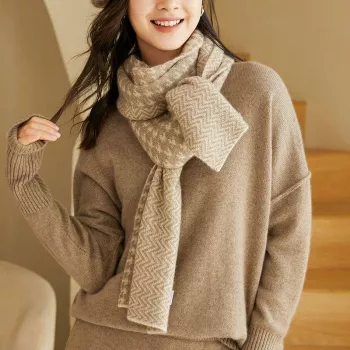
If you’re looking for a straightforward, elevated winter staple, the Luxurious 100% Cashmere Knit Winter Scarf is designed to deliver soft insulation with a refined knit texture—easy for everyday commuting, travel, and dressier evenings. It’s in stock and ready to ship.
| Feature | Details |
|---|---|
| Product | Luxurious 100% Cashmere Knit Winter Scarf |
| Material | 100% cashmere |
| Type | Knit winter scarf |
| Price | $65.01 USD |
| Availability | In stock |
Cashmere quality isn’t only about the label—details in the fiber, knit, and finishing determine how it will feel this winter and how it will look next winter.
When you’re comparing materials or verifying labels, it’s also useful to know that fiber content labeling is regulated in the U.S. under the Federal Trade Commission’s Wool Products Labeling Act.
A knit cashmere scarf can look understated or statement-making depending on how you wrap it. These options stay neat while maximizing warmth.
Cashmere’s strength is its warmth-to-weight ratio. It’s a practical choice when you want insulation without feeling weighed down.
For additional care guidance, the Woolmark care resources for wool and cashmere offer helpful, fiber-safe habits.
If you’re building a gift set, consider pairing the scarf with a home accent or a trip-ready download such as the Hand-Painted Jade Porcelain Cheongsam Vase or the Top 10 Must-See U.S. National Parks + Fast Facts digital travel guide—easy ways to tailor the present to a person’s style or plans.
Yes—pilling is common, especially early on, and it’s influenced by fiber length, friction (like rubbing against coat zippers), and how the scarf is washed. Gentle de-pilling with a cashmere comb or fabric shaver and less frequent washing help keep it looking smooth.
Hand-wash in cool water with a mild wool/cashmere cleanser, avoid wringing, reshape while damp, and dry flat on a towel away from direct heat. Between wears, airing it out can reduce how often it needs washing.
Cashmere is very warm for its weight, but in extreme cold it works best as part of a layered system with a warm coat plus hat and gloves. Knit density matters too—a denser knit generally blocks wind better and holds warmth longer.












Leave a comment