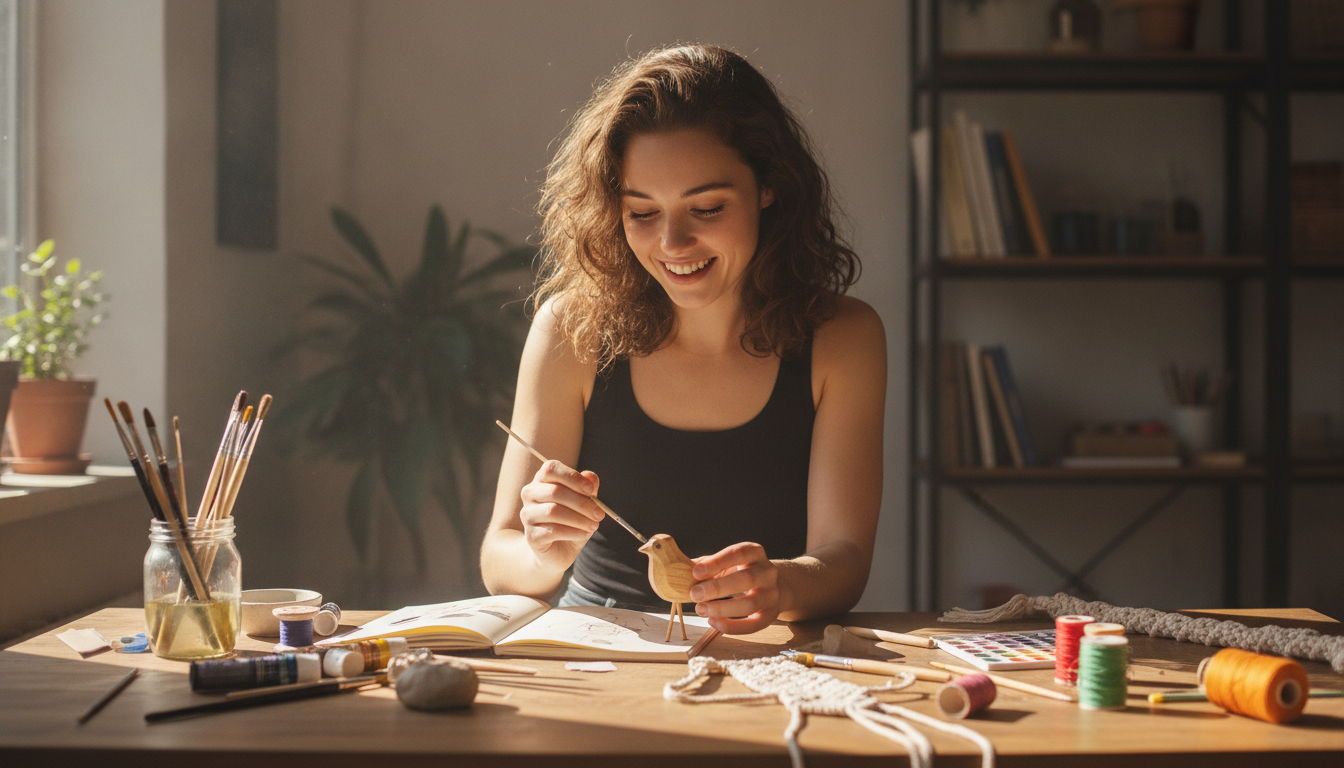
A weekend hobby project can feel like a mini-reset: a clear start, a satisfying finish, and a small skill gained along the way. The trick is choosing something that fits the weekend you actually have—your energy, your time, and your available space—so it feels restorative instead of like another obligation.
Before you dive in, make the choice easy on yourself. A good weekend project is less about ambition and more about fit.
If your week has been stressful, a small creative routine can be a practical way to unwind; the American Psychological Association has helpful guidance on stress management that pairs well with calm, low-pressure hobbies.
These ideas are designed for real life: minimal setup, minimal cleanup, and a result you can see right away.
Half-day projects are ideal when you want to feel progress without turning your weekend into a full renovation.
If your half-day plan includes movement (like reorganizing a space, gardening, or a supply run by foot), even light activity can support overall health; the CDC summarizes the benefits of physical activity in ways that make small, consistent weekends feel like a win.
Two-session projects are great when you want a bigger payoff without the “all day Saturday” trap. Session one is for groundwork; session two is for finishing touches.
| Project type | Energy level | Time needed | Space | Typical cost |
|---|---|---|---|---|
| Shelf or desk refresh | Low | 30–60 min | Small | Low |
| Micro-art/collage | Low–Medium | 45–90 min | Small | Low |
| Beginner sewing item | Medium | 2–4 hrs | Small–Medium | Low–Medium |
| Cast-iron cooking session | Medium | 2–3 hrs | Kitchen/Outdoor | Low–Medium |
| Room zone restyle | Medium–High | Two sessions | Medium | Low–High |
| Small wood build | High | 4–6 hrs | Garage/Outdoor | Medium |
If your project plan depends on feeling rested, a consistent wind-down routine can help; the NIH has a helpful overview of healthy sleep basics that pair nicely with a calm Sunday reset.
Try a shelf or desk refresh, a micro-collage page, editing and printing two favorite photos, mixing a custom spice blend, or a short facial massage routine. Time-box a 10-minute setup and a 10-minute cleanup so the hour stays enjoyable.
Start by using what you already have and set a small cap (like $10–$25) for anything new. Stick to “one new supply at most,” repurpose containers/materials, and focus on practicing a technique rather than buying more tools.
Choose a smaller finish line (one drawer instead of the whole room), then do a 15-minute “minimum viable progress” session. Label parts, store tools neatly for an easy restart, and set a Sunday wrap-up time to close the loop.










Leave a comment