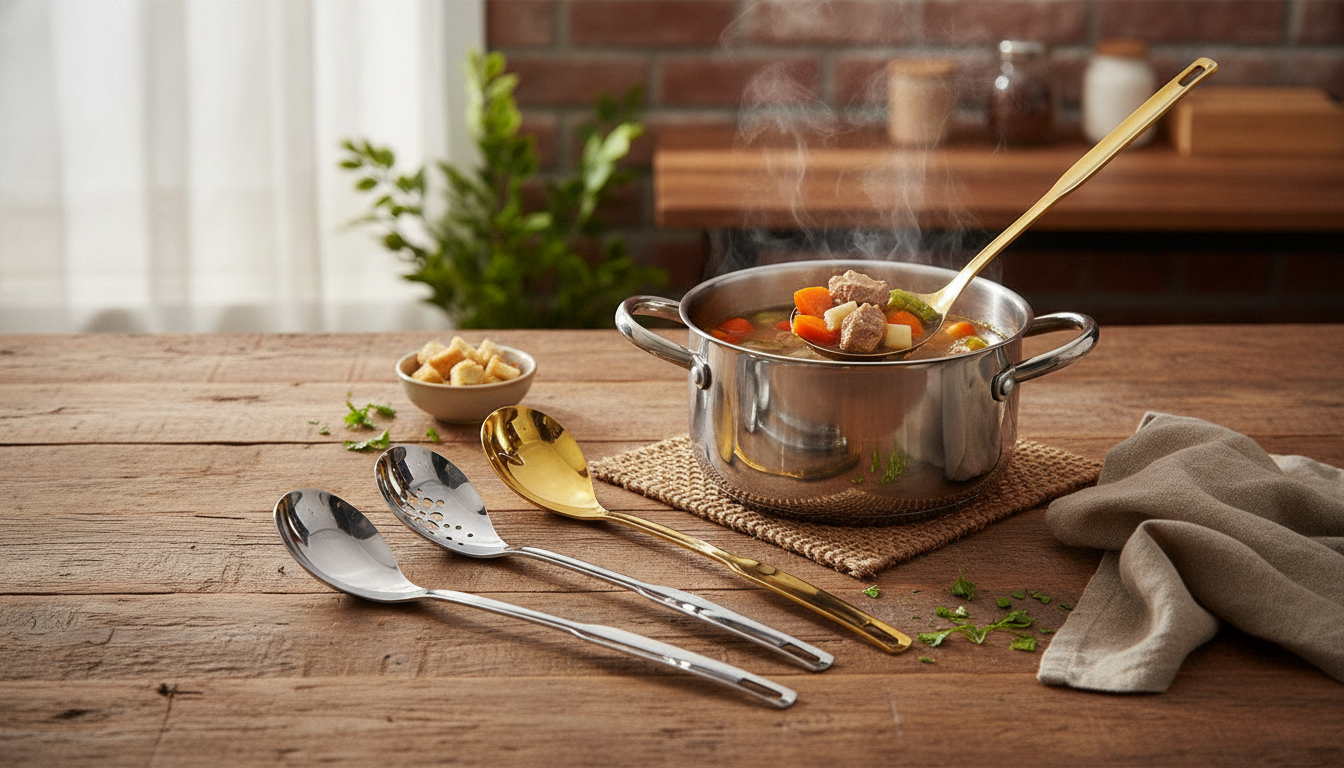
A long-handled stainless steel soup spoon with a built-in colander head is a practical tool for serving, draining, and skimming in one motion. It helps keep hands away from heat, drains liquid quickly, and stands up to daily cooking with less staining and odor pickup than many plastics. For home cooks who bounce between stockpots, simmering soups, and quick boiling tasks, this ladle-colander style utensil can reduce the number of tools cluttering the sink while keeping serving cleaner and more controlled.
Stainless steel is a common choice for food-contact tools because it’s durable, heat-tolerant, and corrosion resistant when cared for properly. For general background on stainless steel as a material, see Encyclopaedia Britannica — Stainless steel. For broader food-contact safety and kitchen handling guidance, the U.S. Food & Drug Administration — Food Contact Substances and USDA FSIS — Kitchen Food Safety are helpful references.
| Cooking task | Why a soup spoon colander helps | Tip for cleaner serving |
|---|---|---|
| Dumplings & ravioli | Lifts pieces while draining water through perforations | Pause 2–3 seconds above the pot to drip off |
| Skimming broth | Catches solids/foam with minimal liquid | Use gentle circular motions near the surface |
| Serving chunky soup | Controls solids-to-broth ratio better than a plain ladle | Angle slightly to drain before plating |
| Blanching vegetables | Transfers quickly without bringing much water | Move straight to ice bath to stop cooking |
In day-to-day cooking, the small things matter: a handle that stays stable while you lift food from a deep pot, and perforations that drain quickly without dropping what you’re trying to serve. For foods like tortellini, dumplings, and chunky soup vegetables, a colander-head ladle often hits the sweet spot between a slotted spoon (too small) and a full colander (too bulky for quick transfers).
For the cleanest transfers, drain above the pot first, then move directly to the bowl or plate. That small pause reduces drips, keeps counters tidier, and helps prevent hot liquid trails when serving guests or portioning meals for storage.
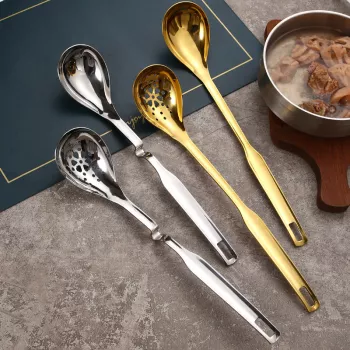
For a dependable, heat-ready utensil that handles serving and draining in one motion, the Stainless Steel Long Handle Soup Spoon & Colander – Durable Kitchen Ladle is designed for hot liquids, deep pots, and everyday cooking tasks like skimming and lifting dumplings.
| Item | Detail |
|---|---|
| Product | Stainless Steel Long Handle Soup Spoon & Colander – Durable Kitchen Ladle |
| Price | 23.51 USD |
| Availability | In stock |
Drain-and-serve tools shine when paired with cookware that can handle steady heat and frequent stovetop use. If you like building a compact set of multi-purpose cooking gear, consider adding a stovetop workhorse like the Reversible Pre-Seasoned Cast Iron Griddle with Non-Stick Surface for BBQ and Cooking for quick sides (toasted sandwiches, seared vegetables, or crispy flatbreads) while soups and broths simmer nearby.
Yes, when it’s made from stainless steel and used properly. Use the long handle to keep hands away from steam, let liquid drain over the pot before transferring, and avoid leaving it resting in the pot long enough for the handle to heat up.
It depends on the hole size. It works best for dumplings, ravioli, chunky soups, and larger noodles, while very small grains may pass through—use a fine-mesh strainer for those.
Rinse right after use, scrub the perforations with a brush or sponge, then dry. For stubborn residue, soak briefly in warm soapy water before scrubbing again.










Leave a comment