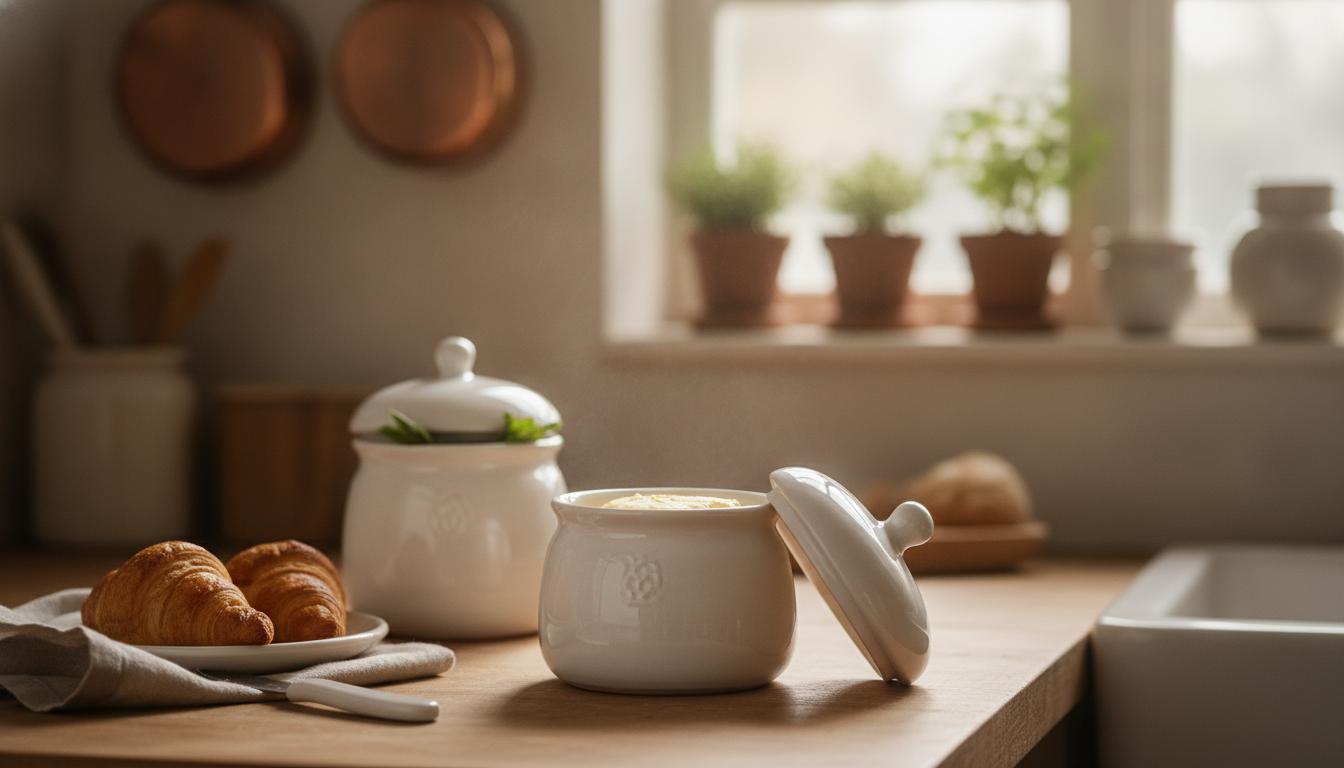
A ceramic butter keeper is designed to keep butter soft and spreadable while helping protect it from air and kitchen odors. This multi-use fresh-keeping jar style also works well for small-batch storage needs—like herbs, garlic confit, or spreads—when a compact, easy-to-grab container is more practical than a large tub or dish.
On a busy counter, butter tends to suffer in two ways: it either gets too firm in the fridge or too exposed on an open dish. A ceramic keeper bridges that gap by creating a more protected “ready zone” for a small portion of butter.
If you want a dedicated countertop option that looks tidy and is easy to grab during breakfast, the Ceramic Butter Keeper & Multi-Use Fresh-Keeping Jar is a simple upgrade that helps keep your routine moving—without leaving butter uncovered.
Butter texture is all about temperature and exposure. A keeper helps by putting a barrier between butter and the open air, which can reduce the chances of the butter picking up “fridge vs. kitchen” flavors or the stray onion-and-garlic aroma that floats around a hardworking home.
| Storage approach | What it’s good for | Trade-offs to consider |
|---|---|---|
| Butter keeper on the counter | Soft, ready-to-spread butter for toast, baking prep, sautéing | Requires regular cleaning and common-sense timing; warmer kitchens may shorten safe window |
| Covered butter dish on the counter | Simple access with minimal setup | More exposure to air and odors; easier to accidentally contaminate |
| Refrigerator storage | Longest lasting freshness | Butter stays firm and may tear bread unless softened first |
| Freezer storage | Long-term storage of extra butter | Requires planning to thaw; texture can change slightly over time |
When you’re unsure about timing, temperature, or household preferences, it’s always reasonable to default to conservative food handling guidance. For general food-safety basics, review resources from the USDA Food Safety and Inspection Service and the FDA food storage and safety pages.
The same features that make a keeper useful for butter—ceramic, a snug lid, and easy countertop access—also make it a handy small container for “a little bit of something” you reach for often.
For strong flavors (garlic, chili oil, curry pastes), cleaning between uses matters—ceramic is generally forgiving, but fats and aromatics can linger if left too long.
A keeper works best when it matches your household rhythm. Instead of leaving a full stick out “just in case,” set yourself up for quick wins by portioning what you’ll actually use and refreshing it more often.
For hot, crisp results that pair perfectly with a soft butter finish, consider the Reversible Pre-Seasoned Cast Iron Griddle with Non-Stick Surface for BBQ and Cooking. It’s a natural match for pancakes, grilled sandwiches, and quick-seared vegetables—especially when you can butter the surface without waiting for a stick to soften.
If you’re setting up a brunch spread and want the countertop to feel intentional (without extra clutter), the Smart Styling System for Warm Tablescape Ideas – 5-in-1 Digital Bundle can help bring everything together—from butter and jam to plates, napkins, and serving pieces.
Many households keep a small portion of butter at room temperature, but safety depends on kitchen heat, cleanliness, and how quickly you use it. Use clean utensils, keep portions modest, and refrigerate if your home runs warm or if you’re unsure about timing and handling.
Clean it whenever you refill it, and at least weekly if it’s in regular rotation. Wash sooner if you notice crumbs, moisture, or any off odors.
It can hold herb butter, peeled garlic or ginger, small brunch spreads (jam, honey, nut butter), finishing salt (if the lid allows quick access), or small-batch condiments like mustard or chili crisp. Clean thoroughly between strong flavors and keep it away from direct heat.









Leave a comment