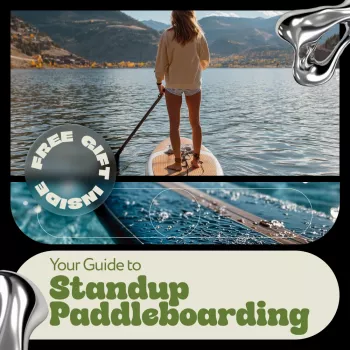
Stand up paddleboarding can be as simple as a calm-water cruise or as technical as surf, touring, and fitness training. The fastest way to build real confidence is to stack small wins: choose forgiving conditions, set up your gear to help you (not fight you), and repeat a few foundational drills until they’re automatic. From there, turning control, efficient strokes, and smart safety habits unlock longer, more challenging sessions without feeling overwhelmed.
Early progress depends less on “talent” and more on picking water that matches your current skill. Sheltered bays, small lakes, and slow rivers help you focus on balance and strokes without constant corrections. Avoid strong wind, big open-water fetch, and heavy boat traffic until your stance and steering feel reliable.
Before you even inflate or carry your board to the shoreline, do a quick go/no-go check: weather trend, wind direction, water temperature, visibility, and a clear route with a turnaround point. Offshore wind is a common beginner trap—if the breeze is blowing away from shore, it can quietly push you out faster than you can paddle back. Favor light onshore or cross-shore wind while learning.
Wear a properly fitted PFD and dress for the water temperature (not the air temperature). Cold water changes everything: a simple fall can become an urgent problem. When appropriate, keep a charged phone in a waterproof case and tell someone your plan—launch point, route, and a realistic “back on land” time.
| Condition | Best For | Watch Outs | Beginner-Friendly? |
|---|---|---|---|
| Calm lake (light wind) | Balance, basic strokes, confidence building | Afternoon wind pickup, sun exposure | Yes |
| Sheltered bay/harbor | Short tours, technique practice | Boat wakes, tides near channels | Yes (with awareness) |
| Slow river | Downstream skills, edging practice | Strainers, shallow rocks, changing flow | Sometimes (with local knowledge) |
| Open ocean (flatwater) | Touring and endurance | Wind swell, currents, offshore winds | No (until experienced) |
| Surf zone | Advanced turning, wave timing | Impact risk, crowd etiquette, shorebreak | No |
Board dimensions are your “difficulty slider.” Wider and longer boards tend to feel calmer underfoot; narrower boards can glide beautifully but require better balance and more precise footwork. If you’re wobbling constantly, it’s hard to learn good stroke mechanics—so prioritize stability first, then refine for speed later.
Choose the correct leash for the environment. Coiled leashes are common for flatwater because they stay out of the water; surf leashes are typically straight and matched to wave size. Moving water adds another layer: leash snag risk is real, so use river-appropriate systems and local guidance before committing.
Paddle length affects shoulder comfort and cadence. A practical starting point for flatwater cruising is about 6–10 inches above your height, then fine-tune: shorten slightly for surf; lengthen a touch for long, relaxed touring if it feels better. Fins matter, too—larger center fins improve tracking; smaller fins and boards with more rocker feel more maneuverable.
Small add-ons can make sessions smoother: reliable deck traction, a way to carry hydration, and a light kit (whistle, tiny first-aid basics, and visibility gear if you’ll be out near dusk).
Start kneeling. It lowers your center of gravity, lets you feel the board’s stability, and reduces the “all-or-nothing” sensation that makes beginners tense up. When you stand, place your feet parallel about hip-width apart near the carry handle, keep knees soft, and keep your hips level. Look toward the horizon instead of staring at your feet—your body tends to follow your eyes.
Use the paddle as a third leg. A light brace on the water (not a hard shove) gives you time to recover when the board tips. If you fall, fall away from the board, protect your face and hands, and keep hold of the paddle if you can.
Remounting is a skill, not an emergency. Approach the board from the side near the center handle, kick while pulling your chest onto the deck, then slide your knees up before standing. Practice controlled falls and remounts close to shore until it feels routine.
For forecasts and safety standards, use authoritative resources like the National Weather Service marine forecasts, the U.S. Coast Guard boating safety resources, and education from the American Canoe Association.
Start from a stable kneeling position and place the paddle across the board for support. Stand one foot at a time near the carry handle, keep knees soft, look at the horizon, and take a few forward strokes right away to stabilize.
A common starting point is about 6–10 inches above your height for flatwater cruising. Adjust based on shoulder comfort and the style of paddling—slightly shorter for surf and sometimes a touch longer for relaxed touring.
Wear a properly fitted PFD and use the correct leash type for the environment. A leash helps keep the board (your main flotation) close, but moving water requires extra caution because snagging hazards can make leash use dangerous.








Leave a comment