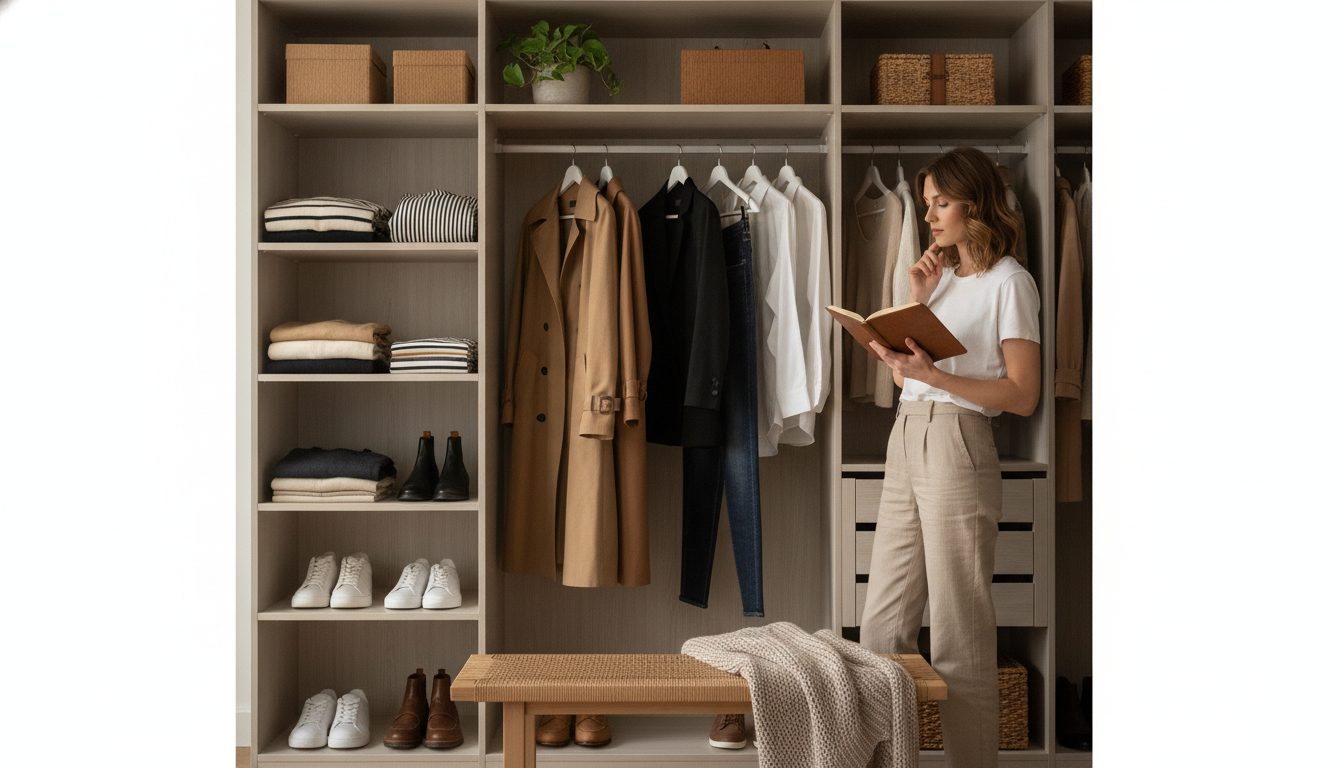
A closet that works year-round relies on fewer, better pieces, smart layering, and a simple system for shopping, care, and storage. The goal isn’t to “have everything”—it’s to have the right core staples, rotate seasonal accents without starting over, and keep clothing looking great so getting dressed stays easy no matter the weather.
A season-proof wardrobe is built for repeat wear, not one-time outfits. Look for versatility first: pieces that pair with multiple shoes, outer layers, and accessories so you can remix them across months.
Outfits get simpler when you rely on a repeatable formula—top + bottom + “third piece” + shoe. That third piece (a blazer, cardigan, trench, or chore jacket) is what makes a basic outfit feel intentional and helps you adapt to cold mornings, warm afternoons, and over-air-conditioned spaces.
Longevity is better measured by cost-per-wear, fabric resilience, and maintenance ease than by trend cycles. And the best closet is the one that matches real life—work dress codes, travel frequency, caregiving needs, climate, and how often laundry realistically happens.
A quick audit is the fastest way to get clarity without buying anything new. Start by sorting into categories: tops, bottoms, layers, shoes, occasionwear, activewear, and accessories.
Next, identify “workhorse” items you reach for weekly. Note what makes them succeed—fit, comfort, color, fabric, or the fact that they layer well. Then flag problem pieces: itchy materials, constant wrinkles, poor fit, high-maintenance care, or items that only work for one very specific look.
Finish by creating a short gaps list based on outfits you need but struggle to assemble, and try a one-in/one-out rule for a set period to prevent rebound clutter while you refine the system.
A flexible core doesn’t mean a tiny closet—it means a dependable base. Start with a tight palette: 2–3 neutrals plus 1–2 accent colors that flatter your skin tone and work with your most-worn footwear.
Choose “bridge” fabrics that behave well across temperatures: midweight knits, cotton poplin, denim, wool blends, and structured layers that can be worn open or closed. Keep silhouettes consistent so layering is effortless (for example, a slimmer base layer under a relaxed blazer).
Invest most in the items that touch your skin and get the highest wear: tees, base layers, underwear, socks, and everyday shoes. Add at least one polished third piece that instantly upgrades basics—especially on days when you want to look pulled together with minimal effort.
| Season | Keep the core | Add for comfort | Style upgrade |
|---|---|---|---|
| Spring | Jeans, tees, button-downs | Light jacket, water-resistant shoes | Scarf, light knit, fresh accent color |
| Summer | Simple dresses, tailored shorts, tanks | Breathable layers, sun protection | Statement sunglasses, woven bag, minimal jewelry |
| Fall | Denim, midi skirt, long-sleeve tops | Cardigan, ankle boots, light wool | Belted outerwear, warm-toned accessories |
| Winter | Base layers, trousers, sweaters | Thermal layer, coat, boots, gloves | Monochrome looks, textured knits, structured bag |
For clear, step-by-step structure, consider Building a Closet That Lasts Through the Seasons – eBook Guide on How to Build a Timeless Wardrobe, Seasonal Style, Long-Lasting Fashion, which focuses on palette choices, outfit formulas, seasonal rotation, and decision rules that keep shopping focused.
Longevity is often won in the laundry room. Follow care labels and wash less when appropriate—air out, spot clean, steam, and use gentle cycles for delicates. The FTC Care Labeling Rule explains why labels matter and what they’re designed to communicate.
Schedule seasonal maintenance: replace buttons, mend seams, treat stains promptly, and consider resoling shoes you truly love. A longer-wear mindset supports a more circular approach to fashion overall, echoed by the Ellen MacArthur Foundation’s work on fashion and circular economy.
Review quarterly: what you wore, what you ignored, what needs tailoring, and what should be replaced next. If you want a guided framework that keeps you consistent year after year, pair your audit notes with the timeless wardrobe eBook guide and revisit it each season as your checklist.
A practical range is often 40–80 total pieces for most people, depending on climate, dress codes, and laundry frequency. The most reliable setup is “core + seasonal + occasion,” where the core does the heavy lifting and seasonal/occasion items stay intentionally limited.
Durable choices include structured denim, midweight cotton, quality knits with good recovery, and wool or wool blends for layers. Construction and care matter just as much—look for strong seams, adequate fabric density, and avoid items that pill or turn sheer quickly.
Clean items before storing, use breathable bins or garment bags, and keep everything cool and dry. Fold knits to prevent shoulder bumps, use supportive hangers for tailored pieces, and protect wool with proper moth prevention measures.










Leave a comment