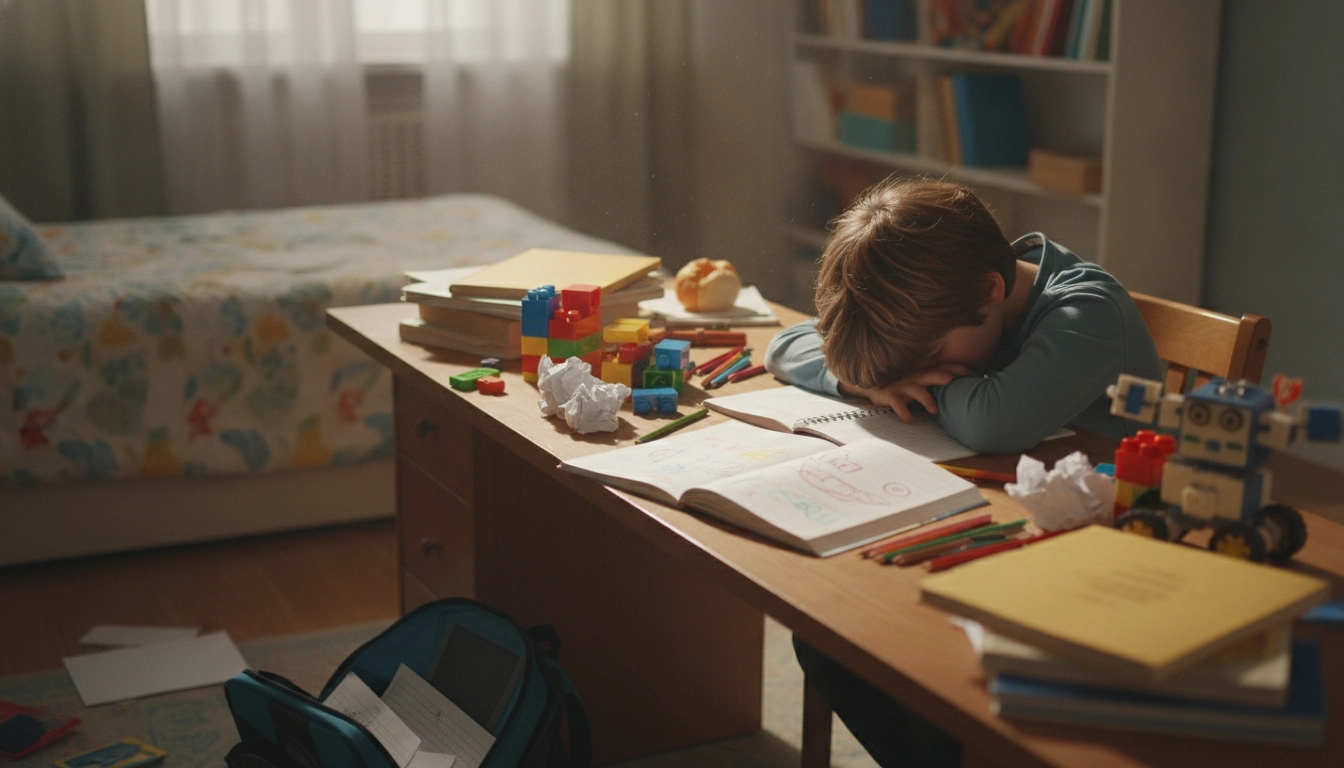
Kids with ADHD often struggle with homework because the skills homework requires—starting tasks, staying focused, managing time, and remembering multi-step directions—are the same areas ADHD can make hardest. Even when a child understands the material, the “getting it done” part can feel like pushing through mud, especially after a long school day.
One common challenge is executive function. Homework asks a child to shift from play or rest into work mode, decide what to do first, gather supplies, and keep going when the task is boring. ADHD can make that transition slow and frustrating, so a short assignment can stretch into an hour of stops and starts.
Working memory also plays a role. A child may read instructions, walk to get a pencil, and forget what the directions were by the time they sit down. They might lose their place in a worksheet, skip steps in math, or miss parts of longer assignments—not because they don’t care, but because their brain drops the thread.
Distraction and emotional overload can pile on. Background noises, notifications, hunger, or an uncomfortable chair can pull attention away. If homework has already caused conflict in the past, a child may feel anxious or defensive before they even begin, making avoidance more likely.
A predictable routine can reduce friction by turning “What do I do now?” into a repeatable sequence. For a parent-friendly structure you can use right away, see this daily homework routine checklist and guide.
For Why Homework Is So Hard for Kids With ADHD, the best answer depends on fit, material, care instructions, and how the product will be used day to day.
Checking those details first helps avoid a poor match and keeps the choice practical after delivery.
Keep it consistent: same start time, same workspace, and a short “setup” step (snack, water, supplies). Use brief work blocks with timed breaks, and end with a quick backpack check so nothing gets left behind.













Leave a comment