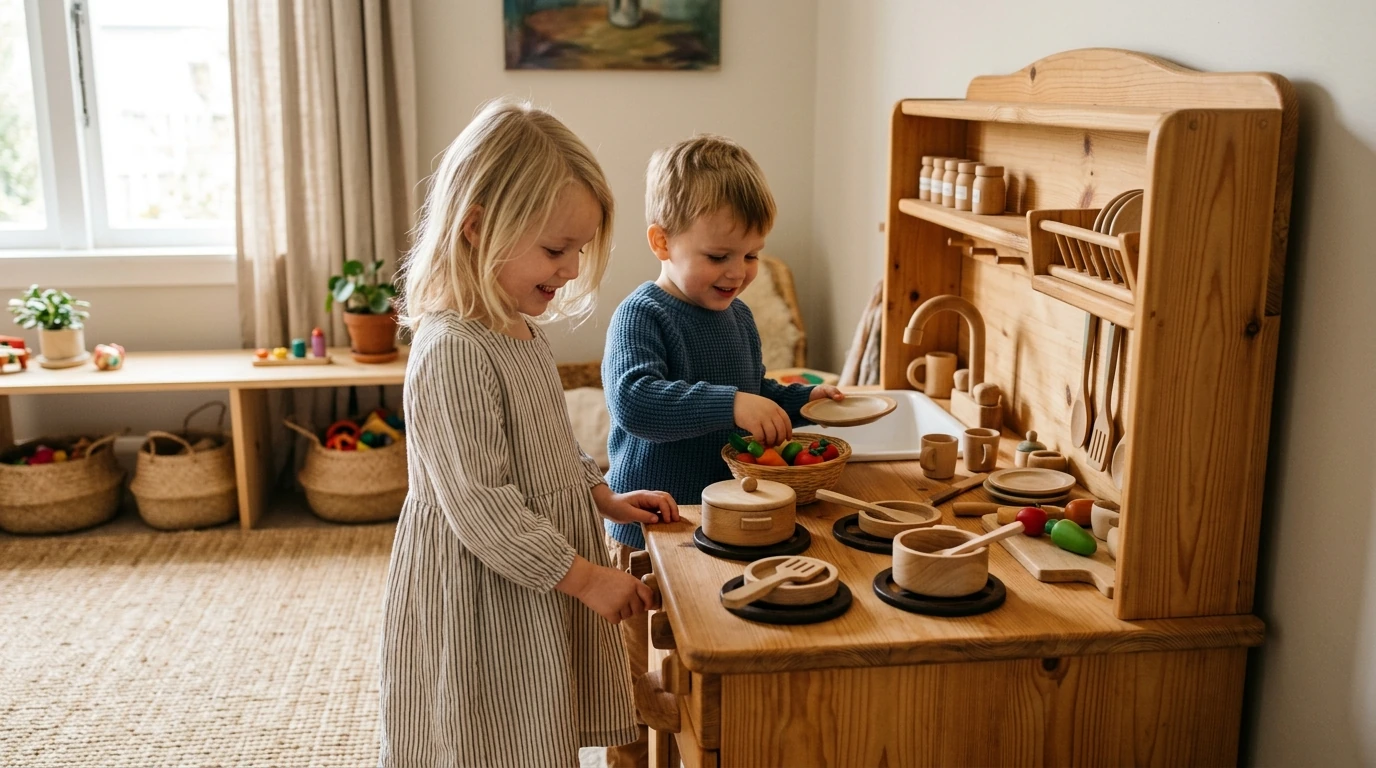
A well-made play kitchen turns everyday curiosity into hands-on pretend cooking, serving, and sharing. This wooden set includes accessories that help kids act out real routines—washing, prepping, “cooking,” and tidying—while practicing language, coordination, and social skills through open-ended play. Research-backed guidance from organizations like the American Academy of Pediatrics and NAEYC highlights how play supports development—especially when kids can lead the story and repeat it in new ways. For more guidance, see 8 Best Wooden Play Kitchen Sets For Toddlers and Kids (2020 ….
A wooden kitchen playset is more than a “mini appliance.” It’s a daily activity station where kids can build familiar routines and invent new ones. For further reading, see Kids Wooden Pretend Cooking Playset Toy Kitchen with Utensils Food.
When kids can repeat a routine—“wash,” “chop,” “cook,” “serve,” “clean”—they often stay engaged longer because they know what comes next, and they get to decide how the scene changes each time.
Many families notice that wooden play kitchens keep getting used even after the “new toy” excitement fades. The material and look contribute to that staying power.
Because wood is typically heavier and more stable than lightweight plastics, the play space often feels more like a real “work area,” which can encourage longer stretches of focused play.
Pretend cooking looks simple, but it’s packed with learning. Kids practice communication, coordination, and social cues while staying in control of the storyline.
Over time, kids naturally level up the complexity—adding “customers,” creating menus, or organizing ingredients—without needing the play kitchen to change.
Before choosing a play kitchen set, it helps to focus on a few practical details that affect daily use and long-term play value.
| Consideration | Why it matters | What to look for |
|---|---|---|
| Stability | Prevents tipping during active play | Wide base, balanced build, solid joints |
| Surface finish | Comfort and safety during daily use | Smooth wood, rounded corners, easy-wipe surfaces |
| Accessory mix | Supports longer pretend-play stories | A variety of kitchen tools and pretend food pieces |
| Storage/organization | Reduces clutter and encourages clean-up habits | Shelves, hooks, bins, or a designated accessory area |
| Play value over time | Keeps interest as kids grow | Open-ended design for many themes (restaurant, bakery, home kitchen) |
A few simple add-ons and routines can make a play kitchen feel like a real “place” kids return to every day.
Wooden play kitchens are often a great fit from toddler years through early elementary, since pretend play grows alongside language and social skills. For younger kids, use supervision if the set includes smaller accessories.
Accessories give kids more “jobs” to do—prepping, cooking, serving, and cleaning—which naturally creates longer play sequences. More pieces also make it easier to switch roles (chef, server, customer) and keep the story going.
Use one accessory bin for quick clean-up, give a few items a “home” spot, and build a one-minute reset routine after play. Rotating a smaller set of pieces each week can reduce clutter while keeping play feeling new.









Leave a comment