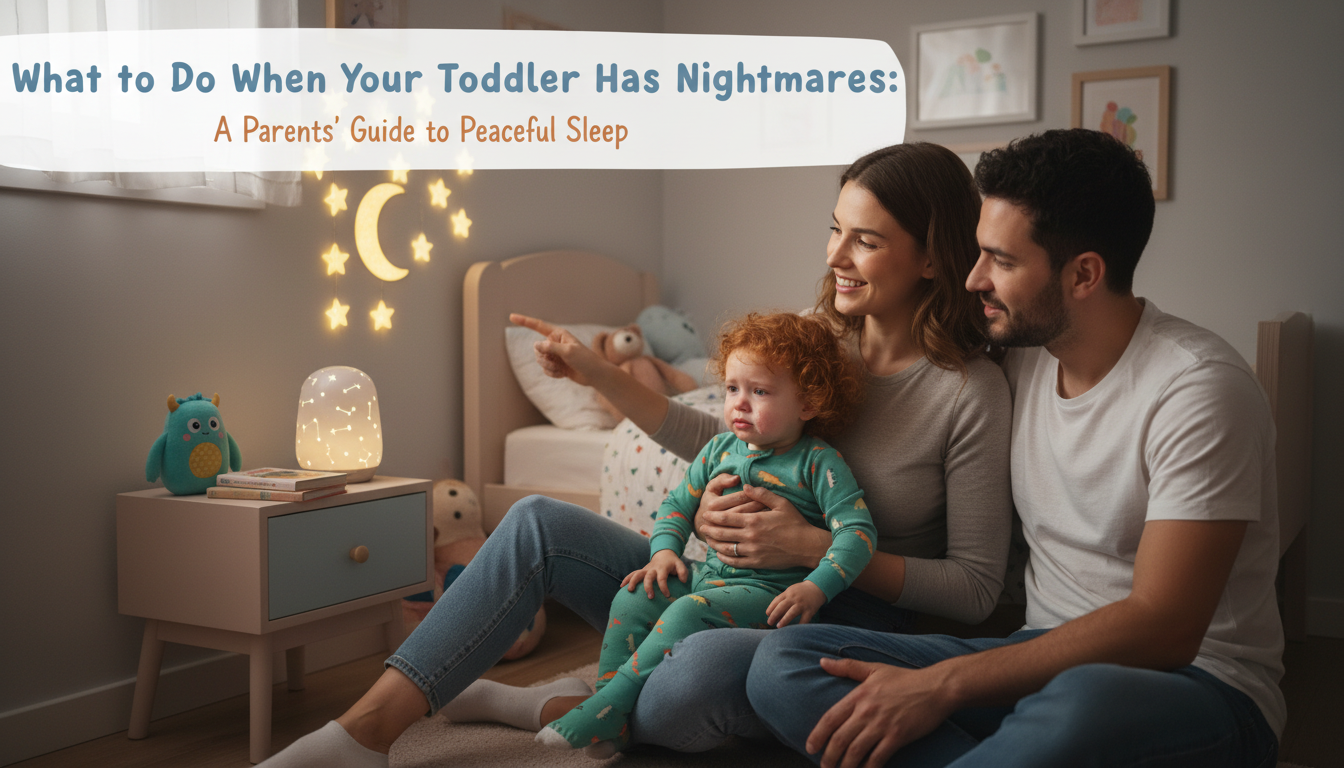
Start by showing up calm and steady. Go to your toddler quickly, get down to their level, and speak softly: “You’re safe. I’m right here.” Keep the lights low so the room still feels like sleep time, but turn on a small night light if they’re frightened of the dark.
Offer simple, grounding comfort before asking questions. Try a brief cuddle, a hand on their back, or a slow rocking motion. Encourage a few easy breaths together: “Let’s take three slow breaths—smell the flower, blow the candle.” If they want to talk, listen without digging for details. If they don’t, that’s fine—focus on safety and settling.
Use short, reassuring phrases that don’t accidentally make the dream feel “real.” Examples: “That was a scary dream. Dreams can feel big, but they can’t hurt you.” “Your body is safe in your bed.” “I’ll stay with you for a little bit while you get cozy again.”
Help them reconnect to the room: “Can you tell me three things you see?” Offer a sip of water, a favorite lovey, or a familiar bedtime cue like a short song. Keep it brief—long playtime or bright screens can signal that waking up is rewarding and make it harder to fall back asleep.
It’s okay to offer comfort, but aim to return to their sleep space once they’re calmer. Sit by the bed for a few minutes, then gradually reduce your presence (chair method) over the next nights if nightmares become frequent.
For more comfort scripts, bedtime tweaks, and common nightmare triggers, read the complete guide here: https://perfectchoiceoutlet.shop/guide-toddler-nightmares-comfort-scripts-bedtime-fixes/.
Nightmares usually happen in the second half of the night and your child can wake up, seek comfort, and remember being scared. Night terrors often involve crying or thrashing while still asleep, and the child is hard to wake and typically won’t remember it in the morning.












Leave a comment