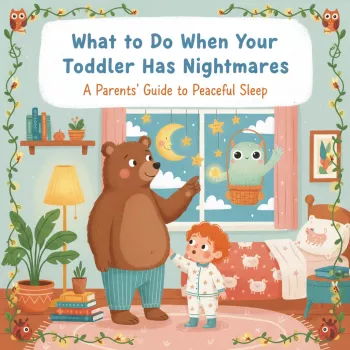
Toddler nightmares can feel sudden and intense—tears, clinging, and repeated wake-ups that leave everyone exhausted. The good news: most nightmares are a normal part of development, and simple, steady responses can help a child feel safe again while reducing how often they happen. Use the steps below to calm the moment, build a reassuring bedtime routine, and know when extra support is needed.
It helps to identify what you’re dealing with, because the “right” response looks different.
For more background on common sleep disruptions, see guidance from the American Academy of Pediatrics (HealthyChildren.org) and the National Sleep Foundation.
When a toddler wakes from a nightmare, the goal is to signal safety without turning the wake-up into a long, bright, chatty event that fully reactivates their nervous system.
| Step | What to say/do | Why it helps |
|---|---|---|
| 1. Reassure | “You’re safe. I’m right here.” | Signals safety and reduces panic |
| 2. Ground | Hand on back, slow breaths, sip of water | Calms the stress response |
| 3. Reset | Short phrase: “Back to bed; I’ll check on you.” | Builds predictability and sleep cues |
| 4. Return | Brief check-in after a few minutes if needed | Supports independence without long wake-ups |
Scripts keep the response steady, especially at 2 a.m. when it’s easy to accidentally add new habits (extra snacks, long conversations, moving into the parents’ bed) that make future wake-ups more likely.
Nightmares don’t always have a single cause, but the pattern often improves when the day sets the stage for a calmer night.
For additional perspective on night terrors (which can be confused with nightmares), the NHS offers an overview that many parents find clarifying.
Occasional nightmares are common, but nightly nightmares for weeks can signal a trigger like overtiredness, stress, illness, media exposure, or an inconsistent routine. Track patterns for 1–2 weeks, and contact your pediatrician if the frequency is persistent, severe, or affects daytime functioning.
Short-term comfort is understandable, but repeated bed-sharing after nightmares can quickly become a learned pattern. When possible, calm your child in their room with a brief cuddle and a consistent script, then help them return to their bed; if separation anxiety is intense, use gradual steps rather than abrupt changes.
Use low light and a soft voice, reassure safety, add gentle touch, and do a quick grounding tool like slow breathing together. Keep questions minimal, then end with a predictable closing phrase to cue sleep and reduce prolonged wake-ups.












Leave a comment