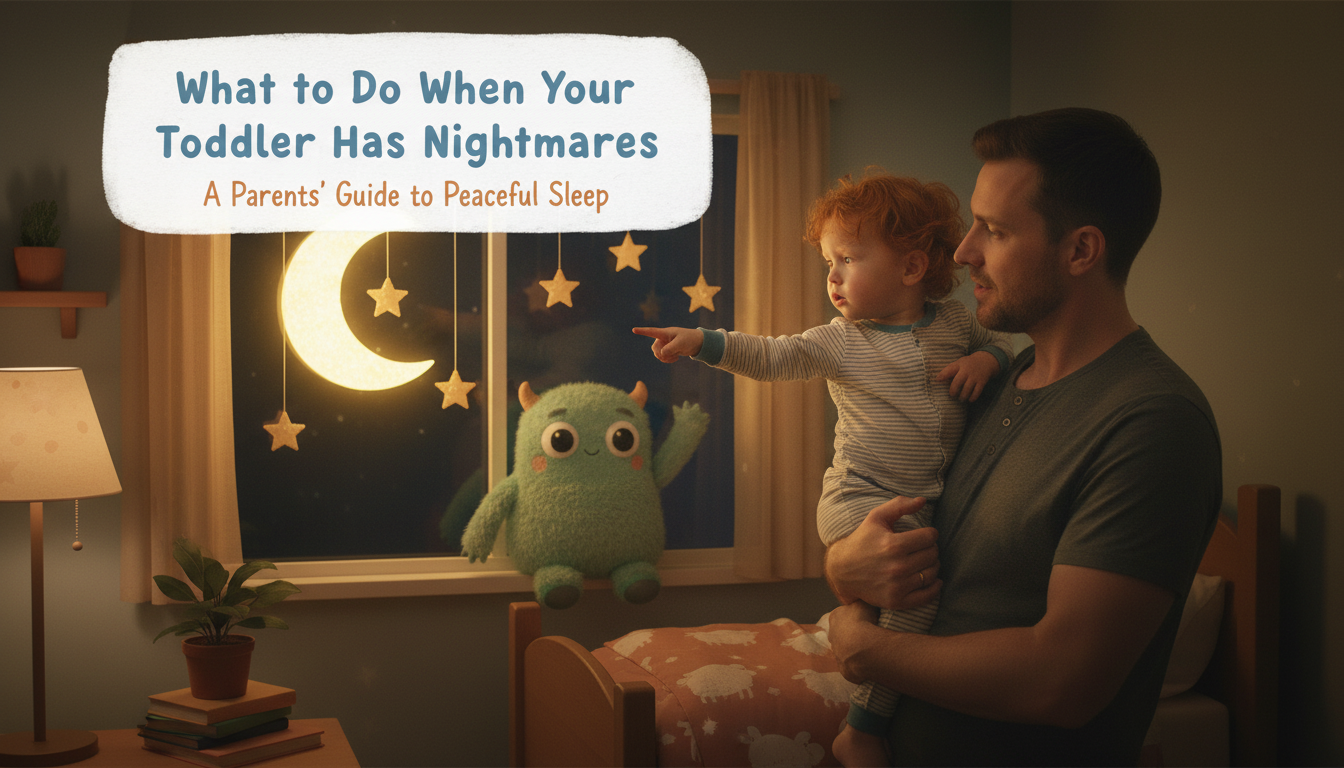
Toddler nightmares are common, especially during big developmental leaps, stressful changes, or after stimulating screen time. While you can’t always prevent them, you can lower how often they happen and help your child feel safe enough to fall back asleep quickly.
A simple, repeatable routine helps your toddler’s brain shift into “safe and sleepy.” Aim for the same order nightly (bath, pajamas, two books, cuddles, lights out) and keep the last 20–30 minutes quiet. If screens are part of your day, try ending them at least 1–2 hours before bed to reduce vivid dreams.
When your toddler calls out, go to them promptly and keep your voice low and steady. Offer a brief comfort script, like: “You’re safe. It was a scary dream. I’m here.” Then help them settle with a quick hug, a sip of water if needed, and guide them back to lying down. Avoid long conversations, bright lights, or moving them to your bed if you’re trying to prevent a new habit from forming.
During the day, name feelings and practice simple coping: a “brave breath” (inhale, exhale slowly), choosing a comfort object, or “closing the dream door” with an imaginary key. Some toddlers do well with a small night light, a familiar scent, or checking the room together before sleep.
Nightmares can increase with overtiredness, irregular naps, illness, new childcare, family travel, or scary media (even “kids” shows). Try an earlier bedtime for a week and note whether nightmares drop. If nightmares are frequent and intense, or sleep becomes a nightly struggle, ask your pediatrician for guidance.
For more practical comfort scripts and bedtime fixes, read the full guide here: https://perfectchoiceoutlet.shop/guide-toddler-nightmares-comfort-scripts-bedtime-fixes/.
Nightmares happen in the second half of the night and your child usually wakes fully and wants comfort. Night terrors often happen earlier in the night, and kids may scream or look awake but are hard to console and don’t remember it in the morning.












Leave a comment