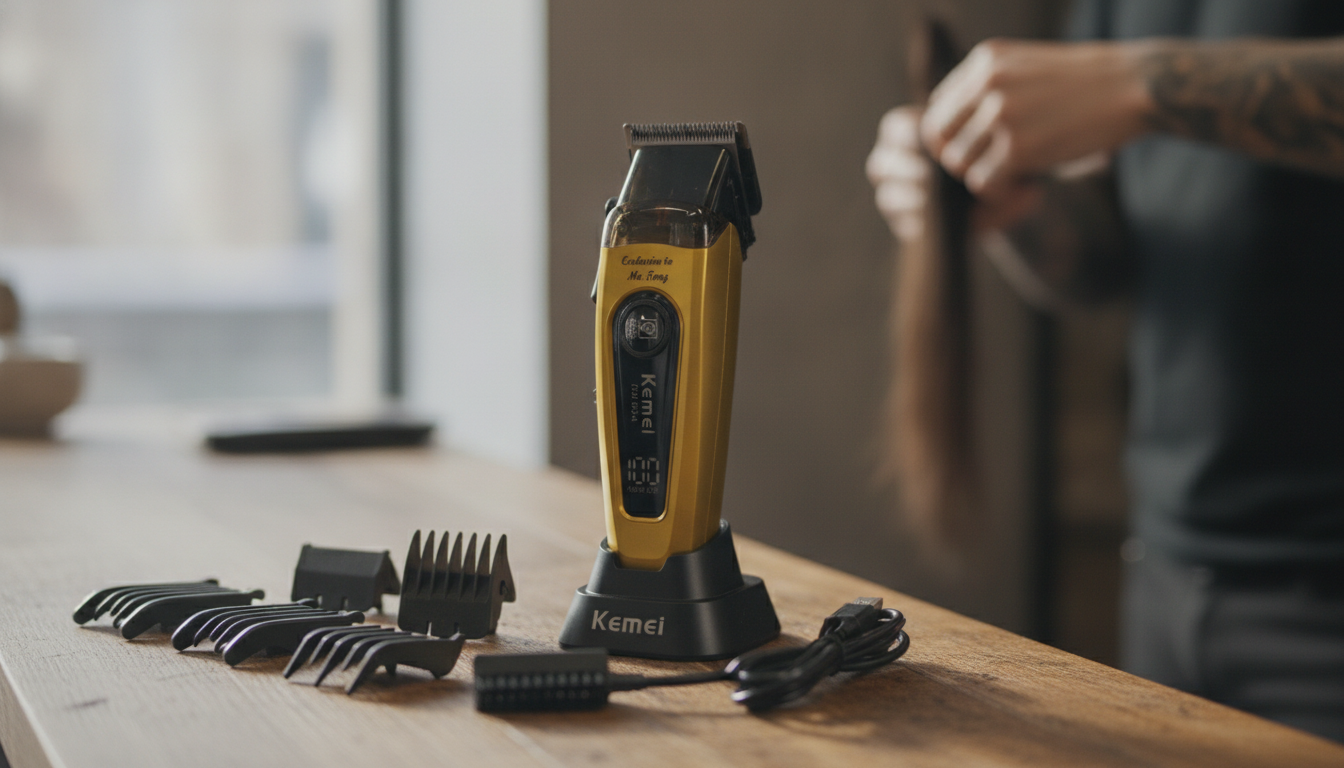
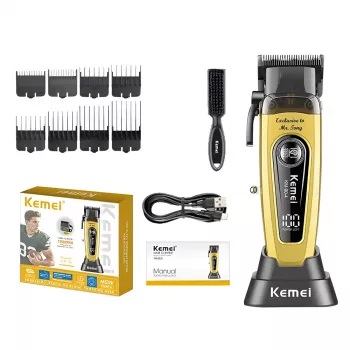
Fast, clean fades and consistent bulk cutting depend on two things: a motor that doesn’t bog down and a blade that stays smooth against the skin. These cordless clippers pair an 11500RPM brushless motor with a DLC-coated blade to help deliver quick, even passes on different hair types—without the drag and heat build-up that can come with slower, worn blades. For more guidance, see Issue 4 – Volume 7 – Engineering Research Express.
The result is a clipper setup that feels more “always ready,” whether you’re maintaining a taper every week, cleaning up sideburns between barbershop visits, or doing full cuts at home for the family. For further reading, see About the cover.
Two design choices do most of the heavy lifting here: the brushless motor (for efficient power delivery) and the DLC blade coating (for lower friction and longer-lasting surface hardness). For background on DLC as a material, see ScienceDirect’s overview of diamond-like carbon. For general context on how electric motors operate, Encyclopaedia Britannica’s electric motor reference is a helpful primer.
Core features are centered on speed (RPM), efficiency (brushless motor), and blade durability (DLC). Use the spec table to compare against current clippers and decide if the upgrade is meaningful for your routine.
| Spec | Details |
|---|---|
| Motor type | Brushless |
| Motor speed | 11500 RPM |
| Blade | DLC-coated blade |
| Power | Cordless |
| Best for | Fast bulk cutting, fades, tapering, at-home maintenance |
| Included runtime/charging details | Not specified on listing snippet |
Motor speed isn’t everything, but higher RPM can make a practical difference when hair is dense, coarse, or fast-growing. With more cutting action happening per second, you can often clear bulk with fewer repeated passes—especially helpful on the crown and parietal ridge where growth patterns fight you.
Brushless motors are generally designed to run efficiently with less internal friction than brushed designs. In real-world trimming, that can show up as steadier torque during “loaded” moments: transitioning from longer lengths into tighter fade zones, or powering through a thick guard cut without the clipper sounding strained. The consistency also helps when clipper-over-comb work requires quick, repeated contact—speed stays predictable, so your blending rhythm stays cleaner.
DLC (diamond-like carbon) coatings are commonly used to improve surface hardness and reduce friction on moving parts. On clippers, lower friction can translate into a smoother feel on the scalp and less drag in thick hair. It’s the kind of upgrade you notice most when you’re moving quickly: fewer “sticky” moments and less temptation to press harder, which is where irritation often starts.
Wear resistance matters for cut quality over time. A blade that maintains a cleaner edge longer tends to keep lines crisp and reduces pulling, particularly around sensitive areas like the neckline. Even with a coating, basic care still makes or breaks the experience: hair dust buildup can dull performance, add heat, and make a good blade feel average.
Cordless clippers simplify positioning around the ears, neckline, and occipital area without cable pull. That freedom is a big deal for self-cuts, where mirror angles, hand switching, and awkward wrist positions can turn a quick cleanup into a frustrating session.
For fades, the cordless format makes it easier to keep the clipper flat and consistent while you “flick out” at the blend line. Pair the clipper with quality guards, keep the blade clean, and use a light touch—if hair starts to skip, it’s often a sign that the blade needs brushing out or a small drop of oil.
High-speed clippers can feel smoother when the blade stays cool and hair clears quickly from the cutting path. Brushless designs often aim for efficient operation, which can help limit unnecessary heat buildup, particularly during longer sessions like full cuts, beard blending, or multi-person use.
If the blade starts to feel warm, pause briefly, brush out hair fragments, and re-oil lightly. For sensitive skin, reduce pressure and make more controlled, shorter passes around the neckline—fast clippers don’t need to be forced.
Yes—higher RPM can reduce snagging and cut bulk with fewer passes, especially on dense or coarse hair. Technique still matters, and clean, lightly oiled blades plus solid guards will make a bigger difference than speed alone when hair is skipping.
DLC stands for diamond-like carbon, a coating used to increase surface hardness and reduce friction. On clippers, that can mean smoother glide, less drag in thick hair, and better wear resistance—though regular cleaning and oiling are still essential.
Brush out the blade after every use, and add a small drop of oil before or after sessions (or both if you’re cutting for a while). Do a deeper clean periodically when buildup becomes visible, and avoid over-oiling since excess oil can attract dust and hair fragments.










Leave a comment