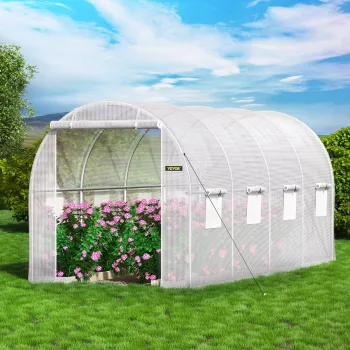
A walk-in tunnel greenhouse is a practical way to add protected growing space without committing to a permanent structure. With a roomy 15x7x7 ft footprint, this portable hot house supports season extension, seed starting, and daily plant care while shielding crops from wind, driving rain, and light frost. The walk-in height also makes routine tasks—watering, pruning, trellising, and harvesting—far more comfortable than working in low mini-greenhouses.
Tunnel-style greenhouses (often similar to “high tunnels” in concept) create a calmer microclimate than open garden beds. That can mean earlier starts in spring, longer harvests in fall, and fewer losses from sudden weather swings.
For climate planning, it helps to know your growing zone and typical last/first frost dates. The USDA Plant Hardiness Zone Map is a dependable reference point when deciding how aggressive you can be with early starts and late finishes.
Before assembly, a little measuring prevents the most common tunnel-greenhouse frustrations: struggling to tension the cover, doors that don’t align well, and anchors that loosen after the first windy day.
| Item to measure | What to look for | Why it matters |
|---|---|---|
| Available ground length | At least 16–18 ft clear | Extra room simplifies anchoring and cover tensioning |
| Available ground width | At least 8–10 ft clear | Helps with airflow, mowing, and access to tie-downs |
| Sunlight hours | 6+ hours preferred | Improves growth and reduces damp conditions |
| Wind exposure | Sheltered if possible | Prevents cover flapping and frame stress |
A waterproof cover helps keep foliage drier during storms and can prevent soil from splashing onto leaves—useful for crops that dislike persistent wetness. The tradeoff is that a covered tunnel can trap heat and humidity quickly, so ventilation becomes your daily “climate control.” Practical greenhouse management guidance from university extensions can help you set routines that prevent condensation and temperature spikes (see UMass Extension greenhouse resources).
If you’re growing in containers, leave some open space between pots and avoid packing every inch. A slightly “less full” greenhouse often produces healthier plants because airflow can do its job.
Portable tunnels do best when they’re treated like a seasonal structure that still deserves serious anchoring. Many tunnel failures come from underestimating wind uplift and cover flapping.
For a deeper look at how tunnels behave in real-world conditions (wind, temperature swings, crop scheduling), the practical notes in Penn State Extension’s high tunnel resources are a helpful reference.
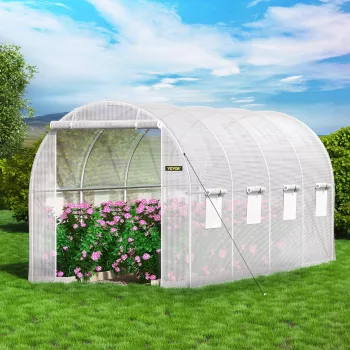
If you want an accessible, backyard-friendly tunnel for seasonal growing, Walk-in Tunnel Greenhouse 15x7x7 ft – Portable Plant Hot House with Waterproof Cover offers walk-in comfort, a tunnel profile suited to season extension, and a waterproof cover that helps protect plants during heavy rain.
| Feature | What it means for daily use |
|---|---|
| 15x7x7 ft size | Space for multiple rows of plants with a workable center aisle |
| Walk-in access | Less bending and simpler tray handling than mini greenhouses |
| Waterproof cover | Better rain protection and a more controlled growing space |
| Portable tunnel format | Flexible placement and easier seasonal adjustments |
If your greenhouse setup is part of a broader backyard routine, a durable cooking surface can be a nice complement for weekend grilling. The Reversible Pre-Seasoned Cast Iron Griddle with Non-Stick Surface for BBQ and Cooking is an easy upgrade for burgers, veggies, and breakfast-style cooks on a grill.
It can in many climates if it is well-anchored and checked regularly, but strong winds, heavy snow/ice loads, and UV exposure can shorten cover life. In harsher winters, removing the cover or taking the structure down can reduce risk.
Vent early on sunny days, open doors/vents for cross-breeze, space plants for airflow, and consider shade cloth during heat waves. Monitoring temperatures midday helps prevent heat stress.
Common options include weed barrier fabric with gravel, pavers for a walkway, or bare soil for in-ground beds. The best choice depends on drainage, mud control, and whether the space is used for pots, beds, or both.










Leave a comment