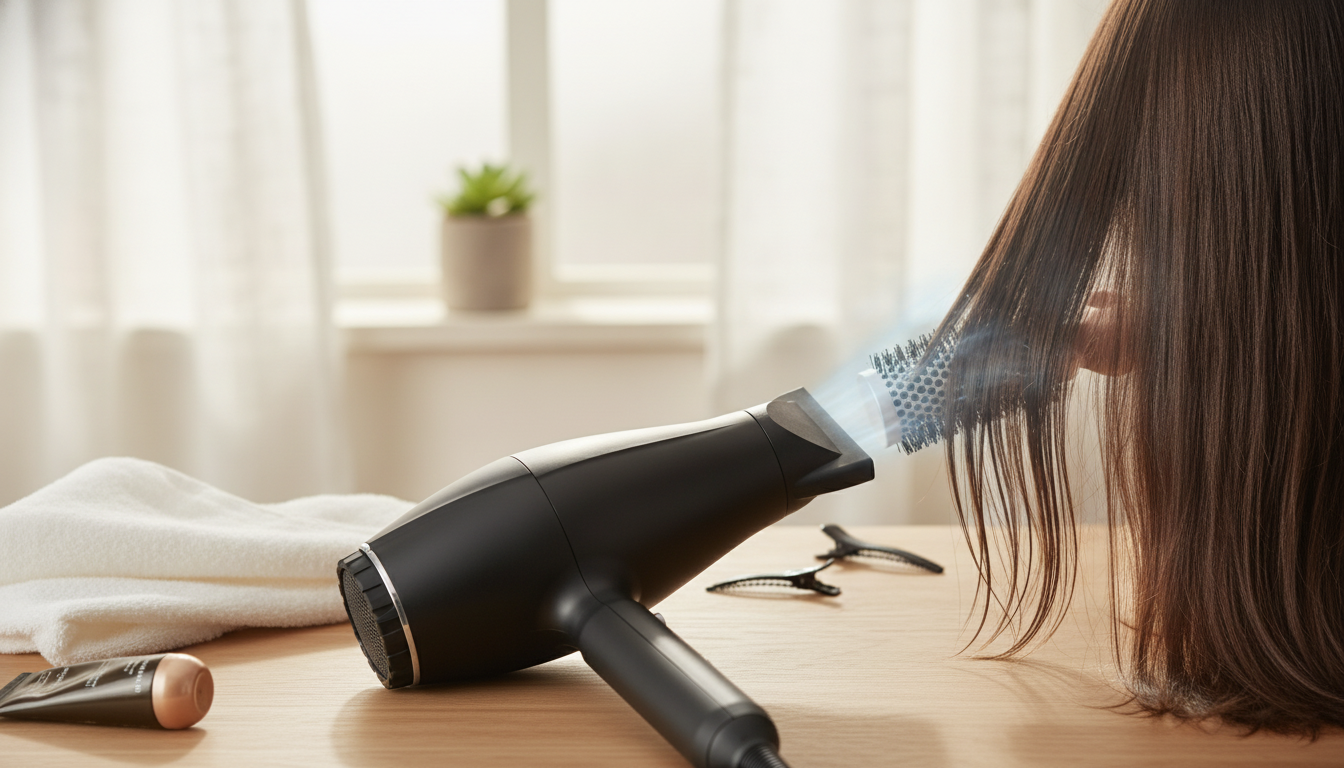
Fast drying, smoother finishes, and more control over heat can make everyday styling easier—especially for thick, frizzy, or color-treated hair. A high-wattage dryer that combines ionic technology with adjustable heat and airflow gives more flexibility for everything from sleek blowouts to quick rough-drying on busy mornings. If the goal is less static, more shine, and a finish that looks polished without spending forever in front of the mirror, a 2200W option is built for that kind of routine.
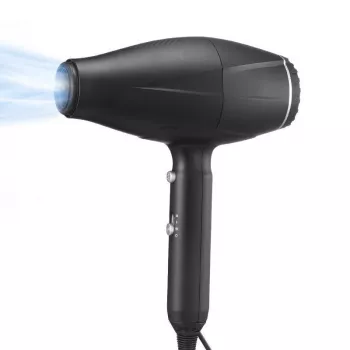
If you’re shopping for a practical, high-power pick, the 2200W Professional Hair Dryer with Ionic Technology & Adjustable Heat Settings is positioned as a straightforward upgrade from lower-wattage dryers that struggle with dense, long, or humidity-prone hair.
Ionic hair dryers are designed to emit negative ions that can help reduce static buildup—the “halo frizz” effect that shows up as flyaways around the crown and hairline, especially in dry weather or when hair is dehydrated. In day-to-day use, the biggest difference many people notice is that hair is easier to control with a brush and looks smoother as it dries.
For general hair health and breakage prevention, it also helps to follow evidence-based care habits like minimizing excessive heat and using gentle detangling techniques. The American Academy of Dermatology Association’s hair care tips are a solid reference for keeping hair and scalp comfortable when styling frequently.
Heat control is where styling gets personal. The most protective routine usually relies on airflow for speed and reserves high heat for the earliest stage—when hair is very wet—then steps down as hair becomes damp-to-dry. That approach can limit overdrying and improve softness at the ends.
| Hair type/condition | Suggested heat | Suggested airflow | Finish |
|---|---|---|---|
| Fine, straight | Low–Medium | Medium | Cool shot to set |
| Thick, straight/wavy | Medium–High | High | Cool shot + smoothing brush |
| Curly (2C–3C) | Medium | Medium | Cool shot + diffuser technique if available |
| Coily (4A–4C) | Low–Medium | Medium | Cool shot + gentle tension drying |
| Color-treated/bleached | Low–Medium | Medium | Cool shot + serum on ends |
A higher wattage hair dryer typically supports stronger airflow and reliable heat output, which can reduce the time hair stays wet. That matters because the “best” way to limit heat stress is often to shorten the overall session and avoid lingering in one spot.
Hair science is nuanced and outcomes vary by hair condition, product use, and technique; for readers who like digging deeper into published research, PubMed is a dependable database for peer-reviewed dermatology and cosmetic science literature.
Towel-blot (don’t rub), apply a heat protectant, then use medium heat and higher airflow until hair is roughly 80–90% dry. Reduce heat for the last stretch so the ends don’t get overdried.
To keep the routine comfortable (especially after hot styling), a quick cool-down can feel refreshing. Some people like pairing hair styling with a brief facial de-puff step using the Ice Roller for Face & Eyes – Skin Tightening Facial Massage Tool—particularly around the eyes and jawline after a warm shower and blow-dry.
It can help by reducing static and encouraging hair to lie flatter while drying, which often looks smoother and less puffy. Results vary with hair damage and technique, so finishing with cool air and adding a small amount of light serum on the ends can improve consistency.
Start with lower heat (especially for fine, bleached, or color-treated hair), and use higher heat only when hair is very wet—then step down as it dries. Keep the dryer moving and use heat protectant to reduce overdrying and breakage risk.
Often, yes—higher wattage typically supports stronger airflow and stable heat output, which can shorten total drying time. Faster drying may reduce overall heat exposure, especially when you section hair and aim airflow downward for efficiency.








Leave a comment