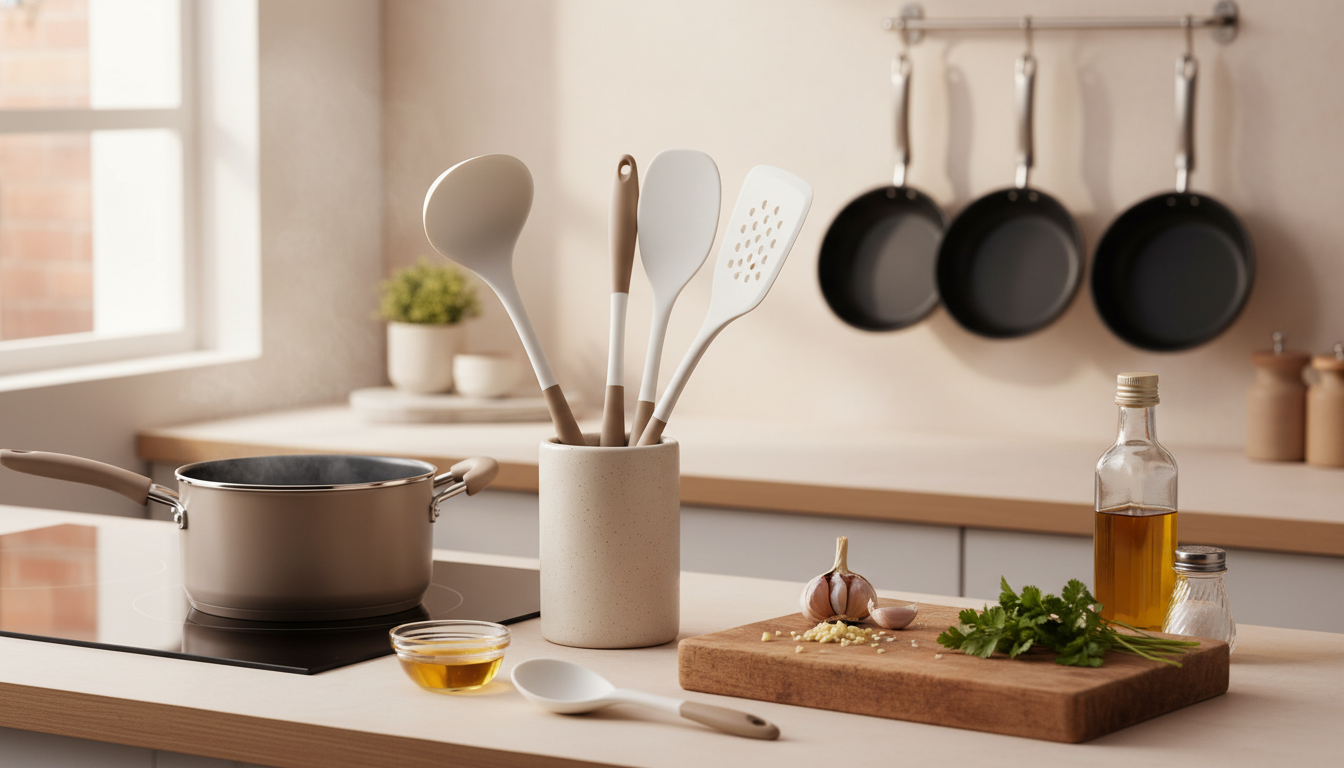
A compact silicone utensil set covers the everyday tasks that can wear down non-stick pans: stirring, flipping, scraping, and serving. With soft, pan-safe edges and easy-to-clean surfaces, a 4-piece kit can simplify cooking while helping non-stick coatings last longer—especially in small kitchens or for quick weeknight meals.
A small utensil set earns its keep when it matches the moves you repeat most often. Instead of storing a drawer full of specialty tools, a focused 4-piece lineup can cover the basics with less clutter.
Non-stick cookware performs best when the coating stays smooth and intact. Silicone utensils are popular for coated pans because the contact surface is soft and forgiving while still being functional for daily cooking.
For general food-contact guidance and safe kitchen practices, it can help to reference authoritative resources like the U.S. Food & Drug Administration (FDA) on food-contact substances and the USDA Food Safety and Inspection Service.
Utensil material should match your pan type, cooking style, and how close the tool will get to high heat near the burner. With non-stick cookware, a softer contact surface is usually the safest choice, but handle comfort and rigidity still matter—too-flexible tools can make flipping and lifting harder.
| Material | Non-stick friendly | Strengths | Watch-outs |
|---|---|---|---|
| Silicone | Yes | Gentle on coatings; flexible scraping; typically dishwasher-safe | Avoid prolonged contact with very hot pan edges; inspect for tears over time |
| Nylon | Yes | Lightweight; affordable; common in starter sets | Can warp or soften at high heat; edges may nick with heavy use |
| Wood/Bamboo | Usually | Naturally gentle; good grip; classic feel | Can absorb odors/stains; may crack if soaked; needs thorough drying |
| Stainless steel | No (for non-stick) | Very durable; great for searing and deglazing on stainless/cast iron | Can scratch non-stick coatings; can be noisy and harsh on pans |
When you use the same few tools every day, the “little” design choices start to matter. The right balance of grip, stiffness, and head shape can make cooking feel smoother and more predictable.
Silicone is generally low-maintenance, but a few habits keep it looking and smelling fresh—especially if you cook with oils, tomato-based sauces, or deeply colored spices.
A 4-piece silicone set shines when it’s asked to do the work non-stick pans are most often used for—fast, everyday cooking with easy cleanup.
Yes—silicone utensils are generally gentle on non-stick surfaces and help reduce scratching compared with metal. Use tools as intended, avoid damaged or sharp-edged utensils, and replace any piece that’s torn or peeling so it doesn’t scrape or trap residue.
Wash them promptly with warm, soapy water using a non-abrasive sponge, especially after oily foods or strongly colored sauces. If using a dishwasher, position utensils so the silicone heads aren’t pressed against hot drying areas, and let them dry fully before storing.
Many silicone utensils are designed for cooking temperatures, but heat tolerance varies by product. Avoid prolonged contact with very hot pan rims or open flames, and don’t leave utensils resting in a hot pan for extended periods.












Leave a comment