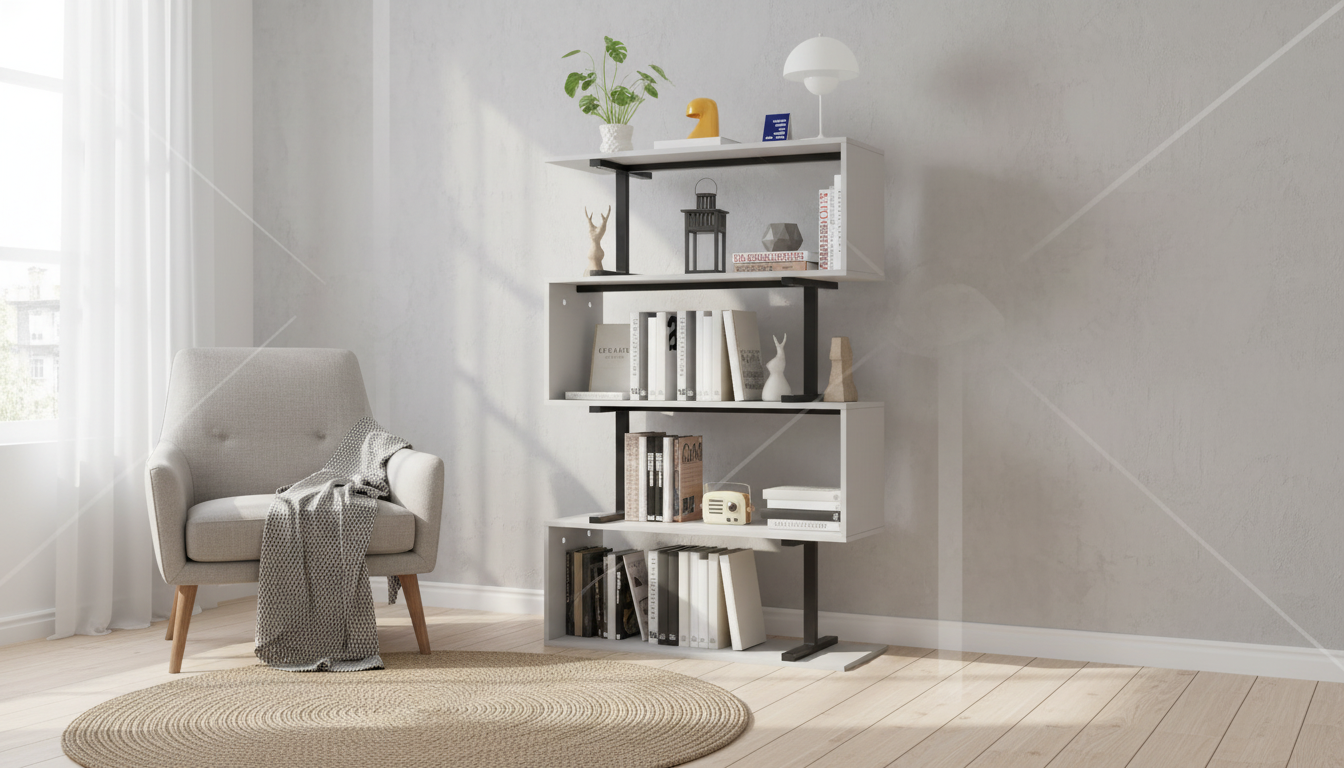
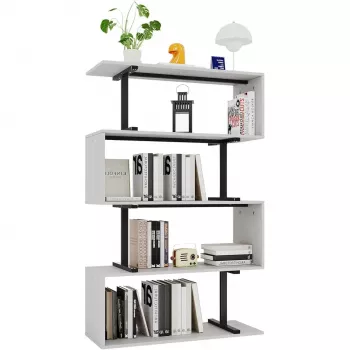
A Z-shaped bookshelf brings a bold silhouette while keeping everyday storage practical. With five staggered tiers, it can display books, plants, and decor without the heavy look of a traditional bookcase—making it a smart option for apartments, home offices, and living rooms that need vertical organization with a modern edge.
Unlike standard rectangular bookcases, a Z-shaped shelf uses offset tiers that create a step-like profile. That simple change has a big impact on how the piece feels in a room—especially when space is tight.
If a traditional bookcase reads “heavy” in a small room, a Z-frame tends to look more sculptural—almost like functional decor that also happens to hold your everyday items.
A great-looking shelf is only great if it fits your space and your routine. Before checking out, confirm the details that affect daily use and long-term stability.
| Room | Best Uses | Placement Tips |
|---|---|---|
| Living room | Books, plants, sculpture, baskets | Place near seating; keep heavier items on lower tiers for stability |
| Home office | Reference books, binders, organizers | Position beside a desk; leave one shelf for daily-access items |
| Bedroom | Nightstand alternative, decor, small storage bins | Avoid blocking closet doors; use soft lighting nearby |
| Entryway | Drop zone baskets, small decor | Keep upper shelves minimal to reduce accidental bumps |
| Kids’ space | Picture books, toy bins | Anchor to wall; keep climbable items off top shelves |
When a room needs storage but can’t handle visual bulk, a staggered, open shelf is a clean solution. The 5-Tier Z-Shaped Bookshelf is designed for exactly that: vertical organization with a modern profile that doesn’t overpower your layout.
A practical way to use the tiers is to treat the bottom shelves as “workhorse” storage (hardcovers, bins, heavier planters) and reserve the upper shelves for lighter decor that adds personality without increasing tip risk.
Open shelving looks best when it feels curated rather than crammed. A few repeatable rules make styling easier—and faster to reset when life gets messy.
If you like a “styled but livable” look, consider planning your decor in mini-zones (one shelf for books, one for greenery, one for baskets). For more guided styling ideas—especially if you enjoy coordinating color and texture—pairing the shelf with a resource like the Smart Styling System for Warm Tablescape Ideas – 5-in-1 Digital Bundle can help you build consistent, repeatable arrangements that don’t feel random.
Any tall, climbable, or top-heavy furniture should be treated like a safety item—not just a decor choice. The goal is simple: reduce tip-over risk and keep the shelf steady in real daily traffic.
For broader guidance on tip-over prevention, review the U.S. Consumer Product Safety Commission’s resources on furniture tip-over safety and learn about the ASTM F2057 tipover safety standard used for certain clothing storage units.
It can, as long as weight is distributed thoughtfully. Place heavier books on the lowest tiers, avoid overloading a single shelf, and confirm the shelf’s stated weight limits if provided.
Anchoring is strongly recommended for tall furniture, especially in homes with children or pets. It improves stability and helps reduce tip-over risk.
Use a mix of vertical and horizontal books, repeat a few consistent colors/materials, group decor in odd numbers, and leave some empty space on each tier.








Leave a comment