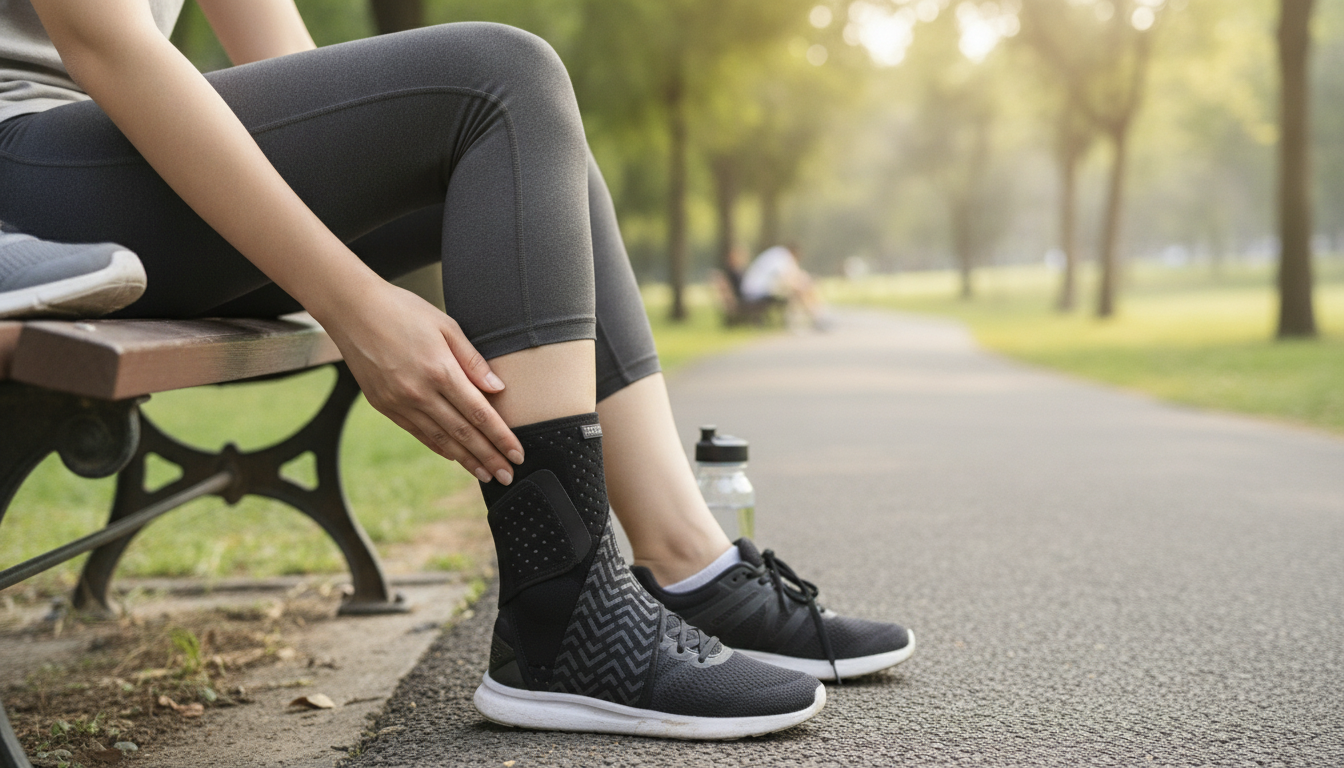
An adjustable ankle wrap that targets the Achilles and surrounding structures can reduce irritation from overuse, add stability after a twist or sprain, and make walking or standing feel more supported. This guide covers who it helps, how to wear it, and what to look for when using an ankle wrap for pain relief and everyday movement.
The Achilles tendon and ankle joint work together every time the foot pushes off the ground. When the area is sore, swollen, or feeling unstable, a wrap-style support can make movement feel more controlled without fully “locking” the ankle.
An ankle wrap is often chosen when the goal is steady, wearable support—something that’s easy to adjust and simple to use at home, at work, or during light training.
Compression is most helpful when it’s consistent and comfortable—not cranked as tight as possible. A wrap’s main advantage is that it can be dialed up or down based on how the ankle feels that day.
A good fit should feel secure and predictable, without pinching or circulation issues. Use this quick check to start safely.
Small adjustments in placement can change how the wrap feels. Take an extra minute at the start so the support lands where you want it.
| Option | Best for | Adjustability | Typical feel in shoes |
|---|---|---|---|
| Adjustable wrap | Targeted Achilles/ankle support, variable swelling | High | Moderate bulk (varies by shoe) |
| Compression sleeve | Light support, everyday wear, mild soreness | Low | Low bulk |
| Rigid brace | Higher instability, significant sprains (as advised) | Medium | Higher bulk |
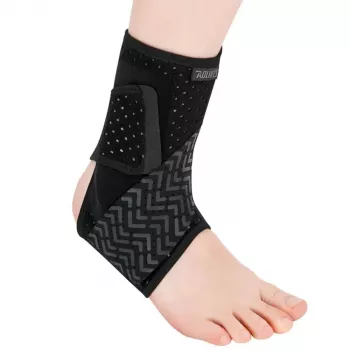
If adjustable, targeted support is the priority, the Adjustable Achilles Tendon & Ankle Support Wrap is designed to provide supportive compression for sprains, plantar fasciitis discomfort, and everyday stability needs. It’s a budget-friendly option for adding support during walking, standing, workouts, or recovery routines—especially when swelling or soreness fluctuates throughout the day.
For a simple add-on to a recovery routine after long days on your feet, the Ice Roller for Face & Eyes can also be repurposed for gentle, localized cooling along the lower leg (avoiding direct pressure on highly tender spots). Always keep cooling sessions brief and use a barrier (like a thin cloth) if you’re sensitive to cold.
It can help by improving overall ankle/foot stability and reducing strain during walking, especially when paired with supportive shoes and a consistent stretching routine. If pain persists or worsens, getting evaluated helps rule out other causes and guides a better plan.
Snug and supportive is the goal—never tight enough to cause numbness, tingling, or color changes in the toes. Re-check the fit after 5–10 minutes of movement and loosen if any symptoms show up.
Many people can, but it’s smarter to start with short sessions and build up while watching for skin irritation or pressure spots. If you have circulation concerns, diabetes, or significant swelling, ask a clinician for individualized guidance.








Leave a comment