Negotiating a job offer can feel high-stakes, especially when decisions need to be made quickly and every word matters. Using AI as a planning and drafting partner helps organize priorities, benchmark compensation elements, and practice confident language—without losing authenticity. This guide centers on a repeatable workflow for evaluating an offer, building a negotiation plan, and communicating clearly across email and live conversations.
AI is most useful when it reduces friction: turning messy notes into clear asks, rehearsing tough conversations, and helping you stay consistent. It’s less useful when you treat it as a source of truth or a substitute for judgment.
| Stage | AI Helps With | What to Double-Check |
|---|---|---|
| Offer review | Summarizing compensation components and identifying gaps | Accuracy of numbers, benefits, and timelines |
| Strategy | Prioritizing asks and mapping concessions | What is realistic for the role/level/market |
| Drafting messages | Email wording, counteroffer structure, subject lines | Tone, professionalism, and alignment with company culture |
| Live negotiation prep | Role-play objections and concise talking points | Confidence, clarity, and consistency with your priorities |
For deeper context on compensation components beyond salary, the U.S. Bureau of Labor Statistics offers a helpful overview of total employee compensation: https://www.bls.gov/ncs/ect/. For negotiation principles and framing, Harvard Business Review’s negotiation topic hub is a strong starting point: https://hbr.org/topic/negotiation.
Strong negotiations start before any message is sent. The goal is to decide what would materially change the offer for you—and how you’ll keep the discussion focused.
A practical way to stay grounded is to write your “trade-off rules” in plain English (for example: “If base can’t move, I’ll prioritize sign-on and an earlier comp review” or “If level/title changes, I can accept slightly less upfront cash because the long-term band is higher”). That prevents emotional, in-the-moment concessions that don’t match what you actually value.
When you treat AI like a teammate for organization and rehearsal (not a data vault), it becomes a repeatable system you can use across roles and industries.
For a safety mindset around tools and data handling, it’s worth skimming NIST’s AI Risk Management Framework for general guidance on identifying and reducing AI-related risks: https://www.nist.gov/itl/ai-risk-management-framework.
| Component | Purpose | Example (Adapt as Needed) |
|---|---|---|
| Appreciation | Maintain goodwill | “Thank you for the offer—I’m excited about the opportunity.” |
| Alignment | Reinforce fit and intent | “The role aligns strongly with my experience in X and Y.” |
| Request | Make the ask explicit | “Is there flexibility on base salary to reach $___?” |
| Rationale | Ground the ask | “Given the scope and market range for this level…” |
| Options | Enable a yes | “If base can’t move, could we consider a sign-on bonus and a 6-month review?” |
| Next step | Keep momentum | “Happy to discuss on a quick call tomorrow.” |
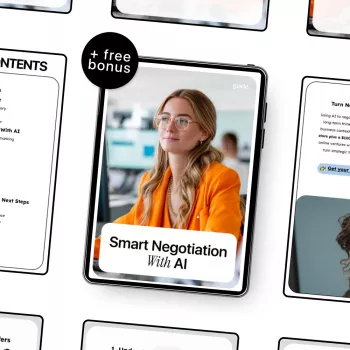
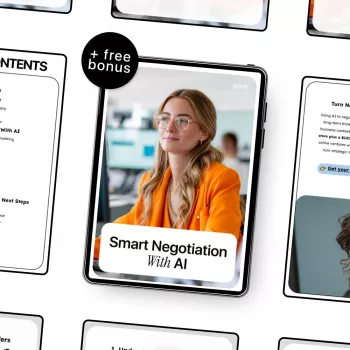
If you want a structured, reusable system (instead of starting from scratch each time), Smart Negotiation With AI (digital download) is built as a practical, step-by-step guide for preparing, drafting, and practicing negotiation conversations.
If you also like having other digital frameworks on hand for planning and organization, consider pairing it with Smart Styling System for Warm Tablescape Ideas – 5-in-1 Digital Bundle as a separate, creativity-focused download you can reuse for hosting and seasonal planning.
| Item | Details |
|---|---|
| Format | Digital download |
| Focus | Job offer negotiation using AI |
| Price | $10.99 USD |
| Availability | In stock |
It can be, as long as you redact personal identifiers and confidential company details and use AI mainly for structure, drafting, and practice. Keep sensitive specifics in a private document and make final decisions yourself.
Common levers include base salary, sign-on bonus, equity/RSUs and vesting terms, title/level, start date, PTO, remote/hybrid flexibility, learning budget, relocation support, and the timeline for review or comp refresh. What’s flexible depends on the company and the role level.
Yes—AI can role-play as a recruiter or hiring manager, generate concise talking points, and help you practice objection-handling so you don’t freeze in the moment. After the call, it can also help draft a clear recap email to confirm what was discussed.












Leave a comment