
AI can accelerate job-search writing and practice when it’s guided with clear context, firm constraints, and real examples. The goal isn’t to hand over your candidacy to a tool—it’s to reduce blank-page time, create stronger first drafts, and help you rehearse answers until they sound natural. With the right workflow, you can move faster while keeping every claim truthful and every sentence aligned with how you actually speak.
Better inputs lead to better outputs. Before you draft anything, define what you’re aiming at and gather proof that you can do it.
High-quality drafts come from structured instructions—not from hoping the tool guesses correctly.
Resumes improve fastest when you generate options, then curate and tighten. Start wide, then compress.
| Task | What to provide | What to ask for | Quality check before sending |
|---|---|---|---|
| Resume bullets | Past roles + 3–5 wins per role + job posting | Achievement bullets mapped to requirements; 2 tone options | Metrics plausible; verbs specific; no duplicated phrases |
| Cover letter | Top 3 requirements + 2 matching stories + company context | One-page letter with a strong opening and a tight closing | Specific to company; no generic compliments; matches resume facts |
| Interview practice | Job posting + your fact sheet + projects | Question set + model answers + follow-up questions | Answers show tradeoffs; examples match resume; concise structure |
A good cover letter reads like a tailored business case, not a biography. Aim for specificity and restraint.
Interview prep gets dramatically better when practice mirrors the real conversation: specific questions, pressure-tested examples, and thoughtful follow-ups.
For additional baseline guidance on interview readiness, LinkedIn’s interview preparation resources can be a helpful cross-check for fundamentals like research and practice cadence: https://www.linkedin.com/help/linkedin/answer/a507582.
For a practical perspective on managing AI-related risks, the NIST AI Risk Management Framework is a useful reference: https://www.nist.gov/itl/ai-risk-management-framework. For role research and expectations by occupation, the U.S. Bureau of Labor Statistics Occupational Outlook Handbook is a reliable starting point: https://www.bls.gov/ooh/.
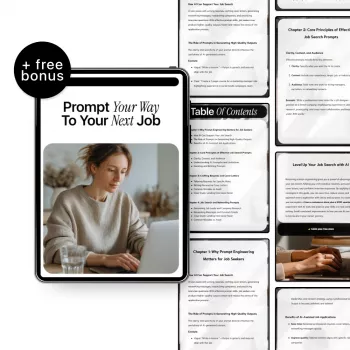
If you want an organized set of methods you can reuse for each application, consider the Prompt Your Way to Your Next Job – Practical Prompt Engineering Tips for Job Seekers | AI Resume, Cover Letter & Interview eBook, designed to help you move from scattered notes to polished materials with a repeatable system.
For stress management during heavy application weeks, some candidates also build a simple “prep routine” before practice sessions. A small tool like the Ice Roller for Face & Eyes – Skin Tightening Facial Massage Tool can be an easy add-on for a quick reset before mock interviews.
Yes—when you provide a fact sheet, a specific job posting, and a couple of examples of your voice, then edit the draft to verify every metric, remove filler, and ensure the tone matches how you actually communicate.
It can generate posting-specific questions, realistic follow-ups, and concise answer drafts tied to your real projects, allowing you to practice tradeoffs and outcomes instead of memorizing vague talking points.
Anything invented or unverifiable: credentials you don’t have, roles you didn’t do, inflated metrics, sensitive personal identifiers, or proprietary employer/client information that you’re not permitted to share.










Leave a comment