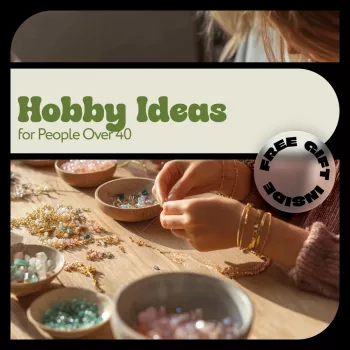
After 40, a hobby often stops being a “nice extra” and starts feeling like a practical tool for living well. You’ve likely learned what drains you, what restores you, and which obligations deserve your best energy. The right hobby can become a steady place to return to—especially during career shifts, caregiving seasons, or empty-nest transitions.
One reason hobbies land differently now is that they create a “chosen challenge.” You get the satisfaction of learning and improving without the high stakes of work performance. Over time, that steady practice can support mood, sleep quality, and stress resilience by adding routine and a sense of mastery. The National Institute on Aging notes that participating in enjoyable activities can support overall well-being, and even small, consistent choices can make a noticeable difference.
Social hobbies matter too. They provide community without the pressure of formal networking—just shared interest, light commitment, and something concrete to do together. When stress is high, it also helps to remember that chronic stress affects the body in measurable ways, as summarized by the American Psychological Association.
Start with constraints first—then get inspired. A hobby fits best when it respects your current life rather than competing with it.
Next, pick a “fuel type” based on what you need most right now:
Finally, choose a first step that takes 30–60 minutes and can be repeated next week. Avoid all-or-nothing launches; consistency is the win.
If you’re not sure what to pick, start by browsing categories and noticing what you’re naturally drawn to.
| Goal | Low-cost starter hobby | Time needed | Best for |
|---|---|---|---|
| Reduce stress | Guided journaling + evening tea ritual | 15–30 min/day | Busy schedules, high stress |
| Build strength | Beginner bodyweight routine | 20–40 min, 3x/week | Energy and mobility |
| Meet people | Local walking group or class | 60–90 min/week | New city, life transitions |
| Create something | Sketching or watercolor basics | 30–60 min, 2x/week | Creative recharge |
| Learn fast | Intro language app + weekly practice buddy | 10 min/day + 30 min/week | Curiosity and travel goals |
| Refresh the home | Tablescape or hosting practice night | 60–120 min/week | Connection and celebration |
If facial massage and quick recovery rituals appeal to you, a simple tool can make the routine feel more “real” and easier to stick with—like the Ice Roller for Face & Eyes – Skin Tightening Facial Massage Tool.
For grill nights and weekend breakfasts, a solid tool can turn experimentation into a repeatable ritual—like the Reversible Pre-Seasoned Cast Iron Griddle with Non-Stick Surface for BBQ and Cooking. If the styling and “warm welcome” side of hosting is your favorite part, the Smart Styling System for Warm Tablescape Ideas – 5-in-1 Digital Bundle can help you build a look and a plan without starting from scratch each time.
If you want a ready-to-use list of practical directions and easy starting points, Hobby Ideas for People Over 40 – Inspiring Ebook with Practical Ideas for People Over 40 to Rediscover Passion, Purpose & Joy is a simple way to explore without overcommitting.
Choose low-friction options like walking, journaling, sketching, or a simple weekly cooking challenge. Aim for 10–30 minute sessions and protect one repeatable weekly slot so it becomes automatic.
A hobby restores autonomy (you choose it), supports recovery (it interrupts stress loops), and builds a sense of progress through small wins. Try a two-week starter plan: pick one hobby, do 10 minutes daily or three short sessions weekly, and track how your energy changes before and after.
One to two core hobbies is usually sustainable, with optional seasonal interests when life allows. Many people do well with one calming hobby and one energizing or social hobby to balance mood and momentum.








Leave a comment