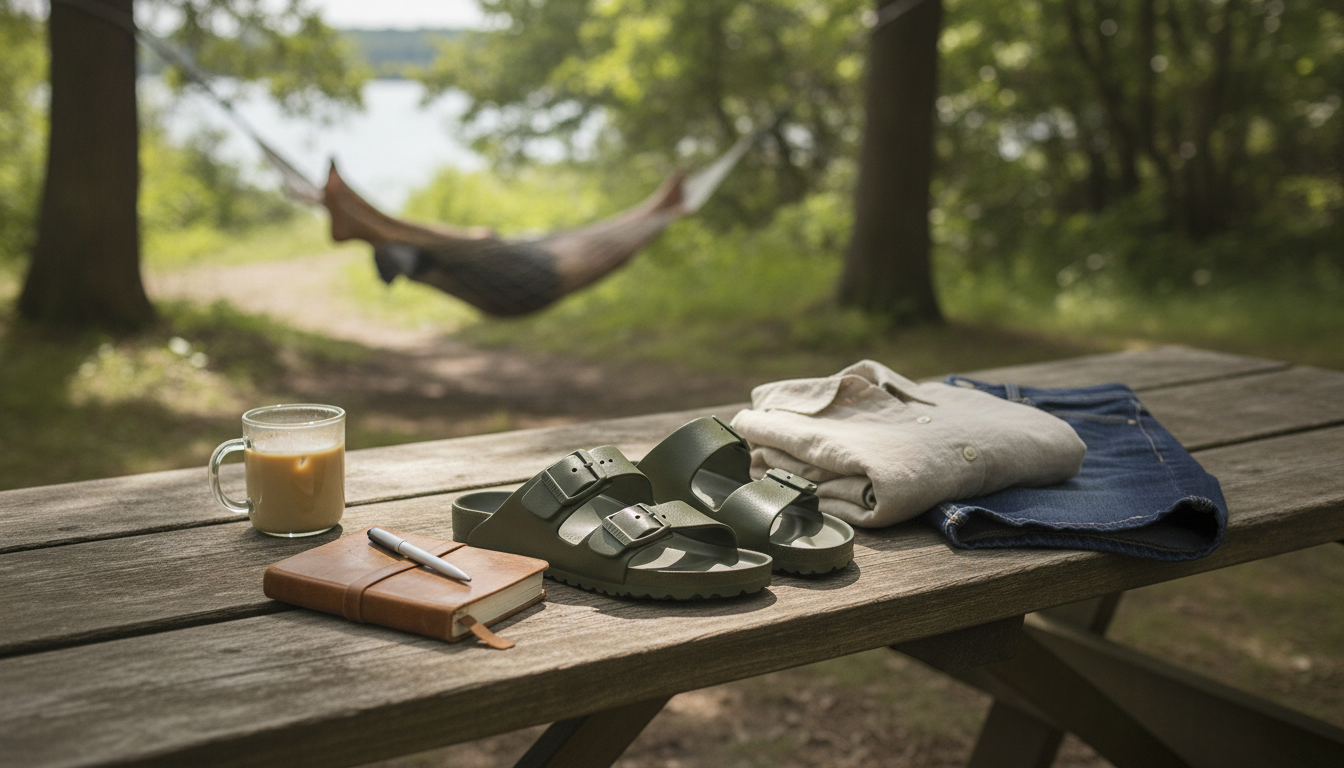
Men’s slippers can feel either soft or supportive—rarely both. Birkenstock-style slippers aim to bridge that gap with a structured footbed, steadier traction, and materials that break in over time. The result is a “house shoe” that feels closer to a well-fitted sandal than a flat, squishy slide. Below is what to look for, how the fit should feel, what impacts comfort and durability, and simple care habits that help them stay comfortable season after season.
What makes a Birkenstock-inspired slipper different is that comfort starts from the bottom up. Instead of relying on thick foam, the design focuses on guiding your foot into a stable position.
For brand background on footbed construction and what “contoured” really means, refer to Birkenstock’s official footbed information.
Two slippers can look similar and wear completely differently. Material choices influence warmth, odor, how quickly the upper relaxes, and whether the structure still feels supportive after months of daily use.
For general footwear and foot health guidance, the American Podiatric Medical Association (APMA) is a helpful resource to understand how supportive shoes can affect daily comfort.
The best fit for structured slippers is roomier than a dress shoe but more controlled than a typical bedroom slipper. Think “stable and aligned,” not “tight and compressed.”
| Fit area | What “good” feels like | Common issue | Easy fix |
|---|---|---|---|
| Toe room | A little space in front of the toes | Toes touch the front edge | Try the next size up |
| Heel placement | Heel sits inside the heel cup | Heel rides on the back rim | Try a larger size or a roomier width |
| Arch support | Support lines up under the arch | Pressure point in midfoot | Re-check size and footbed shape compatibility |
| Upper hold | Secure without pinching | Hot spots or rubbing | Break in gradually; consider softer upper material |
| Stability | Foot feels guided, not wobbly | Slipping or clenching toes | Adjust size/fit; consider a more secure upper design |
If you spend a lot of time standing at home—cooking, pacing on calls, working at a standing desk, or doing projects in a workshop—support usually matters more than “sink-in” softness. Structured slippers are made for that kind of routine.
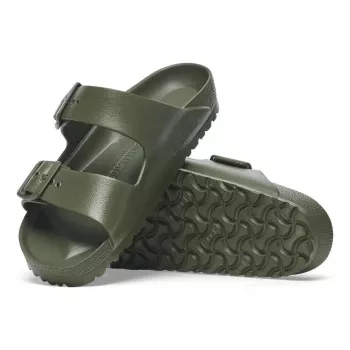
If you want supportive comfort that holds up on hard floors and feels steady for quick outdoor steps, Birkenstock Men’s Green Slippers are a strong everyday pick. The green colorway stands out without being hard to match, and the structured feel is designed for walking around the house—not just shuffling from couch to kitchen.
| Item | Price | Availability |
|---|---|---|
| Birkenstock Men’s Green Slippers | 42.01 USD | In stock |
They should feel secure but not tight. A firmer footbed can feel unfamiliar during the first few wears, but pinching, numbness, or sharp hot spots usually means the size or upper volume isn’t right.
Many are fine for quick trips if the outsole has decent traction and the materials can handle brief exposure. Avoid heavy rain or long wet walks unless the pair is specifically built for regular outdoor use.
Pick the size based on how you’ll wear them most often. With socks, you typically want a touch more volume, but your heel should still sit in the heel cup and your toes shouldn’t press into the front edge.








Leave a comment