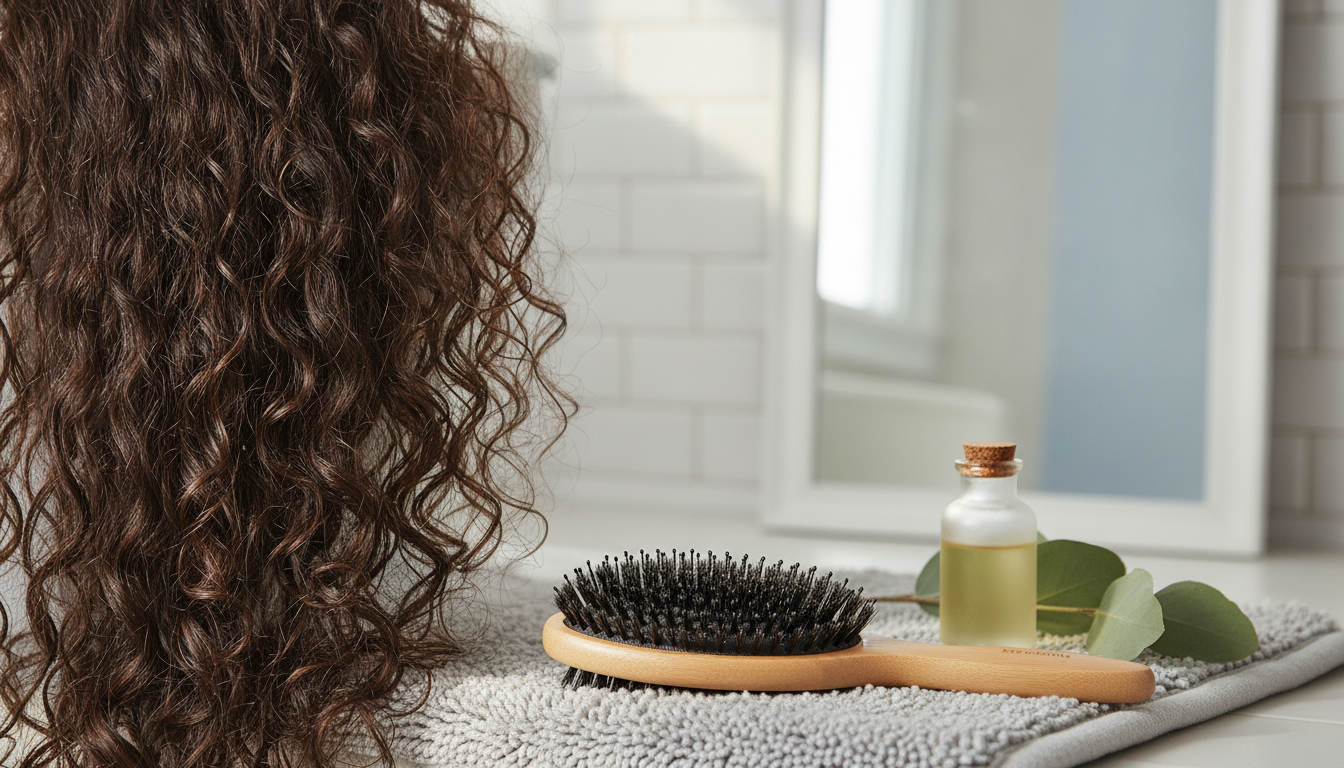
Curly, thick, long hair often needs two things at once: gentle detangling and better slip and shine along the length. A boar bristle brush can help distribute natural oils, reduce frizz at the surface, and smooth the look of long curls—when used with the right technique and timing. Instead of “brushing out” curls, the goal is to polish the canopy (the outer layer), keep curl clumps intact, and support healthier-looking ends between wash days.
Boar bristles behave more like a smoothing and distributing tool than a traditional detangler. On thick, curly lengths, that difference matters because aggressive brushing can swell frizz or pull apart curl groupings.
For general hair and scalp care best practices (including gentle handling and avoiding unnecessary friction), the American Academy of Dermatology Association offers straightforward guidance. If breakage is a recurring issue, Cleveland Clinic also summarizes common causes and prevention steps in its hair breakage overview.
For many curl patterns and densities, boar bristles are a “polish and control” tool. They’re especially helpful when lengths are long enough that ends don’t easily receive natural oils on their own.
A useful way to think about it: detangle first (with slip), then smooth second (with boar bristles). That sequence protects curl definition while still giving long hair a more finished look.
Technique matters more than the number of strokes. The goal is low tension and minimal passes, focusing on the surface rather than raking through the interior of the curls.
For sleek styles, smooth the perimeter and top first, then gather hair into a ponytail or bun. If you notice “puffing” at the roots, reduce pressure and switch to shorter, controlled strokes rather than long pulls.
Curly hair usually benefits from using different tools at different moments: one for detangling with slip, another for finishing and shine.
| Tool | Best for | When to use | Tip for thick long curls |
|---|---|---|---|
| Boar bristle brush | Shine and surface smoothing | Dry hair, finishing step | Use on the canopy; avoid brushing out curl clumps |
| Wide-tooth comb | Gentle detangling | In shower with conditioner | Start at ends and work upward in sections |
| Detangling brush | Tangles and shed hair | Wet/damp with slip | Hold hair near roots to reduce pulling |
| Mixed bristle (boar + nylon) | Smoothing with better reach | Dry hair, low tension | Use short, controlled strokes in small sections |
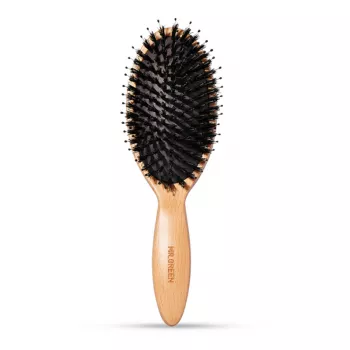
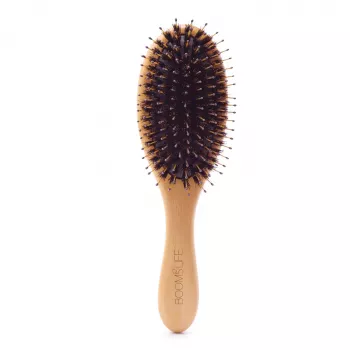
If your goal is smoother lengths without sacrificing curl personality, a dedicated finishing brush can be the missing step between “styled” and “polished.” The Boar Bristle Hair Brush for Curly, Thick, Long Hair is designed for smoothing and polishing longer, denser hair while helping reduce surface frizz.
When styling tension, dryness, or product buildup makes the scalp feel a little “worked,” a quick cool-down can be soothing. The Ice Roller for Face & Eyes – Skin Tightening Facial Massage Tool can be used (clean and gently) around the hairline and temples to calm the feel of the skin—especially if tight styles are part of your routine.
Yes—use it mainly to smooth the outer layer and flyaways on dry hair, avoid brushing through full curl clumps, and work in light sections with minimal passes.
Dry hair is typically best for shine and smoothing. For wet detangling, use a wide-tooth comb or detangling brush with conditioner or leave-in, then use boar bristles as a finishing tool once hair is dry.
Remove hair after each use and wash weekly or whenever product or oil buildup is visible. Let it dry bristles-down to protect the bristle base and handle.










Leave a comment