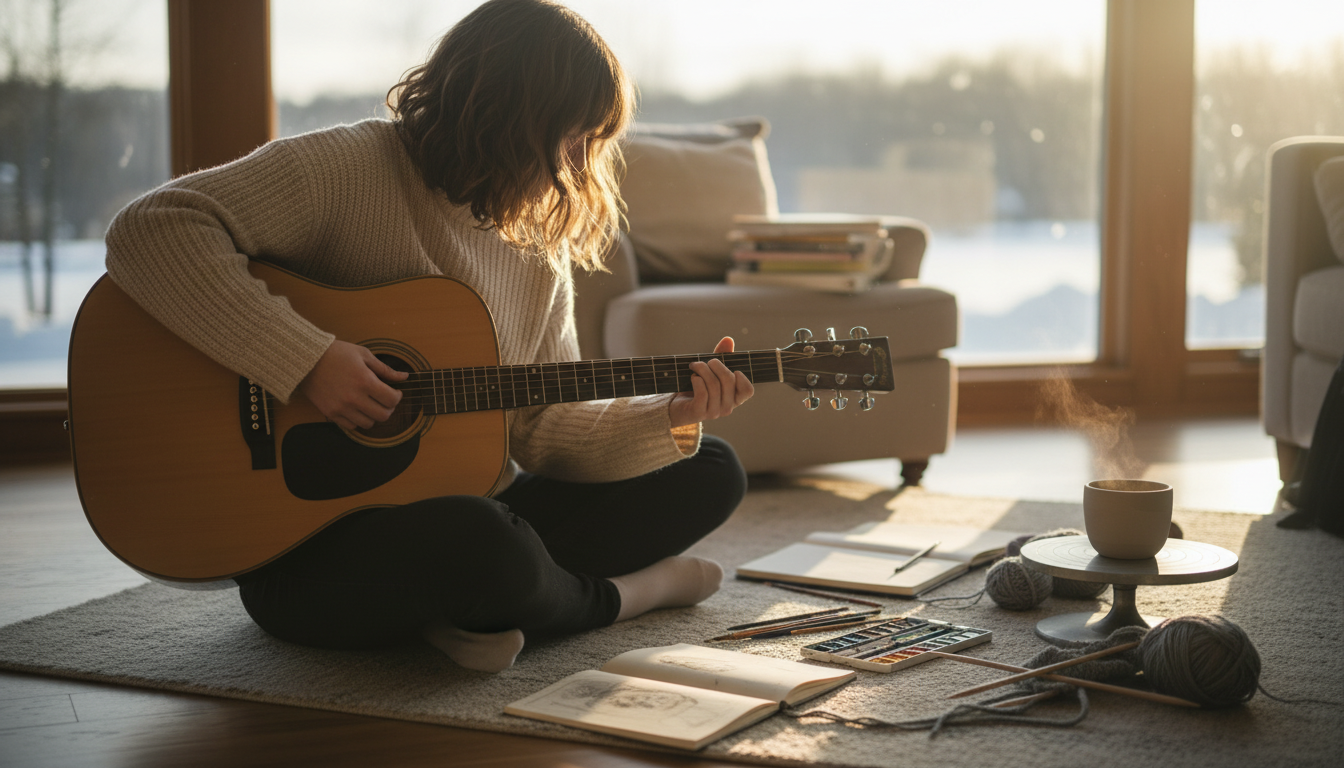
Confidence tends to grow through repeated proof: trying something, getting feedback, improving, and noticing progress. The most reliable hobbies for self-belief share three traits—clear practice opportunities, small wins that stack, and a supportive way to reflect on growth. Below is a practical “confidence ladder” of hobbies (from low-pressure to high-visibility), plus simple routines to stay consistent and measure progress without burning out.
For a quick science-backed boost, physical hobbies also help regulate stress and mood; both the NHS and Harvard Health Publishing summarize the mental health benefits of regular movement.
Confidence builds fastest when challenge is just slightly above your comfort zone—enough to create proof, not so much that it creates shutdown.
If you want a structured, step-by-step approach with prompts and tracking ideas, the digital guide Hobbies That Build Confidence – A Practical Guide to Hobbies That Boost Confidence, Personal Growth & Self-Belief can help turn “I’ll start someday” into a repeatable routine.
The “best” hobby is the one that creates steady evidence you’re capable. Use the categories below to match the kind of confidence you want to strengthen.
| Hobby type | Examples | Confidence muscle | Best for | First small win |
|---|---|---|---|---|
| Creative build | Sketching, photography, piano | Progress tracking, self-expression | People who fear “not being good” | Complete a 10-minute daily practice for 7 days |
| Body-based | Strength training, yoga, martial arts | Discipline, resilience under discomfort | People who want grounded confidence | Learn 3 core movements or a basic form |
| Social | Improv, book club, dance class | Comfort being seen, conversation flow | People who want social confidence | Introduce yourself to 2 people and return next week |
| Performance/leadership | Open mic, coaching, leading meetups | Courage, responsibility, calm under pressure | People ready to stretch | Share a 2-minute demo or lead a short segment |
For creative confidence at home, a simple “beauty project” can be surprisingly grounding—like arranging flowers weekly. A statement piece such as the Hand-Painted Jade Porcelain Cheongsam Vase can turn practice into a visible, calming routine that rewards consistency.
If your confidence grows when you feel capable outdoors, planning small adventures (a new trail, a day hike, a weekend road trip) can stack “I can handle this” experiences. A planning-first resource like Top 10 Must-See U.S. National Parks + Fast Facts can help you set realistic outings that build competence without overwhelm.
Structured, measurable hobbies with quick feedback loops tend to work fastest—like strength training basics, beginner martial arts, daily sketch drills, or language practice. Pair it with a short routine and a simple proof log so progress becomes visible within weeks.
They build self-efficacy: repeated small wins in manageable challenges create evidence that you can act, improve, and recover from mistakes. Consistency, supportive environments, and gradually increasing difficulty turn that evidence into stable self-belief.
Many people notice a shift in 2–4 weeks when they practice consistently and track progress. A stronger identity change (“I’m someone who does this”) often takes 8–12 weeks, especially when feedback and visible outcomes are included.










Leave a comment