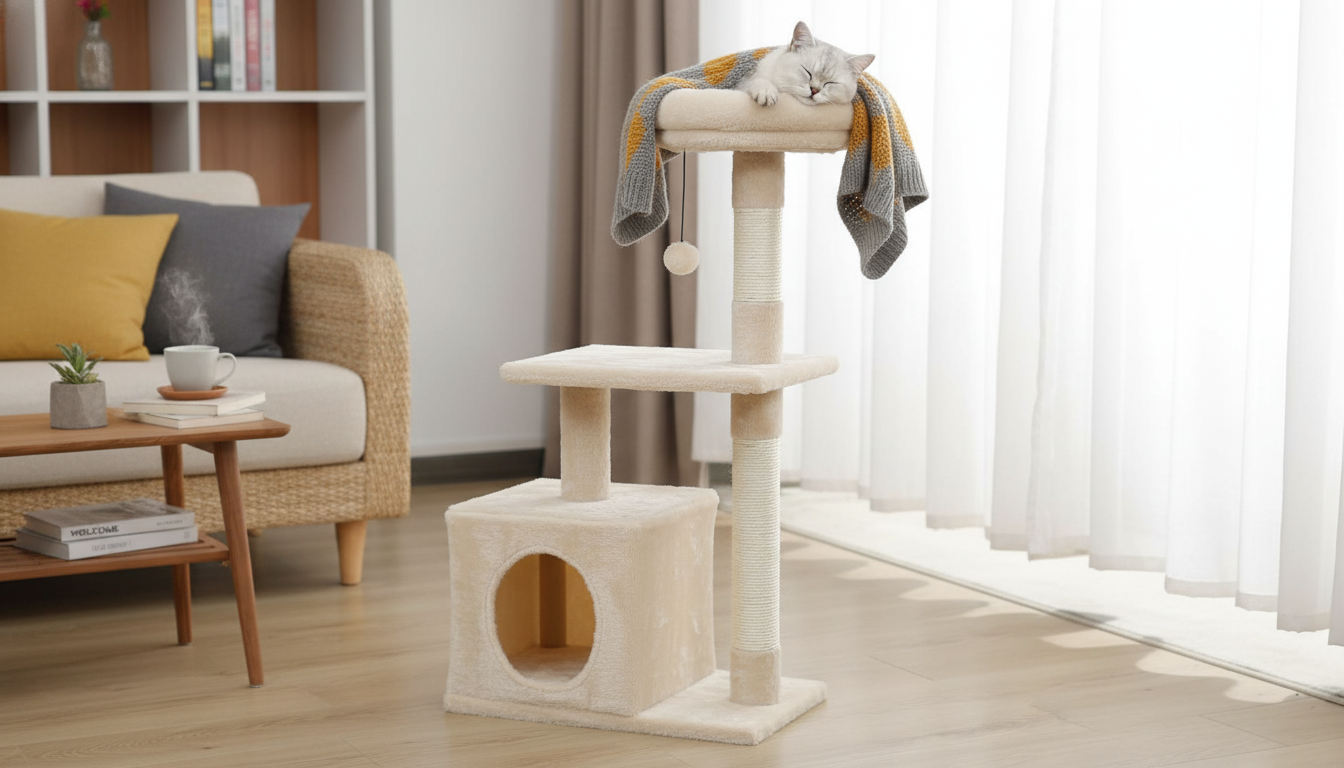
A good cat tree helps indoor cats climb, scratch, hide, and nap without taking over the room. This setup pairs a roomy condo for privacy, a sisal-wrapped scratching post for daily claw care, and a deep hammock for those long, secure naps—ideal for cats that like to switch between “watch,” “play,” and “do not disturb.” When these three comforts live in one consistent “cat zone,” many homes notice calmer routines and fewer surprise scratch marks on the furniture.
Most cats aren’t trying to be “difficult”—they’re following instincts that make sense for a small predator that also prefers control over its personal space. A well-designed cat tree bundles several natural behaviors into one familiar spot.
For scratching behavior basics and why it’s so important to cats, the ASPCA’s overview on cat scratching behavior is a helpful reference.
This combination is built around the everyday cycle many indoor cats follow: scratch to warm up, climb to scan the room, then tuck away for a nap.
| Feature | What it’s for | Best spot in the home |
|---|---|---|
| Large condo | Privacy, security, resting between play sessions | Quiet corner near family activity but not in a hallway |
| Sisal scratching post | Daily scratching routine, stretching, claw maintenance | Near the cat’s favorite lounging area or close to a previously scratched sofa edge |
| Deep hammock | Cradled naps, warmth, calm resting | Away from cold drafts; near a window for sun |
| Vertical levels/perches | Climbing, confidence building, lookout point | Next to a sturdy wall; near a window if possible |
Environment matters as much as the furniture itself; guidance from International Cat Care highlights how giving cats appropriate places to rest, hide, and climb can reduce stress behaviors.
Placement is often the difference between a cat tree that becomes the household favorite and one that’s ignored. The goal is to make the “right” spot the easiest, most rewarding option.
A cat tree stays inviting when it stays stable, clean, and familiar. Small maintenance habits also help the condo and hammock stay “nap-ready.”
For additional feline behavior resources that support a calm home setup, the Cornell Feline Health Center is a solid place to browse.
Cozy Cat Tree with Large Condo, Sisal Scratching Post & Deep Hammock is available now and ships as a single all-in-one solution for scratching, lounging, and hiding. It’s a simple way to set up a dedicated “cat zone” that supports daily routines: scratch, climb, nap, repeat.
To pair the setup with broader wellness routines (feeding schedules, enrichment ideas, and nutrition basics), consider adding Pet Nutrition 101: What Every Pet Parent Needs to Know to your home library.
Place the post right next to the couch corner being scratched, add a small amount of catnip or silvervine to the sisal, and reward immediately after your cat uses it. Temporarily covering or blocking the scratched furniture area helps the new habit become the default.
Many anxious cats relax faster with an enclosed option because it reduces visual stimulation and feels more protected. Keep the condo in a quieter area and encourage exploration with treats and familiar scents rather than placing the cat inside.
Check it after initial assembly, again after about a week of use, and then monthly (or sooner in multi-cat homes). Tighten bolts and make sure the base sits flat so climbing and jumping remain safe.












Leave a comment