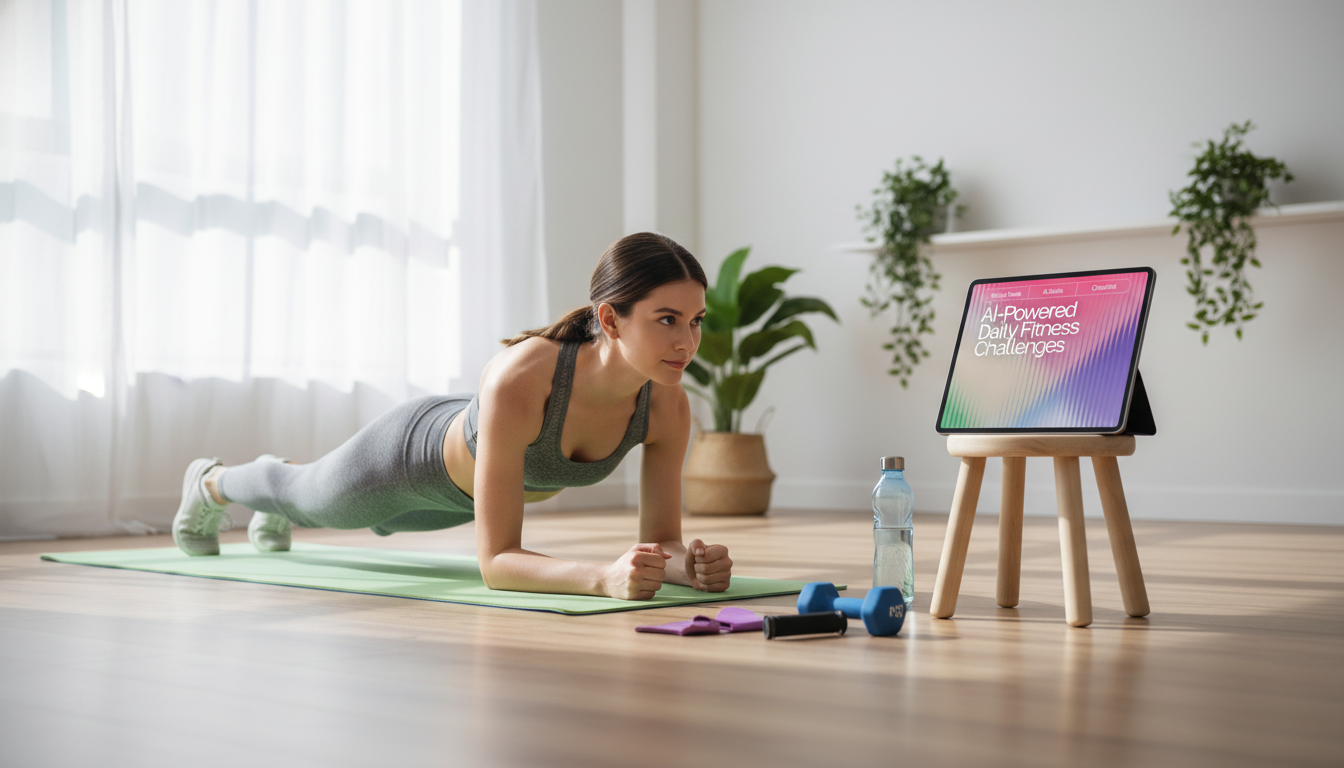
Daily challenges work best when they feel doable, measurable, and varied. A digital checklist paired with flexible challenge ideas helps turn “work out more” into a clear plan: pick a challenge, complete it, check it off, and build momentum—whether the goal is strength, mobility, cardio, or consistency.
A daily challenge system only works when it reduces friction instead of adding complexity. The best setup functions like a small set of guardrails that keeps you moving forward on low-energy days and still supports progress on high-energy days.
For a simple benchmark, align your weekly effort with mainstream guidance for physical activity from sources like the CDC and the World Health Organization, then adapt the daily “dose” to your schedule.
A checklist turns “motivation” into a repeatable process. Instead of negotiating with yourself each day, you follow a short sequence: select, do, record, move on.
| Checklist element | Why it matters | Quick example |
|---|---|---|
| Daily challenge selection | Reduces decision fatigue | Choose 1 strength + 1 mobility option |
| Difficulty toggle | Keeps workouts appropriate as fitness changes | Easier: knee push-ups; Harder: decline push-ups |
| Time cap | Prevents overcommitting | 10-minute limit on busy days |
| Notes field | Captures wins and warning signs | RPE, mood, soreness, sleep |
| Weekly totals | Adds a simple progress metric | 4/7 days completed + 2 mobility sessions |
Rotation keeps things fresh, but structure keeps things sustainable. A simple approach is to repeat categories weekly while changing the exact challenge (or the difficulty) as needed.
This sample week keeps the daily workload modest while covering the major bases. If a day feels too much, use the “easier” version and keep the streak alive.
| Movement | Easier | Standard | Harder |
|---|---|---|---|
| Squat pattern | Box squat | Bodyweight squat | Tempo squat or goblet squat |
| Push pattern | Incline push-up | Push-up | Decline push-up or slow eccentrics |
| Hinge pattern | Hip hinge drill | Glute bridge | Single-leg RDL (light load) |
| Cardio | 10-min brisk walk | 15-min intervals | 20-min intervals or hill repeats |
If you want a deeper baseline for weekly volume and balance, check the American College of Sports Medicine guidelines and translate them into smaller daily “challenge-sized” blocks.
For “choice day” outdoor motivation, pairing a simple walking or hiking challenge with a destination plan can help keep cardio enjoyable: Top 10 Must-See U.S. National Parks + Fast Facts | Digital Travel Guide eBook for Nature Lovers, Hikers & Adventure Planners
| Goal | How the checklist helps | Suggested challenge mix |
|---|---|---|
| Build consistency | Daily cue + easy wins | 3 strength + 2 mobility + 1 cardio + 1 recovery |
| Improve general fitness | Balanced rotation | 2 strength + 2 cardio + 2 mobility + 1 choice |
| Get moving on busy weeks | Short time caps | 5–10 minute daily challenges + walks |
| Avoid burnout | Recovery options still count | Alternate harder days with mobility/recovery |
Most daily challenges work best in the 5–20 minute range, since the real win is consistency. Longer sessions can be optional add-ons on higher-energy days, but the “minimum” should feel easy to repeat.
Yes. Bodyweight strength (squats, push-ups), walking or step goals, mobility flows, and core stability drills can cover a complete week. Use easier/standard/harder variations to stay safe and keep progress moving.
A practical range is 3–6 days per week depending on recovery and schedule. Set a minimum baseline you can hit reliably, and include at least one mobility or recovery day to support sustainability.













Leave a comment