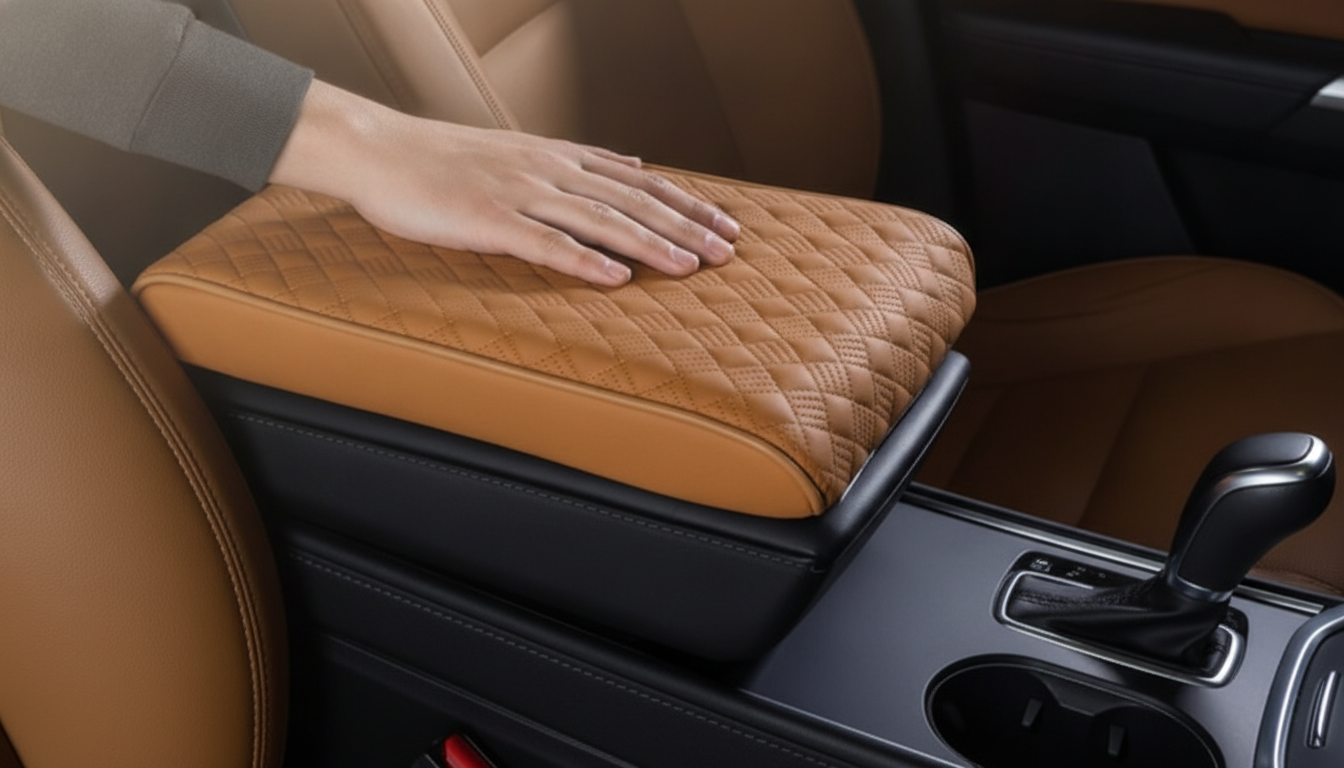
A supportive armrest can make daily driving feel less tiring by raising the resting height of the center console, adding cushioning, and giving the interior a clean, stitched finish. This pad-and-riser style armrest cover is designed to reduce pressure on the elbow and forearm while helping protect the console surface from wear.
A center-console armrest is one of those touchpoints you use constantly, especially during commuting and highway cruising. When the factory armrest sits too low or feels hard, your right shoulder and wrist can end up doing extra work just to stay relaxed.
Comfort upgrades should always support attentive driving habits. Keeping your cockpit organized and your posture neutral can help reduce fatigue and avoid distraction—guidance echoed by safety research on distraction and driver workload from organizations like NHTSA and broader ergonomics recommendations from OSHA.
Beyond comfort, the right armrest pad should look like it belongs in the cabin. This style focuses on a modern, stitched appearance while staying practical for daily use.
For many drivers, PU leather hits a sweet spot: it looks clean, it’s simple to maintain, and it helps refresh an armrest that’s already showing shine or cracking from years of contact.
Fit is the difference between “feels custom” and “keeps shifting every turn.” Before ordering, take a minute to check dimensions and clearances so the pad sits stable and doesn’t block anything you use.
| Item to Check | Why It Matters | What to Do |
|---|---|---|
| Armrest top size (L × W) | Prevents sliding or overhang | Measure with a tape measure and compare to the pad’s footprint |
| Lid clearance and latch access | Avoids blocked opening/closing | Test opening angle and confirm latch stays reachable |
| Console controls nearby | Ensures buttons/ports aren’t covered | Verify the pad won’t overlap switches, USB ports, or knobs |
| Seat position range | Maintains comfortable elbow height | Adjust seat and confirm the new height still feels natural |
A well-placed armrest pad should feel “set-and-forget,” but small setup details matter. A few minutes of prep helps prevent shifting and keeps the pad aligned with your natural driving posture.
It shouldn’t, as long as it doesn’t force your shoulder to lift or pull your arm into an awkward angle. Adjust your seat so your shoulders stay relaxed, keep both hands available for steering, and make sure the pad doesn’t interfere with controls or encourage overreliance on one-handed driving.
Start by cleaning the armrest so the base can grip consistently, then center the pad and keep it aligned with where your elbow naturally rests. Correct sizing is the biggest factor; after the first drive, recheck and nudge it into the most stable position.
Use a microfiber cloth with mild soap and water, then wipe dry with a clean cloth. Avoid alcohol or solvent-based cleaners, blot spills instead of scrubbing, and only use conditioners that are labeled safe for PU/faux leather.












Leave a comment