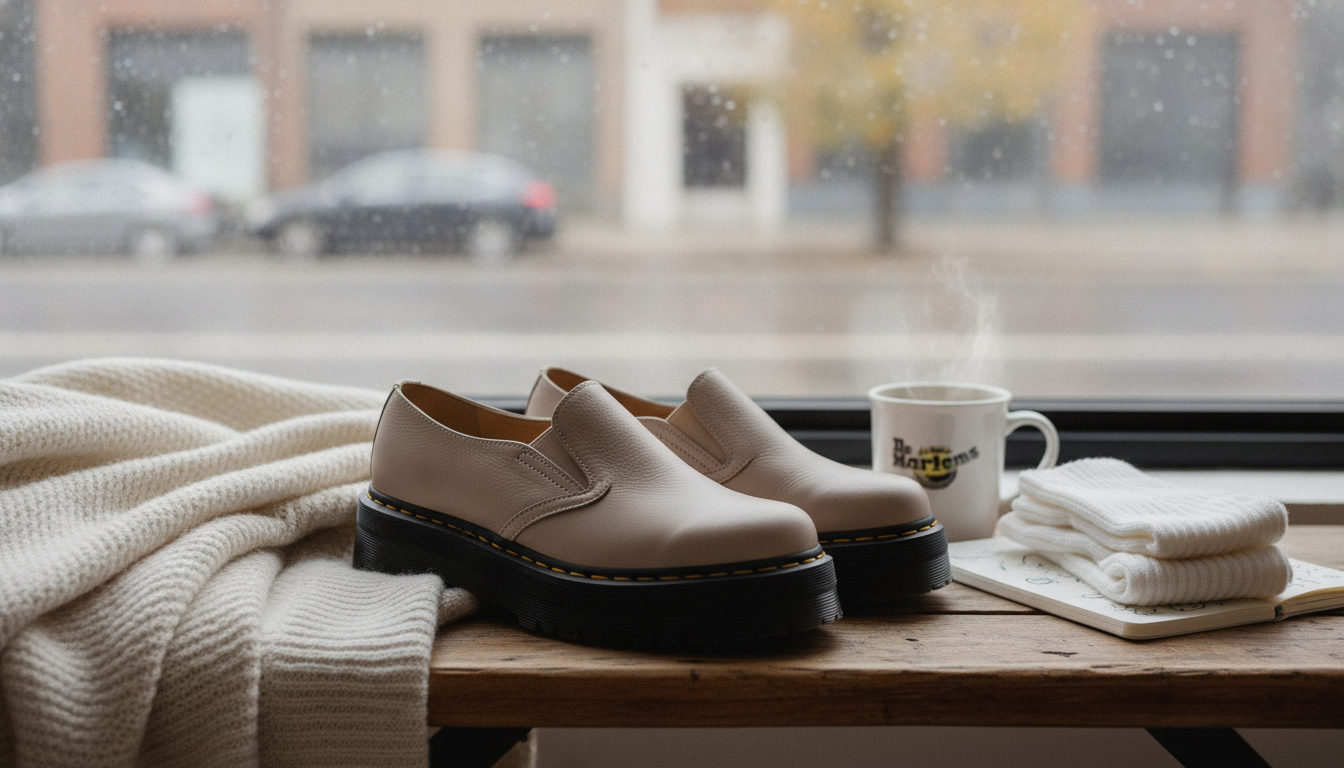
A leather slip-on that keeps the signature Dr. Martens attitude while dialing up everyday convenience. This guide covers feel, fit, break-in, styling, care, and what to check before buying so the shoes look sharp and wear comfortably over time.
Slip-ons can lean “soft and casual,” but Dr. Martens slip-ons tend to keep a more structured profile. That structure is what makes them feel substantial—and what helps them look intentional with outfits beyond weekend wear.
If you want to browse the current listing, the in-stock option is Dr. Martens Women’s Leather Slip On Shoes.
Comfort and longevity come down to leather choice and the small construction details that keep the shoe stable over time. A quick check before you commit can save weeks of “hoping they’ll break in.”
Slip-ons need a specific balance: secure at the heel, comfortably snug through the midfoot, and not cramped at the toes. Because you can’t “lace in” extra hold, heel security becomes the deciding factor.
| Fit area | What you want | What to adjust if it’s off |
|---|---|---|
| Heel | Secure with minimal lift while walking | Try a half-size down (if available), use a heel grip, or add a thin insole |
| Toe box | Toes lay flat, slight space at the front | Size up if toes press; choose thinner socks if only slightly snug |
| Midfoot | Snug but not painful compression | Consider gentle stretching or a shoe stretcher for leather; avoid forcing severe tightness |
| Instep | No sharp pressure across the top of the foot | Use a thinner insole or wear thinner socks; persistent pressure may require a different fit |
Structured leather rarely feels like a slipper out of the box. A better expectation is “supportive at first, then noticeably easier each week,” especially as the upper warms and flexes where your foot bends.
For blister care basics, the American Academy of Dermatology Association offers practical self-care guidance here: Blisters (self-care).
Leather slip-ons are an easy way to make simple outfits look pulled together. The goal is to let the shoe’s sturdy profile work as an anchor, then keep the rest of the outfit clean and balanced.
For deeper leather-care best practices, consult the Leather Conservation Centre’s guidance: Caring for Leather.
Leather typically relaxes and molds with wear, especially in width and across the top of the foot. They should start snug but not painfully tight; major size issues usually won’t stretch enough to fix heel slip or toe crowding.
Use blister patches or moleskin on hot spots, wear slightly thicker socks for short sessions, and consider a heel grip insert. If the heel lifts a lot while walking, the sizing may be too large.
Wipe dirt with a damp cloth, let the shoes dry naturally, and apply a leather conditioner as needed. For frequent wet weather, add a leather protector spray and avoid direct heat sources when drying.







Leave a comment