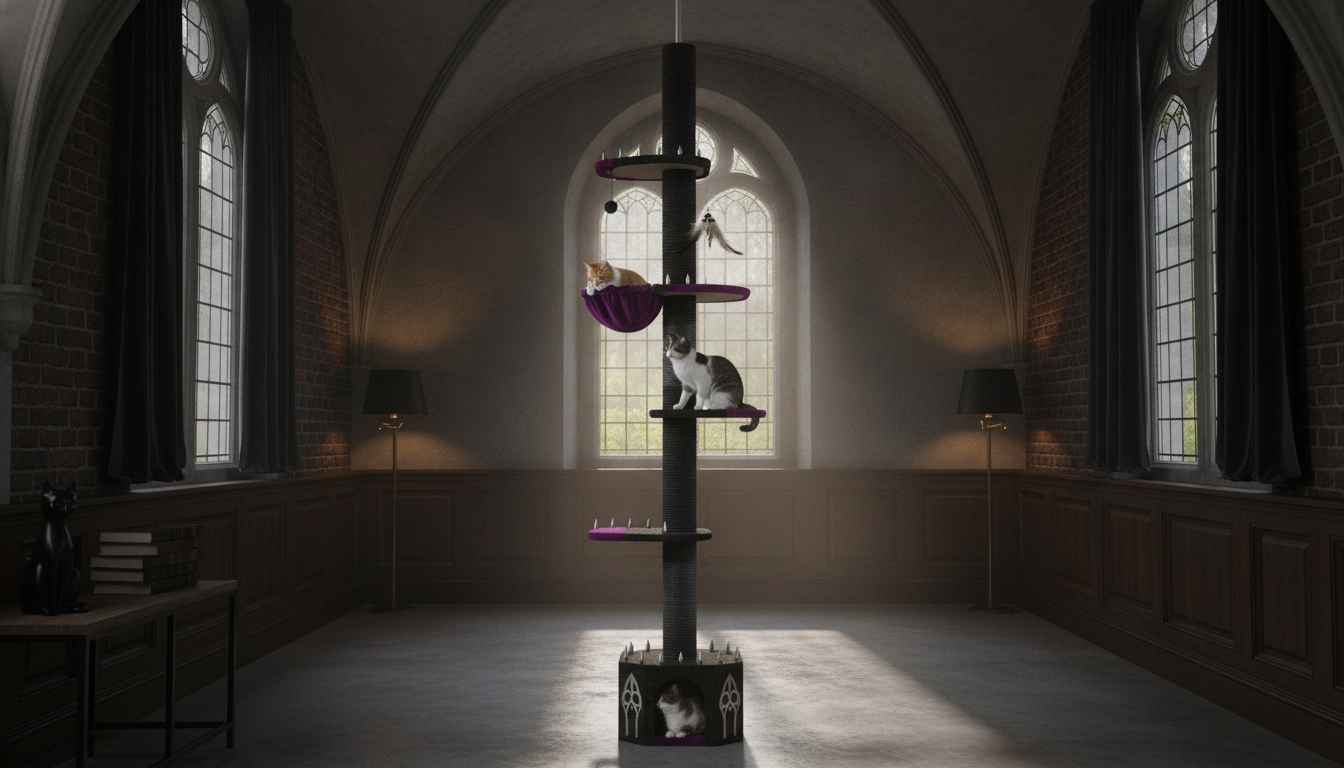
A floor-to-ceiling cat tree is a space-smart way to add vertical climbing, scratching, and lounging—especially in apartments where floor space is limited. This gothic-style, black 5-tier tower is designed to stabilize through ceiling tension while giving cats multiple levels to perch, stretch, and relax in a hammock, helping redirect scratching away from furniture and creating a dramatic, modern look that blends with dark décor.
Indoor cats tend to thrive when they can climb, survey their space, and “own” a few elevated routes. A tall tower creates a cat-friendly vertical zone that can reduce boredom and channel energy into healthy movement instead of mischief.
Enrichment matters for behavior, too. Guidance from organizations like the American Association of Feline Practitioners (AAFP) and resources such as International Cat Care emphasize the value of meeting a cat’s environmental needs—height, hiding, resting options, and safe outlets for scratching.
This tower leans into a sleek, dark aesthetic while still covering the basics cats actually use every day: a climbable route, dedicated scratch surfaces, and a comfortable rest spot.
Scratching isn’t “bad behavior”—it’s normal. The key is giving cats a better target than the couch. The ASPCA’s scratching guidance supports the idea that providing appropriate scratch options (and rewarding use) can reduce damage to household items.
A tall, adjustable tower is especially helpful when a room can’t spare a large base. It’s also a strong match for cats who naturally seek high ground or who get restless without daily play and climbing opportunities.
| Need | Why it matters | How this tower helps |
|---|---|---|
| Vertical territory | Cats feel safer and more confident with height options | Multiple tiers create elevated resting and lookout spots |
| Scratch-friendly surfaces | Scratching maintains claws and relieves stress | Includes scratching posts to redirect clawing |
| A nap zone | Resting spots reduce competition for furniture | Hammock provides a dedicated lounge |
| Space efficiency | Apartments benefit from narrow footprints | Floor-to-ceiling style prioritizes height over width |
| Stable feel | Wobble can discourage use | Tension-based ceiling support can improve steadiness when installed correctly |
Where you place a tower can determine whether it becomes “the favorite spot” or a piece of furniture your cat ignores. Aim for a location that supports both safety and your cat’s daily routines.
Some cats sprint up a new tower in minutes; others need a few days of low-pressure encouragement. The goal is to make the tower the easiest “yes” in the room—especially for scratching.
Tension-based towers are designed to distribute pressure between the floor and ceiling, but ceiling type and correct installation matter. Follow the instructions closely, avoid fragile surfaces, and re-check tightness periodically; use any included protective pads (or compatible pads) to help reduce marking.
Measure your floor-to-ceiling height and choose a tower that adjusts to that range with the small margin specified in the instructions. Pick a spot with a flat, solid ceiling area and leave enough clearance around the tower for safe jumping on and off.
Lead exploration with toys and reward any scratching on the posts right away to build a strong habit. Add catnip to the scratching areas (not the lounging fabric), place the tower near a favorite hangout, and temporarily protect old scratching targets until the new routine sticks.










Leave a comment