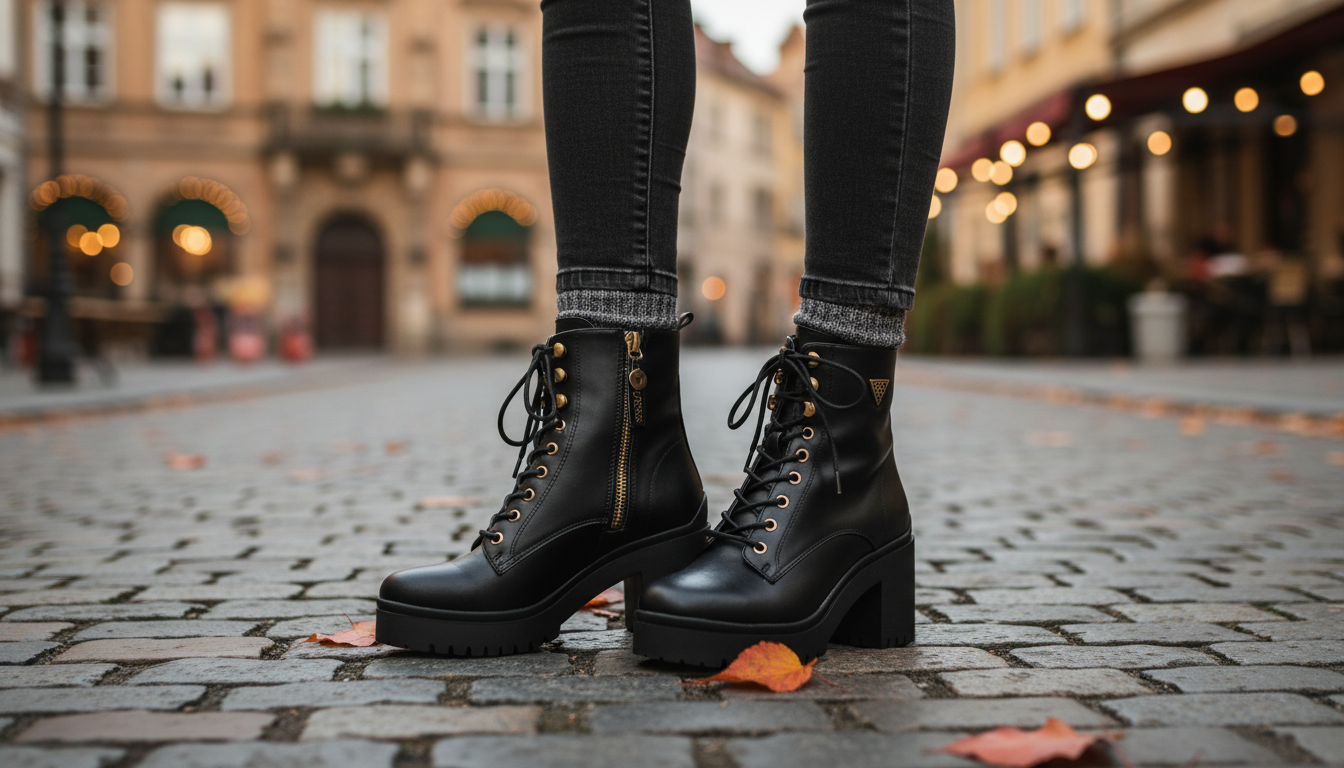
Sleek black ankle boots in faux leather are a reliable staple for day-to-night outfits, offering a polished look with easy versatility. This guide covers what to notice in materials, fit, comfort details, styling ideas, and simple care steps so the pair holds up through regular wear.
| Detail | What to expect | What to verify on the listing |
|---|---|---|
| Color | Black | Confirm if hardware/sole are tonal or contrast |
| Upper material | Faux leather | Check if there are mixed panels (textile/elastic) |
| Boot height | Ankle | Look for shaft height if provided |
| Fit focus | Ankle opening + toe box comfort | Review size notes and return policy |
| Best pairing | Jeans, trousers, skirts, dresses | Match heel/sole type to intended use |
A black faux leather ankle boot looks its best when the surface stays smooth and consistent—especially at high-flex areas like the toe bend and the ankle crease. When scanning product photos, look for an even finish with minimal puckering or rippling where the boot naturally moves.
Faux leather doesn’t “break in” the same way real leather does, so starting with the right feel matters. If a boot already looks overly wrinkled straight from the box, it may show wear sooner, especially around the instep and ankle.
Comfort hinges on three zones: the toe box (space), the midfoot (support), and the ankle opening (security). A clean, minimal ankle boot can look sharp, but if it pinches at the forefoot or rubs at the ankle bone, it won’t last long in your regular rotation.
For general footwear comfort guidance, the American Podiatric Medical Association (APMA) recommends prioritizing proper fit and supportive design—practical advice that applies especially to structured ankle boots worn for commuting or long days.
Black ankle boots earn their spot because they anchor outfits without competing for attention. The easiest way to keep the look intentional is to repeat clean lines: straight hems, tailored layers, and simple proportions.
Small tweaks make a big difference: a slightly cropped pant hem can make the ankle area look cleaner, while a matching black tight under a skirt creates a long, uninterrupted line that feels modern and put-together.
For step-by-step cleaning specifics (especially after rain or grime), The Spruce’s faux leather cleaning guide is a helpful reference for gentle methods that won’t overdo moisture or abrasion.
Faux leather usually stretches less than real leather, so major “breaking in” is limited. You may notice minor give in lining or elastic areas, but it’s best to start with a comfortable fit and fine-tune with socks or a thin insole if needed.
Wipe them with a soft damp cloth, then use mild soap and water for any marks that remain. Air-dry away from direct heat, and consider a protectant labeled for faux leather; avoid soaking or harsh chemicals.
Thin socks give the closest fit and can reduce bulk, while medium socks often add comfort for walking. Go thicker only if you have extra room—otherwise it can create pressure or cause rubbing—so it’s worth testing indoors before committing.











Leave a comment