
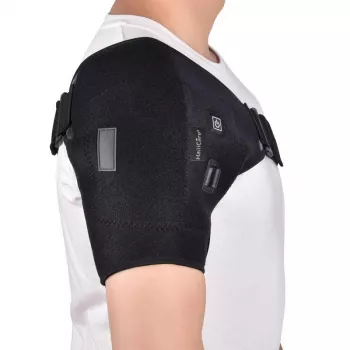
A heated shoulder massage brace combines gentle compression, targeted warmth, and adjustable support to ease everyday stiffness after long desk hours, workouts, or repetitive lifting. It’s a simple, hands-free way to keep soothing heat in place while you relax, work, or wind down after activity. Below is a practical guide to what these braces do, what features matter most, how to use them safely, and when it’s time to get medical advice.
A wearable shoulder wrap is designed to deliver consistent comfort right where tension tends to build. Instead of balancing a heat pack on your shoulder, you can move around lightly while maintaining contact over the target area.
Heat and gentle compression tend to be most appreciated when soreness is “muscular” (tight, achy, and stiff) rather than sharp or unstable. A brace can also be a helpful cue to keep the shoulder relaxed and supported during downtime.
For additional safety guidance on thermotherapy, see the Cleveland Clinic overview of heat therapy uses and cautions. If symptoms are severe or worsening, resources like the NHS guidance on when to see a doctor for shoulder pain can help you decide what to do next.
Not all shoulder wraps fit the same way, and comfort depends on secure placement without excessive pressure. Prioritize adjustability and safety features first, then consider convenience upgrades.
| Feature | Why it matters | What to choose |
|---|---|---|
| Adjustable straps | Keeps heat where you need it without slipping | Wide strap range with secure fasteners |
| Multiple heat levels | Comfort and safety across different sensitivities | At least 2–3 settings plus auto-off |
| Massage intensity control | Prevents discomfort and supports gradual use | Low-to-high options or on/off |
| Breathable fabric | Reduces sweat and irritation during longer sessions | Soft lining and airflow panels |
| Ambidextrous design | Works on either shoulder and improves value | Left/right compatible wrap |
Heat should feel soothing—never sharp, stinging, or overly hot. A slow, conservative ramp-up is the best way to learn what your shoulder tolerates.
If you’re managing a recent strain and want general home-care basics, MedlinePlus has a clear overview of sprains and strains care to help you decide whether heat, rest, or medical guidance is more appropriate.
For people who prefer cold therapy for flare-ups or post-activity cooling, an Ice Roller for Face & Eyes – Skin Tightening Facial Massage Tool can be a simple way to apply brief, controlled cooling (avoid lingering on one spot too long, and keep cold off irritated or sensitive skin).
If the goal is easy, repeatable comfort at home, a wearable wrap is a practical upgrade from handheld heat packs. The Adjustable Heated Shoulder Massage Brace is designed for targeted warmth and massage while keeping your hands free.
| Item | Price | Availability |
|---|---|---|
| Adjustable Heated Shoulder Massage Brace | $19.51 | In stock |
Short sessions are usually best—often around 10–20 minutes. Start with a lower heat setting and a shorter session, then adjust if it remains comfortable, and always follow the device’s time limits. Avoid sleeping with heat on.
Heat is commonly used for stiffness and tight muscles, especially when the discomfort feels achy rather than sharp. Avoid heat and get medical guidance if pain follows an impact, swelling is significant, redness is spreading, there’s fever, or numbness/tingling persists.
Many wraps are ambidextrous, but some are side-specific. Check whether the straps and heating zone can be positioned correctly on your left or right shoulder, and confirm the wrap sits securely without pressing into your neck.









Leave a comment