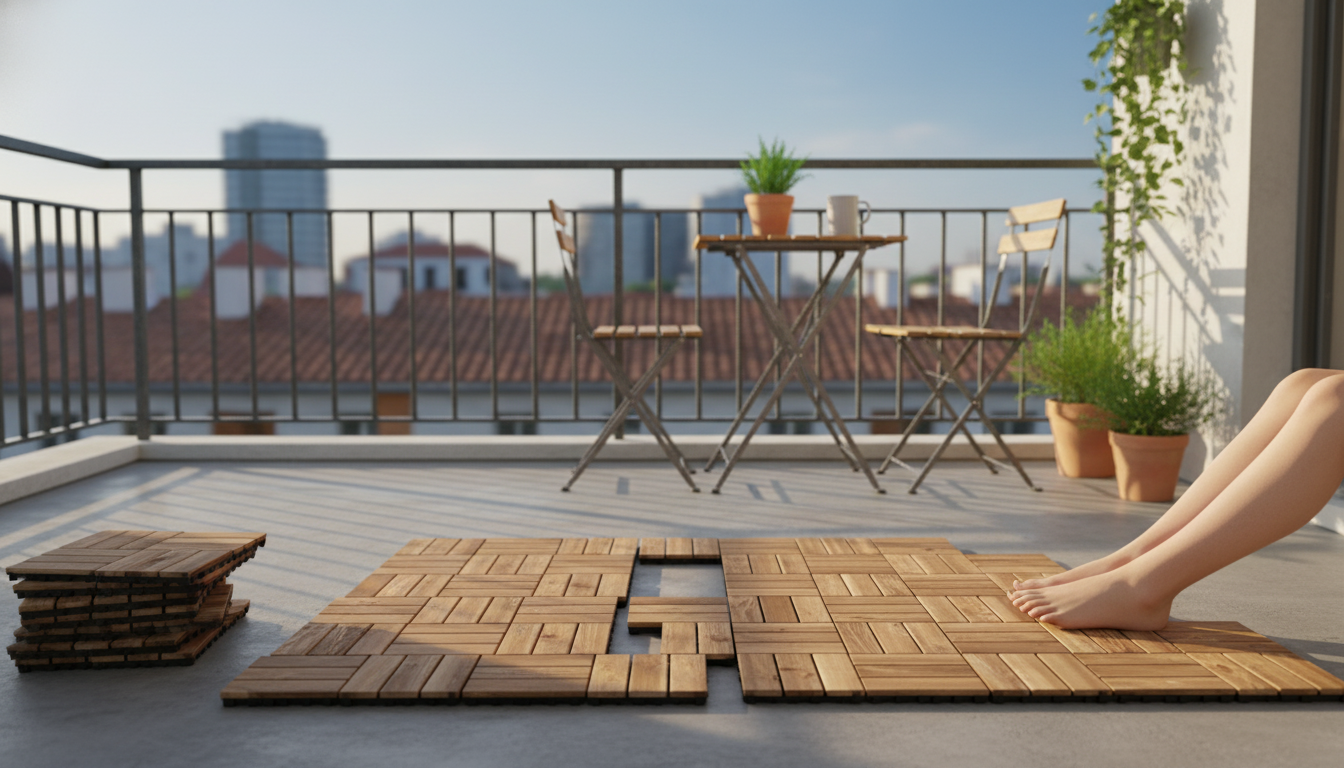
Interlocking deck tiles create a finished, walkable surface over many existing floors—often without adhesives or special tools. They’re a practical option for renters and homeowners who want a cleaner look, better drainage underfoot, and a project that can be completed in an afternoon with minimal mess. Because the tiles “float” above the base surface, they can also be lifted later for cleaning or reconfiguring, which is helpful in tight outdoor spaces like balconies and small patios.
Interlocking deck tiles are snap-together panels designed to connect edge-to-edge into a continuous surface. Unlike mortar-set pavers or glued flooring, most systems are made to float over an existing substrate rather than being permanently bonded. That makes them popular when permanent construction isn’t ideal or isn’t allowed.
Interlocking tiles come in several top-surface materials, often paired with a plastic (PP) base that creates a slightly raised, drainable platform. The right choice depends on how much sun, moisture, and traffic your space gets.
| Space | Priority | Good match | Notes |
|---|---|---|---|
| Balcony | Lightweight, easy removal | Composite or wood on raised base | Confirm building rules for drainage and weight |
| Concrete patio | Cover imperfections, comfort | Composite, wood, or stone/porcelain | Ensure slope allows water to run off beneath tiles |
| Pool surround | Wet traction, fast drying | Textured composite or rated porcelain | Choose surfaces intended for wet areas and bare feet |
| Rooftop terrace | Drainage, protection of membrane | Raised-base systems | Verify compatibility with roof membrane and warranties |
A little planning keeps the finished surface looking clean and intentional—especially around railings, door thresholds, and built-ins.
If you’re pairing tiles with a wood deck or wood elements outdoors, it can also help to understand basic wood treatment and safety considerations from the USDA Forest Service.
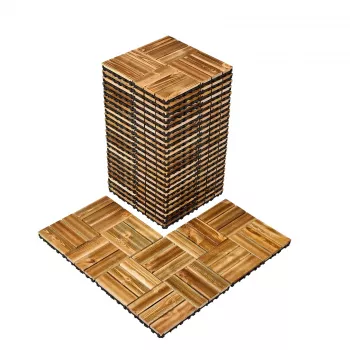
If you want a ready-to-order option for refreshing a patio, balcony, or outdoor sitting area, Interlocking Deck Tiles provide a modular snap-together surface suited to quick makeovers where permanent construction isn’t ideal. Before ordering, confirm the set’s total coverage, tile dimensions, material composition, and care instructions on the product page.
To complete the refreshed outdoor feel with a decorative accent on a side table or bistro setup, consider the Hand-Painted Jade Porcelain Cheongsam Vase – Retro Chinese Ceramic for Flower Arrangements.
A flat, stable surface is ideal, but small variations are usually acceptable. If you have significant dips, crumbling concrete, or loose boards, repair those areas first to prevent rocking tiles and edges that won’t stay locked.
Often yes, as long as the deck is structurally sound and boards are properly fastened. Clear debris between boards, make sure drainage isn’t blocked, and leave a perimeter gap so the floating surface can expand and contract.
Sweep regularly and rinse as needed. For deeper cleaning, use mild soap and a soft brush, and in shaded or damp areas lift a few tiles occasionally to remove trapped debris and help reduce mildew.












Leave a comment