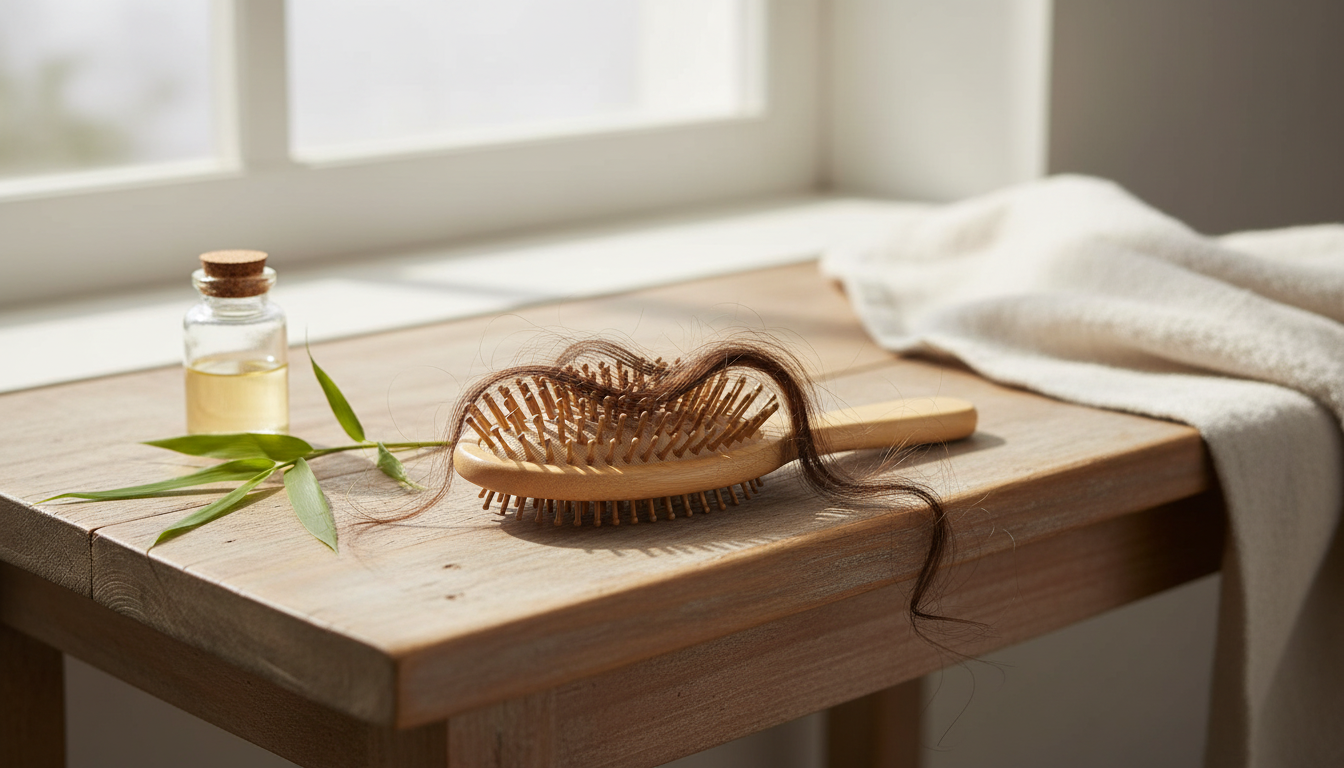
A bamboo hair brush brings together gentle detangling, comfortable scalp stimulation, and a more natural feel in the hand. This guide covers what to expect from bamboo brushes, who they suit best, how to use them for different hair types, and how to keep them clean and long-lasting.
Bamboo brushes stand out for their balance of comfort and control. The bamboo body typically feels lightweight, but still sturdy enough for everyday brushing—especially helpful when you’re working through tangles slowly instead of forcing your way through them.
Many bamboo designs use pin-style bristles rather than dense, rigid plastic bristles. When you brush in small sections and start at the ends, pin bristles can glide with less tugging than stiffer, one-piece plastic designs. If your brush includes a cushioned base, that added flexibility can soften the feel on the scalp by letting the pins “give” slightly as you brush.
Another small but noticeable difference is grip. Bamboo’s natural texture often feels less slippery than glossy plastic, which can make gentle, controlled strokes easier—especially when hands are damp from styling products or after shower detangling.
A bamboo brush won’t “fix” every hair issue on its own, but technique plus consistency can make brushing feel smoother and less stressful. Over time, many routines improve simply because bamboo brushes encourage slower, lighter passes and better sectioning.
For general hair-care guidance and damage prevention, the American Academy of Dermatology Association shares practical tips on daily care, while the Cleveland Clinic outlines detangling habits that reduce breakage.
| Hair situation | What to focus on | Brushing tip |
|---|---|---|
| Fine or easily weighed-down hair | Gentle strokes and minimal passes | Brush lightly; stop once hair is detangled |
| Thick hair | Sectioning and patience | Work in layers from underneath; detangle ends first |
| Curly or wavy hair | Timing and product slip | Brush mainly on damp hair with conditioner/leave-in for best glide |
| Dry ends | Oil distribution and breakage prevention | Use fewer, slower passes; avoid yanking at knots |
| Sensitive scalp | Comfort and pressure control | Use the pads of the pins, not the tips; keep pressure light |
A bamboo hair brush is a strong everyday option for straight, wavy, and many curly routines—especially for anyone who wants a simple tool that supports gentler habits. It can also be a nice match for those who prefer a natural-feel handle and don’t want a “high-maintenance” brush that needs special handling during styling.
There are a few situations where a different tool may fit better. For very tight curls or highly textured hair, wide-tooth combs and finger detangling are often preferred to preserve curl pattern and reduce frizz. A bamboo brush can still be used strategically, but it’s usually best on damp hair with conditioner or leave-in for slip, and in smaller sections.
If the main concern is heavy product buildup or visible scalp flaking, switching brushes alone won’t be the biggest lever. A consistent cleansing routine (and gentle, thorough rinse-out) typically makes the bigger difference, with brushing serving as a supportive step rather than the solution.
The safest brushing routine is less about speed and more about control. Small adjustments—like where you start and how you hold the hair—can noticeably reduce snagging.
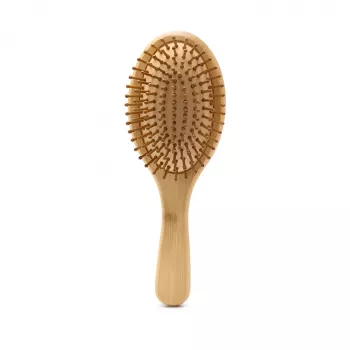
If you want a straightforward brush for daily detangling and smoothing, the Natural Bamboo Hair Brush is an easy add to a minimal routine. Best results come from sectioning and gentle technique rather than forceful brushing.
For a simple self-care pairing after brushing—especially if the scalp feels tense—consider keeping a cooling tool nearby for quick, targeted massage. The Ice Roller for Face & Eyes – Skin Tightening Facial Massage Tool can be used along the hairline, temples, and jaw for a refreshing finish.
| Item | Price | Availability |
|---|---|---|
| Natural Bamboo Hair Brush | $9.82 | In stock |
It can help reduce the look of frizz by smoothing and aligning strands and by distributing natural oils down the hair. For curls, limit brushing on fully dry hair and use light pressure with a bit of leave-in or serum for better control.
Yes, it can work well when used on damp, conditioned hair with plenty of slip. Detangle in sections, start at the ends, and avoid aggressive brushing to help preserve the curl pattern.
Remove shed hair after each use, then do a deeper clean weekly or biweekly depending on product use. Avoid soaking the brush and let it dry thoroughly to protect the bamboo and cushion.









Leave a comment