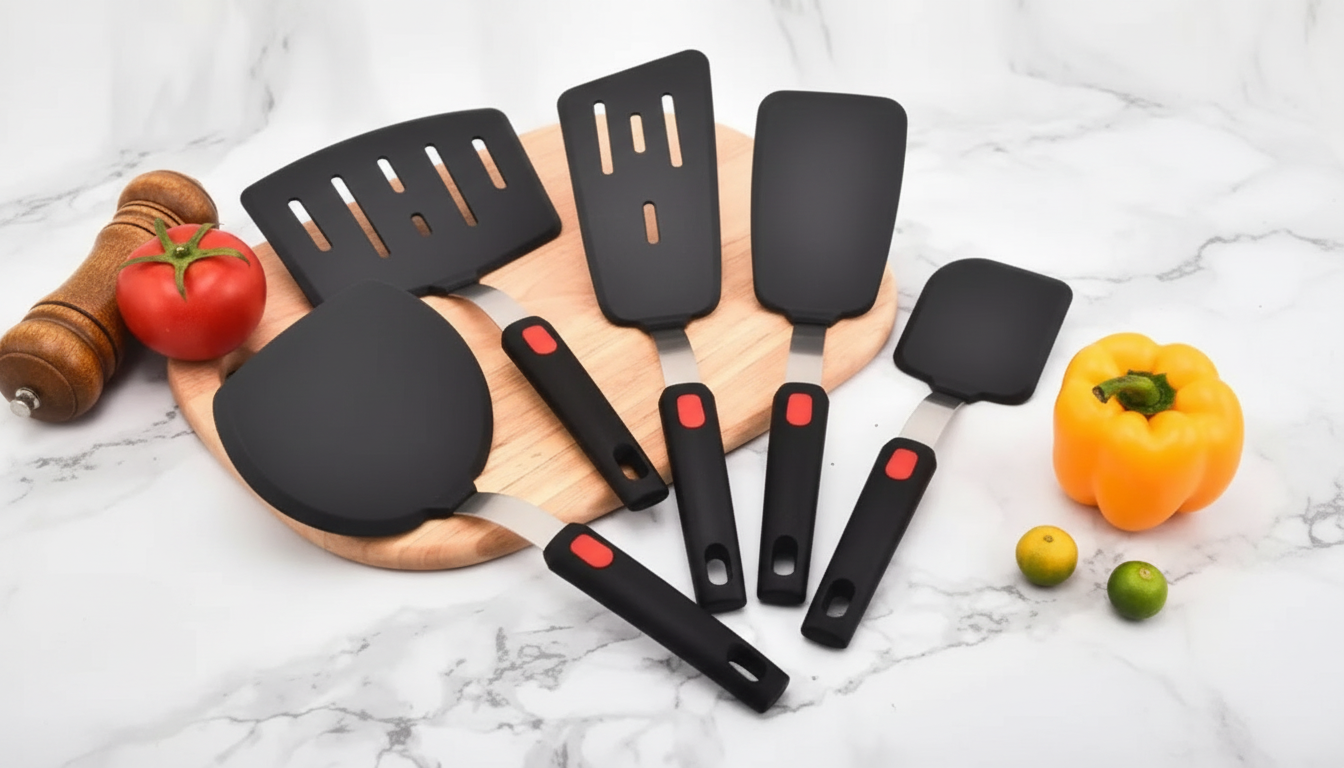
A dependable spatula set can be the difference between clean flips and stuck-on messes. This silicone-and-stainless design is built to protect delicate non-stick coatings while staying sturdy enough for everyday sautéing, scraping, folding, and serving—without bending, warping, or leaving scratches behind. For more guidance, see In-Depth Product Reviews: Silicone Spatulas, Turners, and ….
When a utensil feels “right” in the hand, it tends to live on the counter instead of getting buried in the drawer. A silicone working edge paired with a reinforced stainless steel structure is designed to cover the basics well—especially for non-stick kitchens where gentle contact matters. For further reading, see 4 Best Spatulas, Tested by Our Experts.
For shoppers who want one dependable set that transitions from stovetop to mixing bowl without babying their pans, the Premium Silicone & Stainless Steel Non-Stick Spatula Set for Effortless Cooking is a practical option built around that silicone-safe contact plus reinforcement for control.
Non-stick coatings and ceramic finishes do their best work when metal edges aren’t dragging, prying, or scraping. A spatula that’s thin enough to slide under food, yet soft enough to avoid gouging, helps keep everyday cookware looking (and cooking) better for longer.
For households that use non-stick skillets daily, the payoff is simple: fewer scratches, fewer stuck-on spots, and less frustration when lifting a just-set omelet or transferring cookies off a sheet pan.
Not all spatulas are interchangeable. A “best” choice depends on the cookware you own and what you cook most often.
| Material | Best for | Potential downsides |
|---|---|---|
| Silicone with stainless reinforcement | Non-stick pans, mixing bowls, everyday flipping and scraping | Avoid cutting directly on the edge; follow temperature/care guidance from the manufacturer |
| All-metal stainless steel | Searing, scraping on stainless or cast iron, smash burgers | Can scratch non-stick coatings |
| Nylon | Light non-stick use, basic stirring and turning | Can warp or soften at higher heat depending on rating |
| Wood/Bamboo | Gentle stirring, rustic cookware, low-heat tasks | Absorbs odors/stains; can crack if soaked |
In many kitchens, silicone-with-reinforcement becomes the “default” tool: it’s quiet on pans, flexible enough to follow curves, and sturdy enough to lift a loaded portion without folding in half. For more specialized jobs—like scraping browned bits from a stainless pan—an all-metal turner can still be a great backup, just not on coated cookware.
Small design details can change how smoothly dinner comes together. The sweet spot is a spatula that stays firm when you need leverage, but still flexes at the edge to keep contact even across the pan’s surface.
| Item | Why it complements the spatula set | Price |
|---|---|---|
| Reversible Pre-Seasoned Cast Iron Griddle with Non-Stick Surface for BBQ and Cooking | Adds a large, versatile cooking surface for pancakes, burgers, and grilled vegetables; use the spatula set for gentle handling when cooking on coated or non-stick cookware alongside cast iron. | 32.51 USD |
Silicone is generally considered non-scratch on coated surfaces when used normally. Avoid using sharp edges to pry, don’t cut food with the spatula, and skip abrasive cleaners that can roughen surfaces over time. Always follow your cookware manufacturer’s care guidance.
Heat tolerance depends on the silicone rating specified by the manufacturer. Keep the spatula away from direct flame and avoid leaving it resting on hot cookware for long periods, which can shorten its lifespan.
Wash promptly with mild soap and warm water, especially after oily foods or strongly colored sauces. For lingering smells, an occasional baking-soda soak can help; avoid abrasive pads, and dry thoroughly. Some gradual color pickup from spices or tomato sauces can happen over time.










Leave a comment