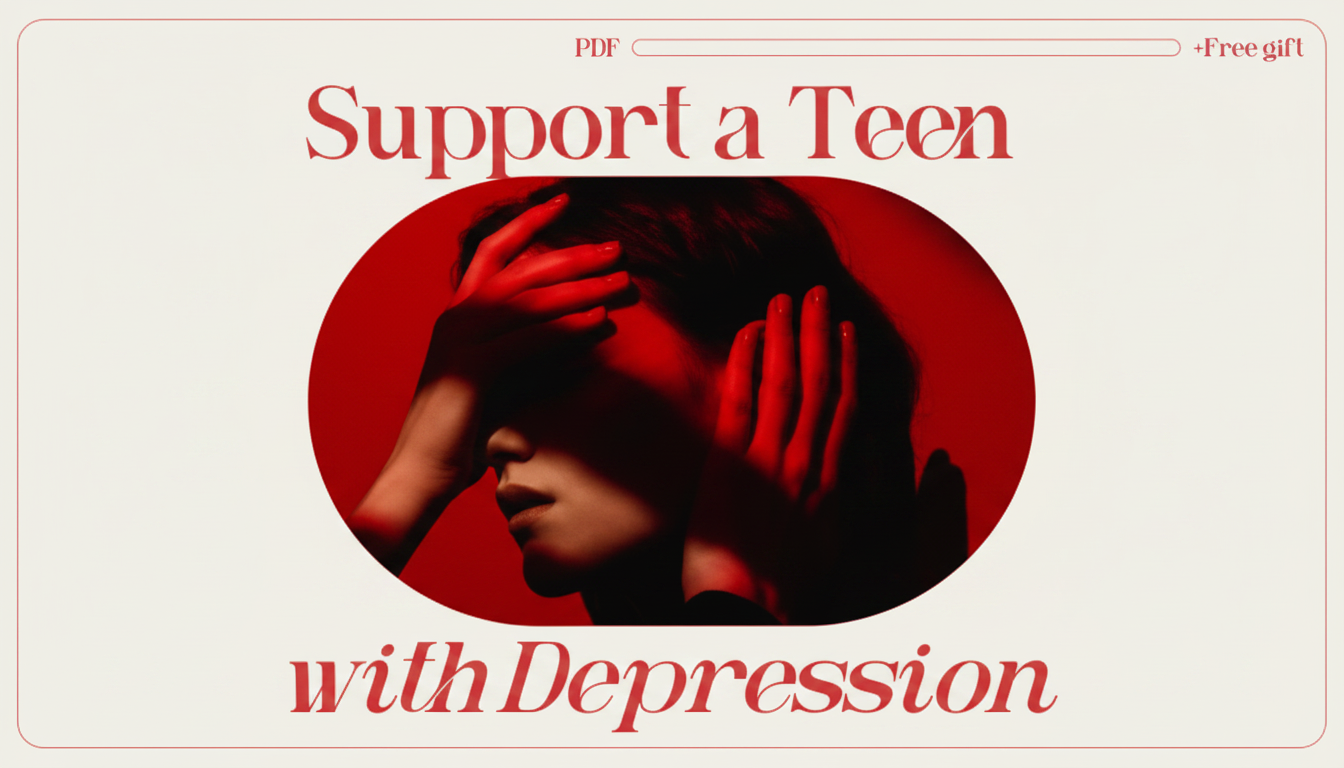
When a teen is depressed, “motivation” often looks like low energy, slowed thinking, and overwhelm—not laziness or defiance. Support works best when it reduces friction, protects connection, and builds tiny wins that rebuild confidence over time. The plan below helps parents and caregivers choose realistic daily supports, start conversations that don’t escalate, and create gentle structure that a teen can actually follow.
Depression can shrink energy, pleasure, concentration, and hope all at once. That means motivation often returns after mood and sleep improve, not before. A helpful reframe is to focus on “activation” (small doable actions) rather than waiting for “inspiration.”
If warning signs appear, ask directly about self-harm or suicidal thoughts. Clear questions do not increase risk; they often open the door to getting help. If there is imminent danger (active plan, intent, access to means), seek emergency help immediately.
Keep supportive adults in the loop—a co-parent, trusted relative, school counselor, pediatrician, or therapist—so you’re not carrying risk alone. For immediate support in the U.S., the 988 Suicide & Crisis Lifeline is available 24/7.
| Item | What to write down |
|---|---|
| Warning signs | Changes that signal risk (sleep collapse, agitation, giving away items, talking about death) |
| Trusted contacts | Parent/caregiver, relative, family friend, school counselor |
| Professional supports | Therapist/clinic, pediatrician, local crisis team |
| Emergency steps | Nearest ER, local emergency number, crisis hotline/text line |
| Means safety | How medications, sharps, and firearms are secured |
Depression can make teens feel ashamed, exposed, or “behind.” Communication that starts with empathy and stays specific helps them feel safer—so they can accept support.
When a teen is depressed, the barrier to starting can be enormous—even for simple tasks. Reducing “activation energy” is often more effective than reminding or lecturing.
| Goal | Smallest next step | Support to offer |
|---|---|---|
| Get out of bed | Sit up and put feet on the floor | Open curtains, bring water |
| Hygiene | Brush teeth for 30 seconds | Set timer, keep supplies visible |
| Schoolwork | Open laptop and name one task | Sit nearby, mute distractions |
| Movement | Walk to the mailbox | Go together, keep it short |
| Food | Eat something neutral (toast/yogurt) | Stock easy options, no commentary |
If you want a clear, repeatable daily plan you can keep on the fridge or in a notes app, Checklist: Spark Motivation — Your Action Plan to Support a Teen with Depression | Practical Guide for Parents & Caregivers on How to Motivate a Teenager with Depression walks you through connection scripts, micro-goals, and weekly resets.
For evidence-based background and resources, see the National Institute of Mental Health (NIMH) overview of depression and the American Academy of Pediatrics mental health resources.
Small routines can be easier to sustain when they’re paired with a low-pressure family rhythm—like a simple shared meal. If cooking feels like the one “normal” anchor your household can manage, a durable tool like the Reversible Pre-Seasoned Cast Iron Griddle with Non-Stick Surface for BBQ and Cooking can make quick breakfasts or one-pan dinners less complicated.
If you need a quick physical reset during tense moments (especially after a difficult conversation), a small soothing tool like the Ice Roller for Face & Eyes – Skin Tightening Facial Massage Tool can support a brief pause—cooling your face, slowing your breathing, and helping you re-enter the room calmer.
Focus on activation rather than motivation: pick micro-steps, offer two realistic choices, and use quiet body-doubling to help them start. Reduce friction first (prep, timers, smaller tasks) and praise effort and follow-through, not outcomes.
Lower the barrier to entry: start with a pediatrician or school counselor, and propose a time-limited trial (one session) instead of an open-ended commitment. If refusal comes with worsening warning signs, prioritize safety planning and urgent professional evaluation.
It’s an emergency if there are suicidal thoughts with a plan or intent, access to lethal means, self-harm, severe agitation, psychosis, overdose risk, or a sudden inability to function. If you believe there’s imminent danger, call emergency services or go to the nearest ER, and contact 988 for immediate crisis support.












Leave a comment