HomeBlogBlogSeasonal Wardrobe Reset: The Smart Men’s Checklist

Seasonal Wardrobe Reset: The Smart Men’s Checklist

Seasonal Wardrobe Reset: The Smart Men’s Checklist

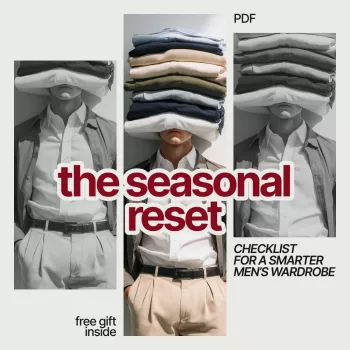
The Seasonal Reset Checklist for a Smarter Men’s Wardrobe

A seasonal reset keeps everyday outfits easy, cuts decision fatigue, and prevents closets from filling with duplicates and “maybe someday” pieces. This practical checklist turns wardrobe organization into a repeatable routine: review what worked, store what won’t, repair what’s worth saving, and build a tighter rotation for the months ahead. For more guidance, see Organizing & Storing Seasonal Clothing! – Clean My Space.

Set the reset rules (30 minutes before touching a hanger)

Before you start pulling clothes, decide how the reset will run so you don’t spiral into a full-day project. For further reading, see The Ultimate Men’s Capsule Wardrobe, in 15 Foolproof Pieces – GQ.

  • Pick a reset window: 60–90 minutes for a small closet, 2–3 hours for a full wardrobe.
  • Define the season’s needs: climate, commute, dress code, travel, and weekly activities (office days, gym, events).
  • Prepare four bins or bags: Keep Now, Store, Tailor/Repair, Donate/Sell.
  • Choose two “lanes”: one “uniform lane” for daily life (smart casual, workwear, athleisure) and one “upgrade lane” for elevated occasions. Use these lanes to judge borderline items.

If you want a printable, repeatable system you can run every season, keep a dedicated guide on hand: The Seasonal Reset Checklist for a Smarter Men’s Wardrobe – A Practical Guide for Men’s Seasonal Wardrobe Organization.

Step 1: Pull, sort, and make fast decisions

Speed comes from starting with the bulkiest categories and using a simple filter you can repeat without overthinking.

  • Start with the most space-consuming category: outerwear, sweaters, and shoes create immediate breathing room.
  • Use a simple decision filter: Fits today + feels good + matches at least 3 outfits = Keep Now.
  • Quarantine “almost” pieces: anything that needs tailoring, de-pilling, resoling, or stain removal goes into Tailor/Repair—with a deadline.
  • Avoid the memory trap: sentimental items get a small, separate container; keep the closet for wearable items only.
  • Handle duplicates: keep the best-condition, best-fitting version; store or donate the rest.

A useful rule for “maybe” items: if you wouldn’t wear it in the next two weeks for a normal day, it doesn’t belong in Keep Now. That doesn’t mean it’s trash—it just means it’s not in the current rotation.

Step 2: Refresh the core rotation (capsule logic without being strict)

The goal isn’t a minimalist wardrobe. It’s a tighter rotation where everything earns its space and outfits build themselves.

  • Build around essentials for the season: 2–3 pairs of pants/jeans, 5–7 tops, 1–2 layering pieces, 1 main jacket, 2–3 pairs of shoes.
  • Balance colors: anchor neutrals (navy, charcoal, olive, tan, black/white) and add 1–2 accent colors that work across categories.
  • Check “outfit math”: each top should work with at least two bottoms; each layer should work over at least three tops.
  • Prioritize comfort and movement: if it pinches, rides up, or needs constant adjusting, it drains confidence—move it to Store or Donate.
  • Keep one slot open: for a season-specific need (rain shell, linen shirt, insulated vest, dress shoe refresh).

When you’re unsure, test the piece against your two lanes. If it doesn’t support your daily “uniform lane” or elevate your “upgrade lane,” it’s likely clutter—even if it’s a nice item.

Step 3: Condition check—clean, repair, and protect

A reset isn’t complete until the clothes you keep are actually ready to wear. This is where a wardrobe stops feeling random and starts feeling reliable.

  • Laundry reset: wash or dry-clean items before storing to prevent odors and moth damage. Follow practical laundry basics from the American Cleaning Institute.
  • Inspect and log quick fixes: missing buttons, loose hems, broken zippers, knit snags, shoe heel wear.
  • Shoe care basics: wipe down, condition leather, refresh insoles, and rotate pairs to extend lifespan.
  • Storage protection: use breathable garment bags for suits/coats, cedar or lavender for deterrence, and avoid plastic for long-term storage. For general storage best practices, see the Good Housekeeping Institute’s clothing storage tips.
  • Create a one-week repair sprint: schedule tailoring/shoe repair so the pieces return before the season’s peak.

Optional but effective: pair the wardrobe reset with a simple grooming refresh so your “kept” pieces look sharper immediately. A quick add-on for puffy eyes or post-gym mornings is the Ice Roller for Face & Eyes – Skin Tightening Facial Massage Tool.

Season-by-season reset checklist (what changes each time)

Seasonal reset quick actions

Season Keep within reach Store away One smart upgrade to consider
Spring Light jacket, versatile sneakers, breathable button-downs Heavy coats, thick knits, insulated boots Water-resistant outer layer for changeable weather
Summer Short-sleeve shirts, lightweight chinos/shorts, breathable shoes Wool trousers, heavy denim, bulky layers One linen or airy cotton shirt that pairs with multiple bottoms
Fall Overshirts, midweight knits, boots, darker denim High-summer pieces, ultra-light fabrics A versatile layer (cardigan/overshirt) that replaces multiple jackets
Winter Insulated coat, warm knits, gloves/scarf, weather-ready boots Linen, thin tees, minimal footwear Better socks/base layers for warmth without bulk

Organize the closet so it stays reset

Plan purchases with a “gap list” (avoid impulse and duplicates)

FAQ

How often should a seasonal wardrobe reset happen?

Aim for four times a year at seasonal transitions, with a quick 10-minute mini-reset monthly to prevent buildup and keep repairs from piling up.

What’s the fastest way to decide what to keep versus store?

Use a three-part filter: fits today, feels good, and works in at least three outfits. If it misses one of those, move it to Store, Tailor/Repair, or Donate/Sell.

How should off-season clothes be stored to avoid damage?

Clean items first, store them in breathable containers, add cedar or lavender for protection, avoid long-term plastic, and keep everything dry and out of direct sunlight.

Was this article helpful?

Yes No
Leave a comment
Top

Shopping cart

×