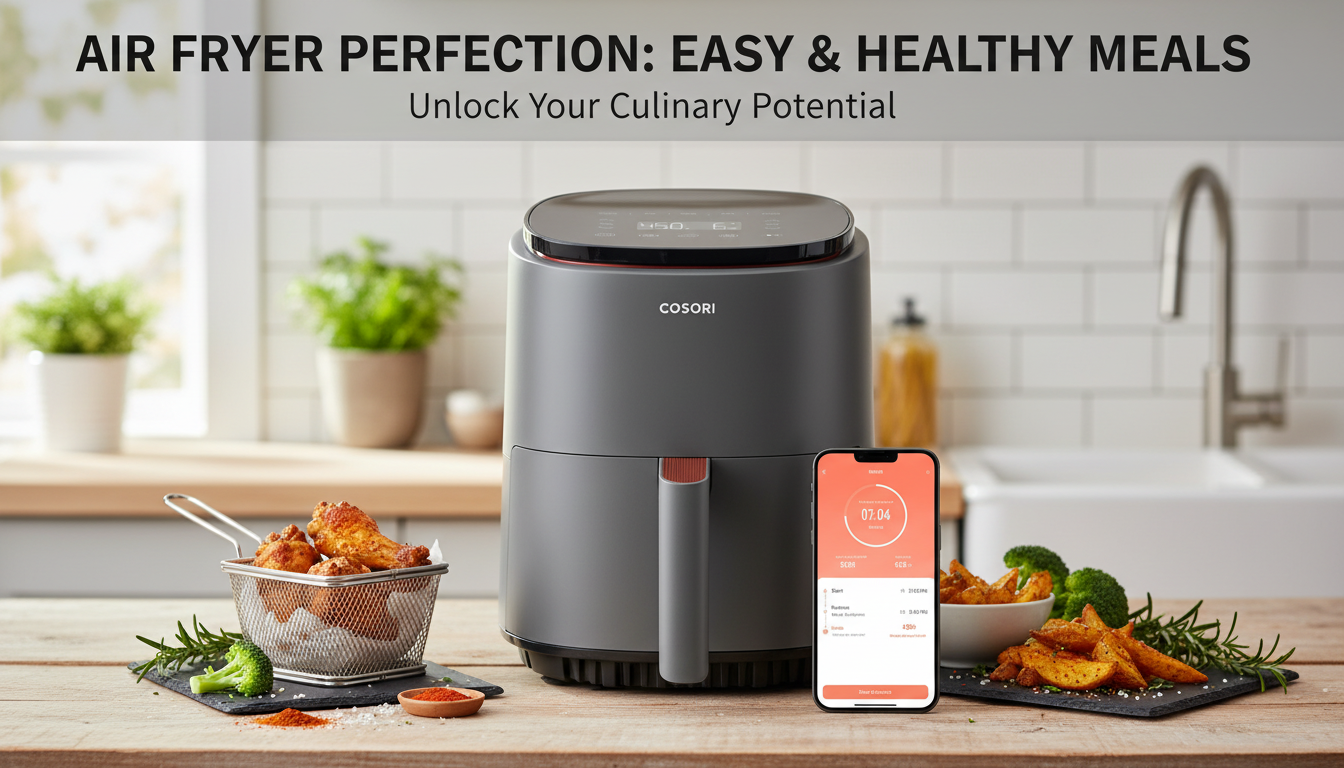
A 4-quart smart air fryer can make weeknight cooking feel more predictable: set a preset, monitor progress from your phone, and clean up fast when the parts are dishwasher-safe. This guide explains what a 7-function, app-connected model is best for, what to look for in daily use, and how to get reliably crispy results with common foods—without drying them out.
What a 4-quart smart air fryer fits best
A 4-quart capacity tends to hit a sweet spot for small households. It’s typically ideal for 1–3 people, quick mains, and sides—without heating a full-size oven for a single portion.
- Right-size capacity for everyday meals: Great for a couple servings of fries or veggies, or a simple protein-and-side setup.
- Small-kitchen friendly: A compact footprint helps in apartments, dorm-style kitchens, and shared spaces where counter room and ventilation matter.
- Best in smaller batches: For the crispiest texture, avoid packing food tightly; cooking in rounds often beats overfilling.
- Useful for meal prep: Reheating leftovers in an air fryer can restore crunch and reduce sogginess compared to microwaving.
Seven functions: how the presets change everyday cooking
Preset modes are built to reduce guesswork by pairing typical time and temperature ranges with common foods. They’re also a helpful “baseline” when cooking the same items repeatedly.
- Presets simplify the first attempt: You’ll spend less time experimenting with settings for staples like fries, wings, veggies, and reheats.
- Adjust based on real-world variables: Thickness, moisture level, and batch size still affect cook time—so treat presets as a starting point.
- Get better browning with simple habits: Shake, flip, or stir halfway through whenever the food shape allows.
- Keep a quick reference: Knowing which function to reach for helps you cook faster and more consistently.
Common uses for multi-function air fryer presets
| Function |
Best for |
Practical tip |
| Air Fry |
Fries, wings, breaded snacks, frozen foods |
Shake the basket halfway for even browning. |
| Roast |
Vegetables, salmon, pork chops |
Lightly oil foods to improve browning and prevent dryness. |
| Bake |
Muffins, small cakes, hand pies |
Use a small, air-fryer-safe pan; avoid blocking airflow. |
| Reheat |
Pizza slices, leftovers, fried foods |
Lower temperature than air fry to heat through without over-browning. |
| Dehydrate |
Herbs, fruit slices, jerky-style snacks |
Slice evenly; rotate trays/basket position if applicable. |
| Broil/Finish (if included) |
Melting cheese, crisping tops, final sear |
Use short bursts and watch closely to avoid scorching. |
| Keep Warm (if included) |
Holding food before serving |
Keep time limited to prevent drying; cover loosely if appropriate. |
App control: when it’s genuinely useful
Smart features are most valuable when they reduce the number of times you need to hover in the kitchen—especially during short, high-heat cycles where overcooking can happen quickly.
- Remote start/stop and timer edits: Handy when you’re juggling kids, work calls, or side dishes and want to adjust timing without rushing back.
- Notifications reduce overcooking: Air-fried items can go from golden to too dark fast; alerts help you catch the moment.
- Recipe guidance and preset management: Useful for standardizing repeat meals (same nuggets, same veggies, same settings) so results stay consistent.
- Placement matters: Smart control works best where Wi‑Fi is reliable and the unit can vent steam safely away from walls and cabinets.
Dishwasher-safe parts: what to confirm before buying
Dishwasher-safe parts can be a real quality-of-life upgrade, but it’s important to know exactly what can (and can’t) go in the machine.
Performance and results: getting crisp food without drying it out
- Don’t overcrowd: Airflow is the “secret ingredient” for even browning; cook in batches when needed.
- Use a light coating of oil for fresh foods: Especially for vegetables, a small amount of oil improves browning and helps prevent a dried-out surface.
- Flip or shake halfway: Fries, nuggets, and bite-size foods brown more evenly with a mid-cook toss.
- Use a thermometer for proteins: Cook to safe internal temperatures and rest briefly after cooking for juicier results. For quick reference, use the USDA safe minimum internal temperature chart at USDA FSIS.
Safety and placement tips for daily use
- Ventilation clearance: Leave space around the air fryer so hot exhaust doesn’t blast cabinets, backsplash areas, or cords.
- Skip aerosol sprays if the basket is nonstick: Some aerosols can contribute to coating breakdown; use an oil mister or brush instead.
- Use heat-safe utensils: Silicone or wood tools help prevent scratches that can shorten the life of nonstick surfaces.
- Unplug before deep cleaning: Keep water away from the main unit’s electrical components. For general home safety guidance, see the CPSC safety education resources.
Quick care routine to keep it running like new
Who this smart 4-quart model is ideal for
Shop in-stock picks
FAQ
Can dishwasher-safe air fryer parts go in the dishwasher every time?
They can, but frequent hand-washing is often gentler and may extend the life of nonstick coatings. Always confirm which parts are rated dishwasher-safe, and keep the main unit out of water.
What can a 4-quart air fryer cook at once?
Typically, it can handle about 1–2 chicken breasts, a couple servings of fries, or a few portions of vegetables—depending on shape and thickness. For best crisping, avoid overcrowding and cook in batches when needed.
Do smart/app-controlled air fryers work without Wi‑Fi?
In most cases, the core cooking functions work from the onboard controls even without Wi‑Fi. App features like remote control, notifications, and recipe tools usually require pairing and a reliable connection.
Recommended for you













Leave a comment