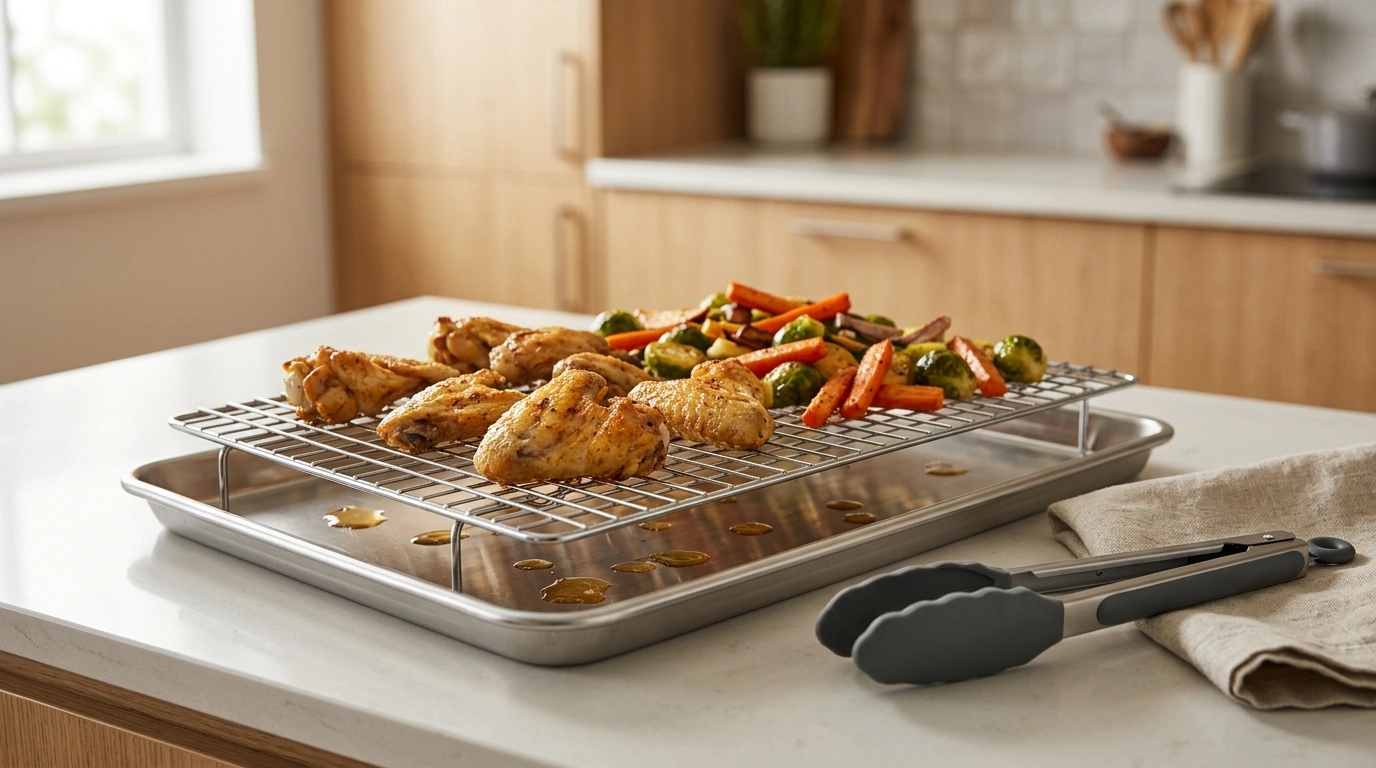
A dependable tray-and-rack combo can simplify weeknight sheet-pan dinners, weekend baking, and mess-free glazing. A stainless steel baking tray and cooling rack set is built for steady heat, better airflow, and quicker cleanup—without depending on disposable liners or fragile coatings.
Using a rack with a tray changes how heat and moisture move around your food. Instead of sitting in its own drippings, food is elevated so hot air can circulate and moisture can escape.
| Task | Recommended Setup | Why It Works |
|---|---|---|
| Crispy chicken wings | Rack inside tray | Airflow around wings reduces steaming and improves browning |
| Roasting vegetables | Tray only or rack for extra crisp | Direct contact browns faster; rack adds airflow for drier crisp edges |
| Cooling cookies | Rack on counter | Prevents carryover heat from softening bottoms |
| Glazing donuts or pastries | Rack over tray | Excess glaze drips into tray for less mess |
| Baking bacon | Rack inside tray | Fat drains away and strips stay flatter |
Stainless steel earns its keep in kitchens that cook often. It handles humidity, frequent wash cycles, and high-heat roasting without the short lifespan that can come with thinner, coated alternatives.
For cookware safety and food-contact considerations, it can be helpful to reference the FDA’s overview of food contact substances.
Stainless steel can release food well when it’s treated correctly. The goal is to manage moisture, use a little fat where needed, and avoid letting sugars or proteins bake on for too long after cooking.
When roasting proteins, always cook to safe internal temperatures. For quick reference, use FoodSafety.gov’s safe minimum internal temperature chart and the USDA’s broader guidance on cooking and food safety.
The easiest cleanup starts with timing: don’t let baked-on grease cool into a hard varnish. A short soak and gentle tools go a long way toward keeping stainless steel looking bright.
A rack’s biggest advantage is airflow. Hot air can circulate underneath, and moisture has a clear escape route instead of pooling where it can soften crusts and skin.
If you want one piece of gear that supports roasting, cooling, and clean glazing in the same workflow, a matched set is the easiest upgrade. The Stainless Steel Baking Tray & Cooling Rack Set – Non-Stick, Durable, Easy Clean is designed so the tray catches drips while the rack improves airflow for crisping and cooling.
For cooks who also want a dedicated surface for stovetop or grill-top searing, pair it with the Reversible Pre-Seasoned Cast Iron Griddle with Non-Stick Surface for BBQ and Cooking to cover both high-heat searing and oven crisping with minimal fuss.
It can be, as long as the rack is specifically oven-safe and made from heat-tolerant materials like stainless steel. Make sure it fits securely inside the tray and avoid racks with coatings that aren’t rated for oven temperatures.
Lightly oil the rack, pat proteins dry before cooking, and avoid heavy sugar-based sauces directly on the metal when possible. Prompt cleaning after cooking also helps prevent residue that can cause future sticking.
Soak both pieces in hot, soapy water, then use a non-abrasive scrubber for the tray and a soft brush for the rack corners. For stubborn spots, apply a baking soda paste, let it sit briefly, and scrub gently—skipping aggressive metal scouring that can scratch.











Leave a comment