Think Bright: A Curated Reading Guide to Strengthen Positive Thinking
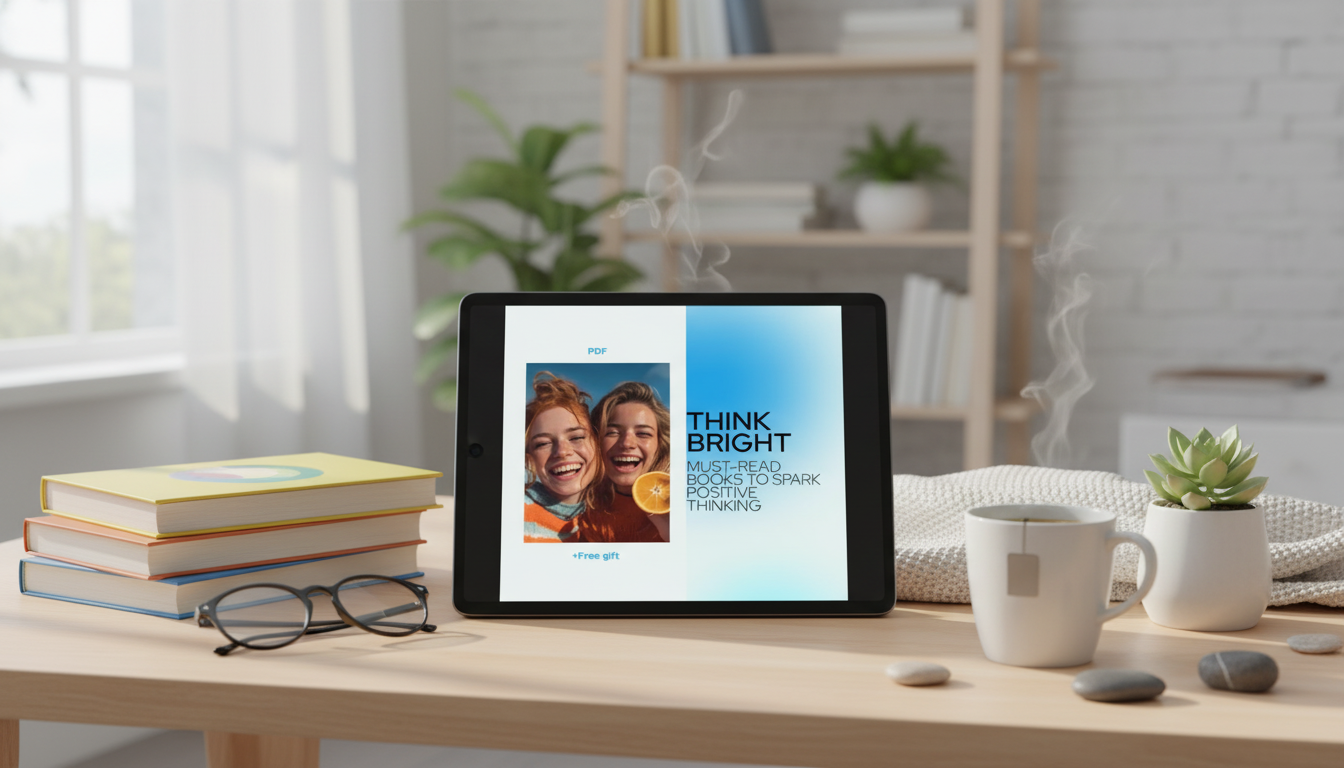
Think Bright is a digital reading guide built around mood-lifting, perspective-shifting books that help reinforce optimistic habits. It’s designed for quick reference—ideal for choosing the next read when motivation is low, routines feel stale, or a reset is needed. Instead of scrolling through endless lists, you get a focused “menu” of recommendations that support practical mindset skills you can carry into daily life.
What This Digital Guide Helps With
- Turning “I should read something uplifting” into a clear shortlist of book options
- Building a repeatable reading habit that supports a steadier mindset over time
- Finding books that fit different needs: confidence, resilience, calm, purpose, and daily encouragement
- Reducing decision fatigue with a curated, themed approach instead of endless browsing
If you want a single place to start, the Think Bright digital download is set up for quick decisions: pick a theme, pick a title, and begin with a simple schedule that fits your week.
Who It’s For (and When It’s Most Useful)
- Readers who enjoy self-development but want clearer direction on what to pick next
- Anyone wanting small, consistent mindset inputs rather than big, one-time “overhauls”
- Busy schedules: the guide format supports quick selection and easy follow-through
- Common moments to use it: new job, burnout recovery, life transitions, goal resets, or a weekly “mental refresh” ritual
It’s also useful for people who already own a few personal growth books but struggle to choose what fits right now. A theme-based list cuts through that indecision and keeps your routine moving.
A Simple Way to Use the Guide as a Weekly Mindset Routine
- Choose one theme for the week (gratitude, confidence, calm, resilience, purpose).
- Pick one book from the guide that matches the theme and your current attention span (short chapters vs. deeper dives).
- Set a low-friction target: 10–20 minutes per day or a chapter per session.
- Add one “carry-forward” practice from the reading (a prompt, a reflection question, or a small behavior change).
- End the week with a 5-minute review: what helped, what didn’t, what to try next.
This approach keeps your expectations realistic and makes “positive thinking” feel less like a vague goal and more like a set of trainable skills.
Reading Themes That Commonly Boost Positive Thinking
Positive thinking doesn’t mean ignoring stress, disappointment, or uncertainty. It’s often about building mental flexibility and choosing more helpful interpretations—especially under pressure. Research and educational resources in positive psychology highlight skills like savoring, gratitude, and strengths-based thinking as factors that can support well-being over time (see American Psychological Association — Positive Psychology).
- Reframing: learning to challenge unhelpful interpretations and widen perspective
- Optimism skills: practicing realistic hope rather than forced positivity
- Gratitude and savoring: noticing what’s working and reinforcing it (more background at Greater Good Science Center — Gratitude)
- Self-compassion: replacing harsh self-talk with supportive self-coaching
- Meaning and values: aligning daily actions with what matters most
Theme-to-Outcome Map (Quick Reference)
| Theme |
What it strengthens |
Best time to pick it |
| Reframing |
Flexible thinking and reduced rumination |
When stuck in a negative loop |
| Optimism skills |
Forward momentum and persistence |
When motivation is low |
| Gratitude & savoring |
Mood stability and appreciation |
When days feel “flat” or repetitive |
| Self-compassion |
Confidence and emotional recovery |
After mistakes, setbacks, or criticism |
| Meaning & values |
Clarity and direction |
During transitions or big decisions |
What to Look For in a “Right Now” Book Choice
- Match the tone to the moment: gentle support can be better during burnout; energizing challenge can fit a fresh-start season.
- Prefer actionable formats when attention is limited: prompts, exercises, short chapters, and summaries make follow-through easier.
- Pick one primary goal at a time: calm, confidence, habits, relationships—one focus reduces overwhelm.
- Avoid stacking too many new practices: choose one idea to implement for 7 days so it has a chance to stick.
If your week is already full, pairing reading with a short mindfulness routine can help you absorb the ideas without needing extra time. For a plain-language overview of mindfulness basics, see NIH (NCCIH) — Meditation and Mindfulness.
Digital Download Benefits (Practical Advantages)
- Instant access: start a new reading cycle immediately without waiting for shipping.
- Easy to revisit: use it as a reusable “menu” whenever a new book is needed.
- Portable reference: keep it on a phone, tablet, or laptop for quick decisions.
- Great for planning: build a personal reading path across months (theme-by-theme).
A Clear Next Step
When you’re ready to start, use the Think Bright: Must-Read Books to Spark Positive Thinking | Digital Download as your weekly reset tool—especially when you want structure without pressure.
More Digital Guides You May Like
FAQ
Is this a book or a guide to books?
Think Bright is a digital guide to books, not a single standalone book. It organizes must-read recommendations around positive-thinking themes so it’s easier to choose what to read next based on what you need most.
How soon can the guide be used after purchase?
It’s a digital download with immediate access, so it can be used the same day. Many people start with a simple weekly theme and a short daily reading target right away.
What if positive thinking feels forced or unrealistic?
The guide is built around practical mindset skills like reframing, self-compassion, and realistic optimism—approaches that acknowledge challenges rather than denying them. Starting with themes like resilience and self-compassion often feels more natural when life is heavy.
Recommended for you













Leave a comment