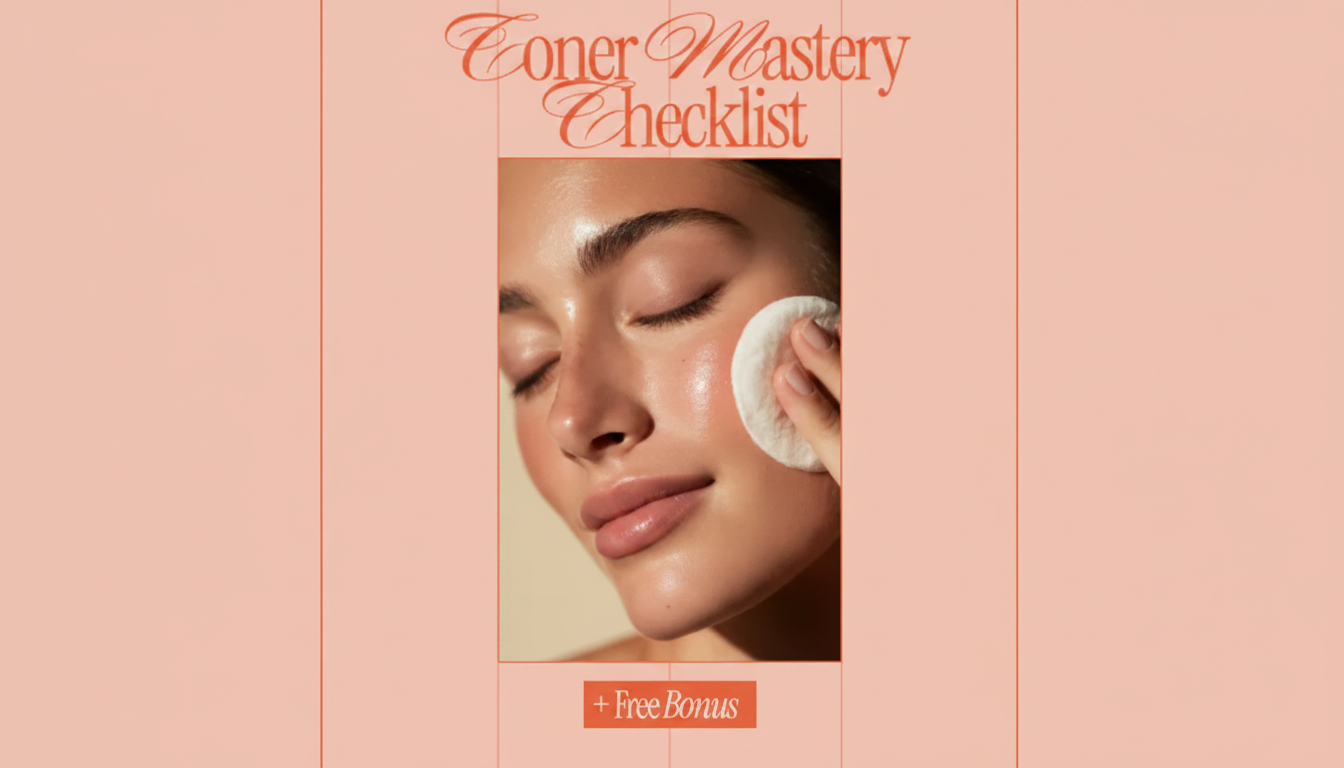
Toners can be the missing link between cleansing and treatment—helping hydrate, calm, lightly exfoliate, or prep skin so the rest of a routine applies more evenly. The challenge is that “toner” can mean very different formulas, from cushiony hydration mists to acid-based exfoliants that behave more like leave-on treatments. This guide breaks down the main toner types, what they’re best at, and a simple checklist for choosing one that fits skin needs without overdoing actives.
A modern toner is best thought of as a supportive “in-between” step. It can add hydration, reduce that tight post-wash feeling, and deliver targeted ingredients in a lightweight layer before serums and moisturizer.
If the basics already feel great—cleanser, moisturizer, sunscreen—there’s no rule that you must add toner. The value comes from picking a toner that fills a real gap (hydration, calming, gentle exfoliation, or tone support) rather than duplicating what other steps already do.
Most toners fall into a handful of categories. The key is matching the category to a single priority, then adjusting frequency based on how your skin behaves over the next few weeks.
| Toner type | Best for | Common ingredients | How often to start |
|---|---|---|---|
| Hydrating | Tight, flaky, dehydrated feel | Glycerin, hyaluronic acid, panthenol | Daily (AM/PM if tolerated) |
| Soothing | Sensitivity, visible redness, post-procedure care | Centella, allantoin, colloidal oatmeal | Daily (usually safe) |
| BHA exfoliating | Blackheads, clogged pores, oily areas | Salicylic acid | 2–3 nights/week |
| AHA exfoliating | Dullness, rough texture, uneven feel | Lactic acid, glycolic acid | 1–2 nights/week |
| PHA exfoliating | Gentler exfoliation for reactive skin | Gluconolactone | 2 nights/week |
Use this five-step process to avoid the two most common toner problems: choosing something that doesn’t address your real need, or choosing something too active for your current skin state.
For general skin-care fundamentals (cleansing, moisturizing, and sun protection), the American Academy of Dermatology Association offers clear guidance that pairs well with any toner approach: AAD: Skin care basics.
If you’re choosing BHA for congestion or blackheads, it helps to understand what salicylic acid does and how to introduce it gradually; Cleveland Clinic offers a helpful explainer: Cleveland Clinic: Salicylic Acid.
Recommended digital download:
Toner Mastery Checklist – What Toners Do and How to Choose | Skincare Routine Guide & Digital Download.
Also available in our digital library:
Pet Nutrition 101: What Every Pet Parent Needs to Know | Digital eBook Download.
No—toner is optional. It’s most helpful when it adds a specific benefit your routine lacks, like extra hydration, soothing support, or carefully controlled exfoliation.
Start 1–3 nights per week depending on the formula strength and your skin sensitivity. Increase gradually only if skin stays comfortable—no persistent stinging, peeling, or redness.
Hydrating and soothing toners usually pair well with either. Exfoliating acid toners are often best alternated with retinoids at first, and vitamin C pairings depend on tolerance—keep routines simple if irritation shows up.













Leave a comment