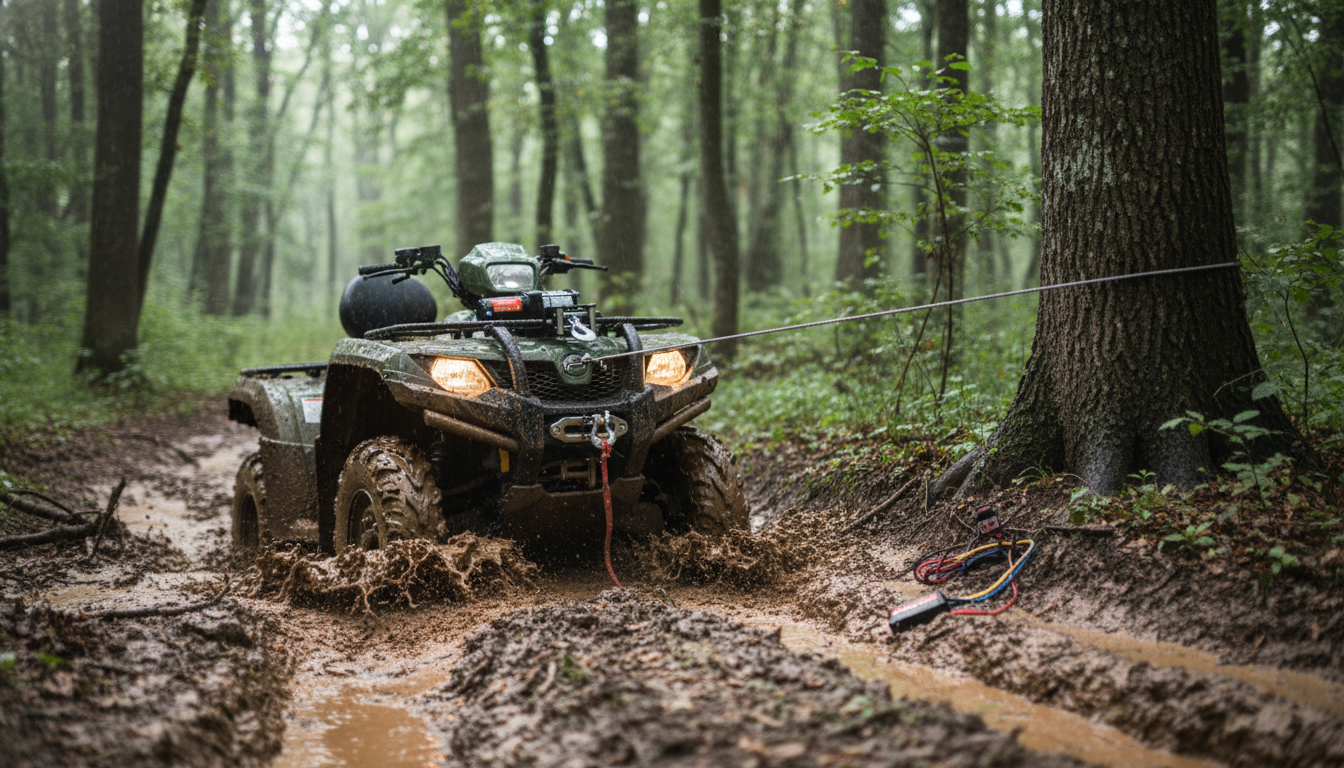
A dependable winch turns a stuck moment into a controlled recovery—especially when water crossings, mud holes, and sudden weather are part of the route. The right waterproof ATV/UTV winch paired with a steel cable can handle repeated wet use, gritty conditions, and the abrasion that comes with rocky terrain and utility work. Below is what to look for, how to size a winch to your machine, and how to keep every pull smooth, safe, and repeatable.
Not every ride is a winch ride, but certain conditions make water resistance far more than a nice-to-have. If your trails include frequent splashes, standing water, or heavy rain, the electrical system is constantly challenged by moisture and grime. Waterproofing helps reduce corrosion, intermittent connections, and “it worked yesterday” failures.
Steel cable remains a practical choice for riders who prioritize abrasion resistance and heat tolerance. It’s well-suited to rocky trail systems, rough fairlead contact, and repeated pulls where drum heat can build up. For utility-focused machines, steel cable can deliver long service life as long as it’s inspected and stored correctly.
| Feature | Steel cable | Synthetic rope |
|---|---|---|
| Abrasion resistance | High | Medium (sleeves help) |
| Weight | Heavier | Lighter |
| Handling comfort | Requires gloves; possible burrs | Easier on hands; still use gloves |
| Maintenance | Inspect for kinks, rust, broken strands | Inspect for frays, UV damage, grit |
| Heat tolerance at drum | Generally higher | Lower; heat can weaken fibers |
| Best for | Rugged, abrasive, utility pulls | Frequent self-recovery, lightweight setups |
“Waterproof” often varies by brand, but the most dependable setups share the same core protections: sealed housings, protected electricals, and corrosion resistance for long-term wet use.
For additional safety and technique guidance, consult established references like Warn Industries’ winching resources and workplace-grade handling basics from OSHA (wire rope inspection and safe handling principles apply on the trail, too).
Correct fitment is more than bolting on a winch. Your machine’s real-world weight, the kind of terrain you ride, and the electrical system all influence how confident the setup feels when it’s time to pull.
| Item | Why it helps |
|---|---|
| Tree saver strap | Creates a secure anchor without damaging bark |
| D-shackles or soft shackles | Connects straps and blocks safely when rated correctly |
| Snatch block | Reduces load on the winch and enables better pull angles |
| Gloves | Protects hands from burrs and pinch points |
| Line damper | Helps control recoil if a line or connection fails |
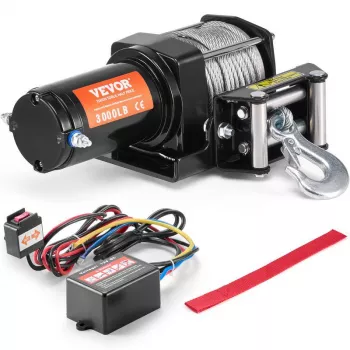
For riders who regularly deal with wet trails and abrasive terrain, the Waterproof ATV UTV Winch with Steel Cable is a practical recovery upgrade. It’s designed for muddy, splash-prone routes where dependable operation matters, and the steel cable setup fits riders who expect rough contact and repeated utility pulls.
| Detail | Value |
|---|---|
| Product | Waterproof ATV UTV Winch with Steel Cable |
| Price | 205.51 USD |
| Availability | In stock |
| Product page | View details |
If your rides include destination planning or extended weekends on the road, these in-stock picks can pair well with trail prep and trip logistics: Top 10 Must-See U.S. National Parks + Fast Facts (Digital Travel Guide) and Pet Nutrition 101 (Digital eBook).
“Waterproof” typically means resistant to splashes and water intrusion, not guaranteed protection from prolonged submersion. Brief submersion may be tolerated depending on seals, but deeper or longer exposure can force water in; after deep water, rinse, dry, and inspect electrical connections.
Steel cable is often better for abrasion-heavy and high-heat situations, especially in rocky terrain and utility pulling. Synthetic rope is lighter and easier to handle, but it needs protection from abrasion and heat and should be kept clean of grit.
Spool steel cable under light, steady tension so each wrap lays tight and even across the drum. Avoid severe pull angles that cause stacking; stop and correct the lay if it starts piling up, and always use gloves while keeping hands clear of the fairlead.












Leave a comment