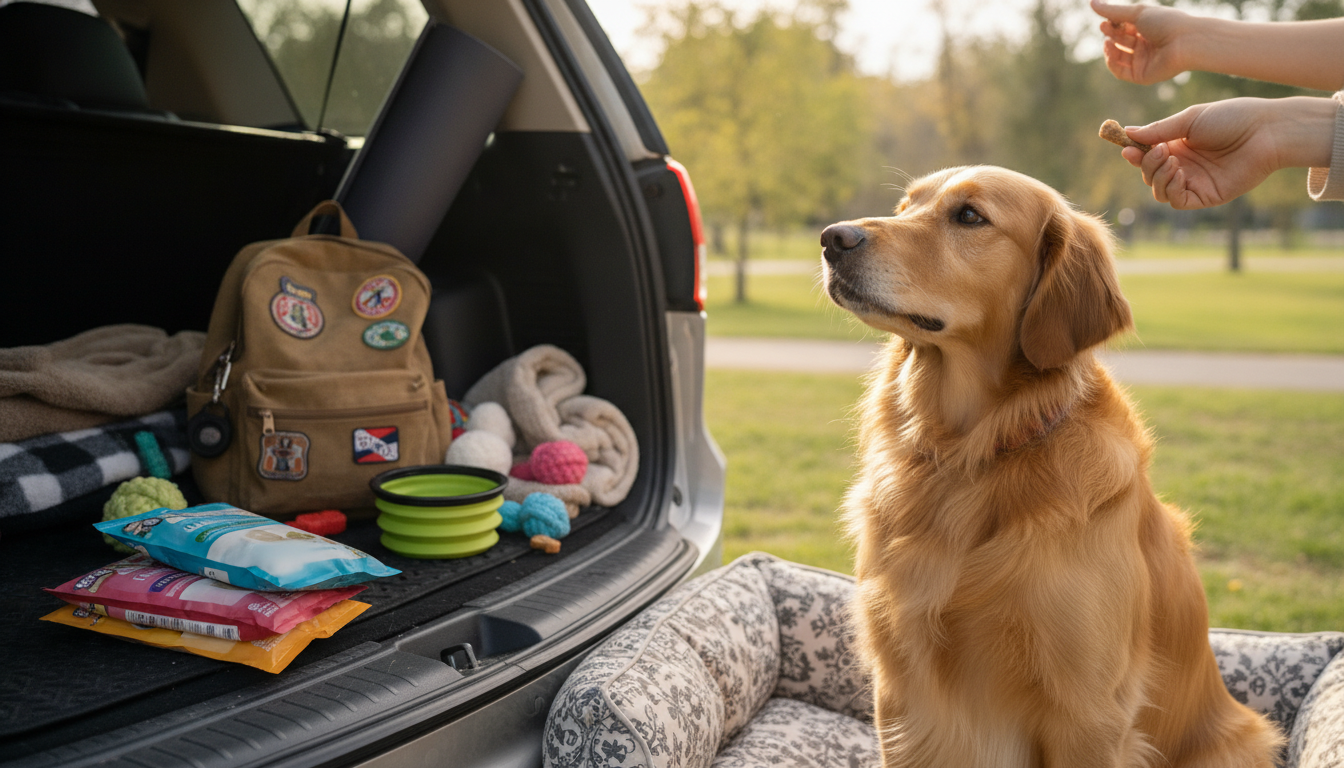
The seven basic dog commands are simple cues that build everyday manners, improve safety, and make walks and home life easier. A solid starter set includes:
A default “polite” position that helps curb jumping and creates calm at doors, food bowls, and greetings.
Teaches your dog to hold a position until released. Start with one second and one step, then gradually add duration, distance, and distractions.
The most important safety cue. Reward heavily when your dog returns, and avoid calling your dog for things they dislike (like ending play abruptly).
A relaxing position that’s useful for settling in busy places. Lure into a down, mark the moment elbows hit the floor, then reward.
Prevents grabbing unsafe items. Teach it first with low-value objects, then progress to more tempting distractions on walks.
Builds loose-leash walking and focus. Reward your dog for being near your side and check in often with short, upbeat practice.
A clear cue to get paws off people or furniture (when needed). Reward four paws on the floor so your dog learns what to do instead.
For step-by-step guidance on teaching these cues with rewards and beginner-friendly tools, visit this beginner dog training guide.
Keep practice short, consistent, and positive. A handful of successful reps beats a long session where your dog gets tired or frustrated.
For 7 Basic Dog Commands Every Beginner Should Teach, the best answer depends on fit, material, care instructions, and how the product will be used day to day.
Checking those details first helps avoid a poor match and keeps the choice practical after delivery.
For 7 Basic Dog Commands Every Beginner Should Teach, the best answer depends on fit, material, care instructions, and how the product will be used day to day.
Aim for 3–7 minutes, 1–3 times per day. End while your dog is still engaged, and use small rewards to keep it fun and focused.












Leave a comment