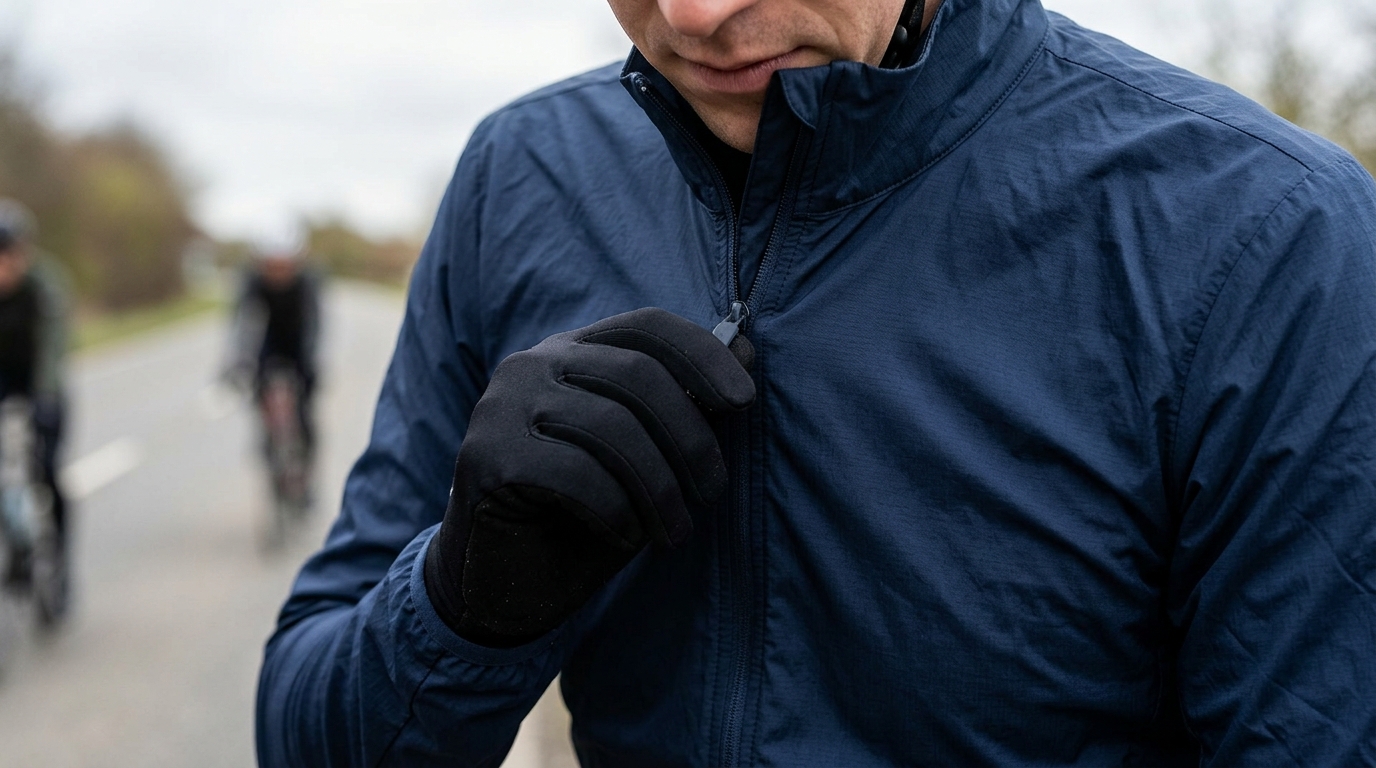
The best windbreaker jacket for cycling is one that blocks wind where it matters most (chest and arms) while still breathing enough to prevent that clammy, overheated feeling on climbs. For most riders, a cycling-specific windbreaker with a slim, on-bike fit and ventilation features will outperform a general-purpose “wind jacket,” especially in cold, gusty conditions.
Wind protection + targeted breathability: A windproof front panel paired with more breathable fabrics under the arms or along the back helps manage sweat without sacrificing comfort in headwinds.
Light water resistance: A DWR-treated shell is ideal for road spray and brief drizzle. For steady rain, a true rain jacket is the better tool.
Ride-ready fit: Look for a dropped tail for coverage in the riding position, close cuffs that won’t flap, and enough stretch to avoid bunching at the shoulders.
Packability: The best options compress small enough for a jersey pocket or seat bag, making them easy to deploy when the wind picks up or the descent gets cold.
Visibility: Reflective accents are a real benefit for early morning rides and gray-weather commutes.
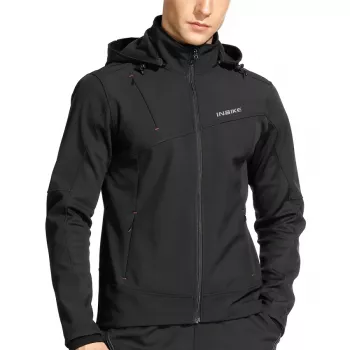
If riding in genuinely cold wind, a lightly insulated (thermal) windbreaker can be the sweet spot between a thin shell and a bulky winter jacket. A well-designed hood can add noticeable warmth during stops or slower sections, and it can pair well with a cap or helmet-compatible design depending on the jacket.
For a deeper, cold-weather-focused breakdown of features and use cases, see the guide here: hooded thermal cycling windbreaker for cold, windy rides.
For Best Cycling Windbreaker Jacket: Fit, Breathability, Warmth, the best answer depends on fit, material, care instructions, and how the product will be used day to day.
It should feel snug in the riding position without pulling across the shoulders, and it shouldn’t billow at speed. Aim for enough room to add a thin base layer, but avoid excess fabric that flaps in the wind.










Leave a comment