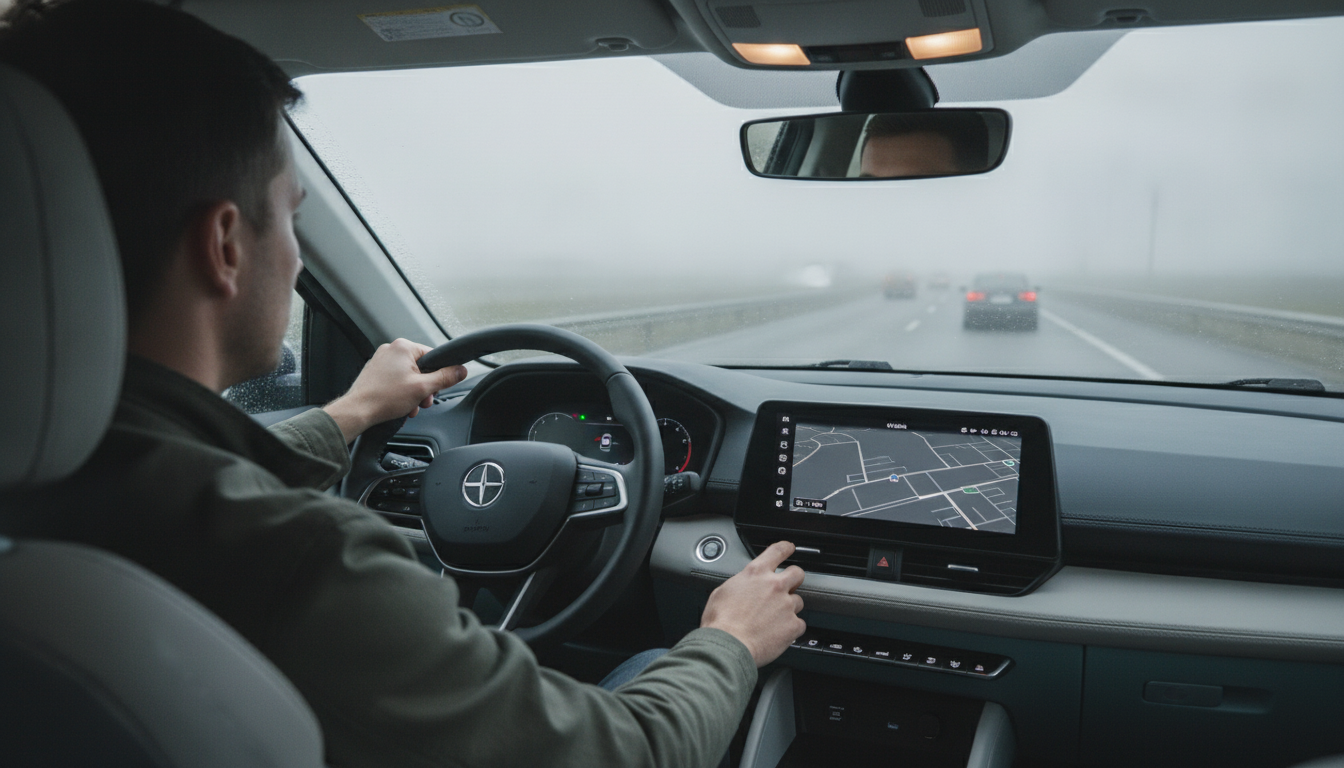
When your line of sight is obstructed, speed and/or lane position may need to be adjusted until your sight is restored. In plain terms: slow down to buy time and, if it’s safe and legal, shift within your lane (or change lanes) to regain a clear view of the road ahead.
Obstructed visibility can happen quickly—spray from a truck, glare at sunrise, fog, a dirty windshield, or a hill crest that hides traffic conditions beyond it. In these moments, a lower speed reduces stopping distance and gives you more time to respond if something appears suddenly, like a stalled car, debris, or a sharp curve.
Adjusting lane position means placing your vehicle where you can see and be seen. That might be moving slightly left or right within your lane to look around a large vehicle, to avoid a puddle that splashes your windshield, or to reduce glare from oncoming headlights. If your view is blocked by a slow or oversized vehicle, a safe lane change can restore visibility—provided you have adequate space, a clear signal, and a verified blind-spot check.
If your vehicle has lane assist features (like Lane Departure Warning, Lane Keeping Assist, or Lane Centering), remember they’re designed to help with lane boundaries—not to “see” hazards through fog, rain, or blocked sightlines. Cameras can also struggle when lane markings are faded, covered by snow, or obscured by water and dirt. The safest move is still to manage speed and positioning until you can clearly see what’s ahead.
For a deeper explanation of how these systems work—and what they can and can’t do—visit the main guide: Lane Assist Explained (LDW, LKA, and Lane Centering).
It may become unreliable or disengage because the camera can’t clearly detect lane lines. If visibility or lane markings are poor, slow down and drive with extra space, even if the feature appears active.













Leave a comment